
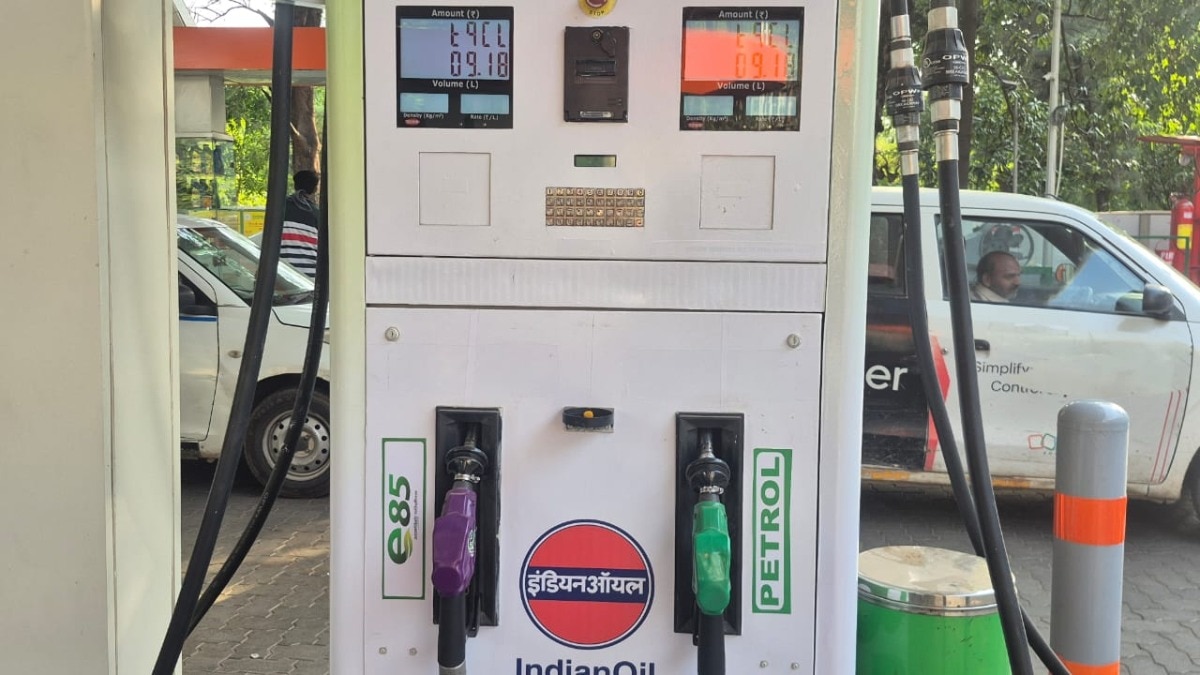
The Centre has officially cleared the way for vehicles capable of running on E100 fuel, following amendments to the Central Motor Vehicles Rules, 1989. The move is expected to encourage the development of flex-fuel vehicles. However, the number of vehicles currently compatible with E100 remains extremely limited.The Ministry of Road Transport and Highways (MoRTH) notified the amendments on October 23, formally incorporating E100 alongside E85 into provisions governing fuel specifications, emission standards and vehicle testing. The revised rules will allow manufacturers to develop and introduce vehicles designed to operate on higher ethanol blends.What do the new rules mean for India's flex-fuel plans?The amendments establish a formal regulatory framework for E100-compatible vehicles, giving manufacturers greater clarity as they develop engines and fuel systems capable of handling higher ethanol concentrations. The changes also expand references to E85 in several provisions to include E100 and clarify that these fuels are restricted to appropriately designed and certified flex-fuel vehicles.The amendments follow a public consultation process, with the draft rules published in April for 30 days to invite objections and suggestions. They also raise the gross vehicle weight limit specified in the relevant provisions from 3,000kg to 3,500kg. For now, the gap between regulatory readiness and the number of compatible vehicles remains substantial. India already has several E85-compatible two-wheelers, but the E100-compatible passenger-car segment is still at an early stage.Currently, the Maruti Suzuki WagonR Flex Fuel is the only passenger car in India that has been unveiled with E100 compatibility. No other E100-compatible passenger car is currently available in the market, although several manufacturers are working on flex-fuel technology. It is important to note that regulatory approval for E100-compatible vehicles does not mean conventional petrol vehicles can use the fuel. E85 and E100 are intended only for vehicles specifically designed and certified by their original equipment manufacturers (OEMs) for these blends. Conventional petrol cars, including those compatible with E20, cannot use these higher ethanol blends unless specifically engineered and certified for them.Maruti Suzuki WagonR Flex Fuel: India's first E100-compatible carMaruti Suzuki unveiled the WagonR Flex Fuel in June, marking a significant step towards introducing E100-compatible passenger cars in India. The model is designed to operate on different proportions of petrol and ethanol, ranging from E20 to E85, and is intended to support the wider adoption of ethanol as an automotive fuel.The WagonR Flex Fuel uses a modified version of Maruti Suzuki's 1.2-litre, four-cylinder K12N petrol engine, engineered to accommodate higher ethanol concentrations.Which other vehicles can run on higher ethanol blends?While the WagonR Flex Fuel is the only passenger car launched with E100 compatibility, several two-wheelers in India have been developed to operate on E85, a fuel blend containing up to 85 per cent ethanol.These include the Suzuki Gixxer SF Flex Fuel, Yamaha FZ-S FI Flex Fuel, Hero Splendor+ and Hero HF Deluxe, as well as the Honda ADV160 scooter. These models demonstrate that manufacturers are exploring higher ethanol blends across different vehicle categories.The Honda ADV160 is particularly notable as an E85-compatible scooter. Priced at Rs 1.70 lakh (ex-showroom), it is powered by a 157cc, single-cylinder, liquid-cooled engine producing 16.3bhp and 14.9Nm, with power delivered to the rear wheel through a continuously variable transmission (CVT).However, E85 compatibility does not automatically mean E100 compatibility. The two fuels have different ethanol concentrations, and a vehicle must be specifically engineered and certified for the fuel it uses.Subscribe to Auto Today Magazine - Ends
E100 fuel gets regulatory clearance, but how many cars can run on it currently?
Full Article
Original Source
Read the full article at Indiatoday →KhanList aggregates and links to publicly available news content. We do not host full articles from third-party sources. Always verify important information with original sources.