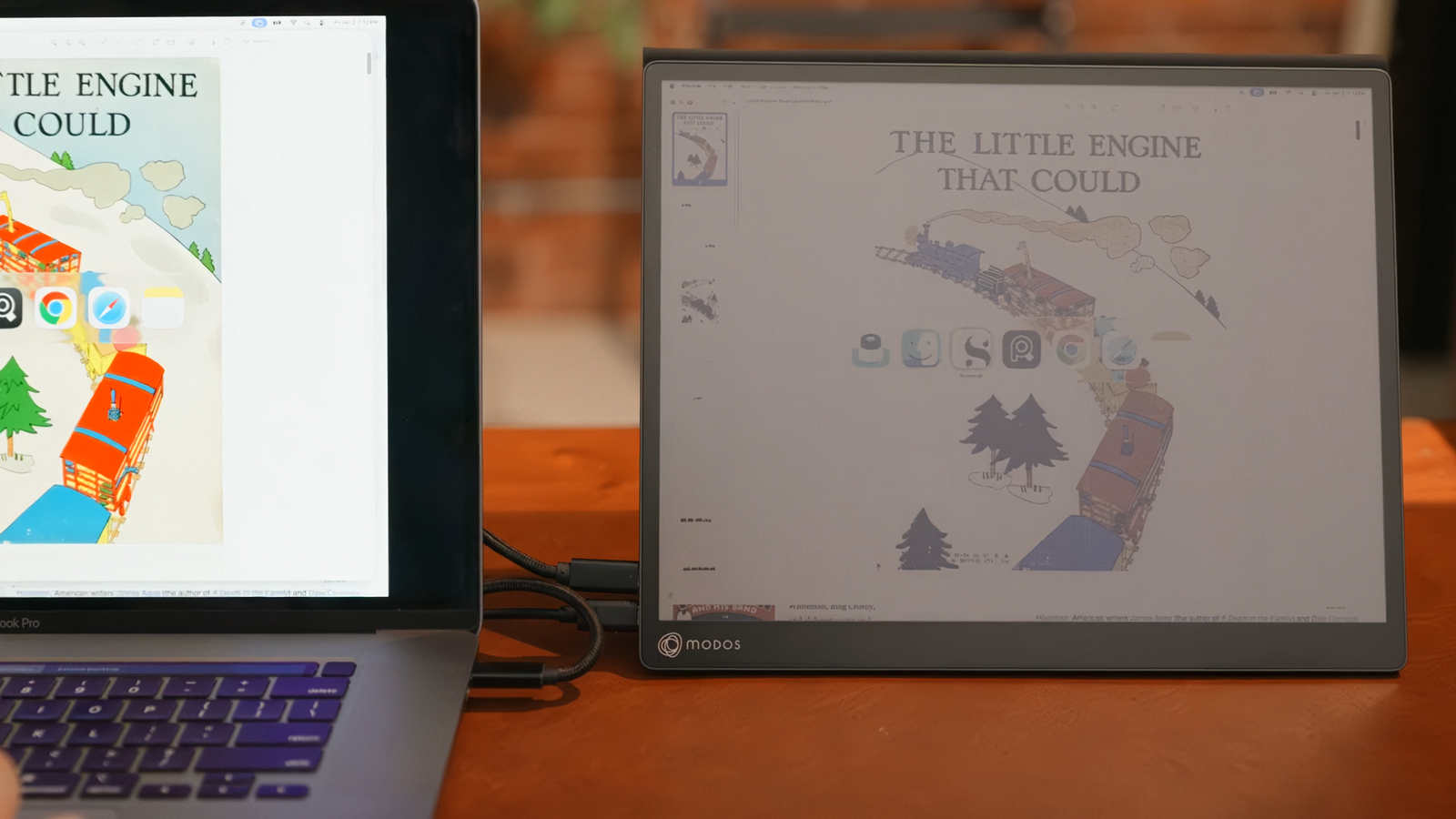
Published Jul 24, 2026, 9:45 AM EDT Sydney Butler is a technology writer with over 20 years of experience as a freelance PC technician and system builder and over a decade as a professional writer. He's worked for more than a decade in user education. On How-To Geek, he writes commerce content, guides, opinions, and specializes in editing hardware and cutting edge technology articles. Sydney started working as a freelance computer technician around the age of 13, before which he was in charge of running the computer center for his school. (He also ran LAN gaming tournaments when the teachers weren't looking!) His interests include VR, PC, Mac, gaming, 3D printing, consumer electronics, the web, and privacy. He holds a Master of Arts degree in Research Psychology with a minor in media and technology studies. His masters dissertation examined the potential for social media to spread misinformation. Outside of How-To Geek, he hosts the Online Tech Tips YouTube Channel, and writes for Online Tech Tips, Switching to Mac, and Helpdesk Geek. Sydney also writes for Expert Reviews UK. He also has bylines at 9to5Mac, 9to5Google, 9to5Toys, Tom's Hardware, MakeTechEasier, and Laptop Mag. Whether it's an Amazon Kindle or any other eReader, fast and fluid motion is probably the last thing you associate with an E-Ink display—but that's changing. In fact, E-Ink has been fast enough to work for special computer monitors for some time now, meant for a limited set of use cases. So what if an E-Ink display could run at exactly the same refresh rate as millions of TVs and monitors all over the world? As reported in Hackaday, one intrepid inventor managed exactly this feat, but it wasn't easy! The biggest thing holding E-Ink back was never the panel itself We were blaming the wrong part The Modos Flow project, created by Wenting Zhang, demonstrates a 13.3-inch E Ink monitor capable of refreshing at 60Hz using custom display controllers and firmware. If you watch Wenting's video going over the development process, it's clear that this was a labor over many years. When trying to boost the refresh rate of an E-Ink monitor to use with a prototype laptop, Wenting discovered that it wasn't the panel technology itself that prevented the display from refreshing as smoothly as a typical entry-level monitor or TV. Instead, it was the controller and its lack of bandwidth standing in the way. There are other technical issues as well, such as how the screen washes out if it's refreshed quickly, something Wenting solved by clever application of dithering algorithms. Do watch the video to get it directly from the source, but suffice it to say that it was a pickle to solve. However, the Modos Flow is a real device that really offers a 60hz E-Ink screen. So, under the premise that this is possible, what would that mean for fans of the Kindle and other eReaders? A future Kindle could finally feel as responsive as a tablet No one likes it choppy Credit: Adam Davidson / How-To Geek Even if there was a Kindle with a 60Hz display, and even if it were color, I still don't think anyone would want to watch videos or play video games on it. There are some inherent aspects to how E-Ink works that means it will probably never be great for those uses. However, the whole experience could be transformed. Page scrolling would feel smooth instead of choppy, and documents that work best while scrolling, such as some PDFs, would benefit immensely. Right now, scrolling on an e-reader is a nauseating experience and I tend to stick to documents that have pages. It would also make it practical to browse text-heavy websites. Clearly, increasing the refresh rate will have some sort of impact on battery life and perhaps even screen longevity, but right now it's not clear whether either of those would be deal-breakers. Moreover, I expect that this sort of feature would be a mode you toggle on or off, and not constantly on. Just like our modern OLED phone screens can clock down to just 1Hz to save power. Amazon Kindle (2024) 8/10 Resolution 300ppi, 16-level gray scale Storage 16GB Even in the budget department, the Amazon Kindle is a stellar value, from its light and compact design, to its adjustable front light and 6-inch display. Screen Size 6-inches Supported formats Kindle Format 8 (AZW3), Kindle (AZW), TXT, PDF, unprotected MOBI, PRC natively; PDF, DOCX, DOC, HTML, EPUB, TXT, RTF, JPEG, GIF, PNG, BMP through conversion. Battery Up to six weeks Size 157.8 x 108.6 x 8.0mm Weight 5.56oz (158g) Connectivity Supports 2.4GHz and 5.0GHz networks with support for WEP, WPA, WPA2, WPA3 and OWE security using password authentication Front light Built-in light Color Matcha, Black Ports USB-C charging port Reading wouldn’t be the only thing a Kindle is good at anymore More options are never a bad thing Credit: Justin Duino / How-To Geek While Amazon has slowly packed additional features into its Kindles over the years, they're still only truly good for reading. If you had the option to speed the screen up to 60Hz, suddenly so much more becomes possible. I already mentioned web browsing as one example, but you could do document editing, take notes using the touch layer, and there are numerous useful apps that don't need perfect visuals, but do benefit from smooth input and animation. Simple games are, of course, possible. After all, I have played games on systems with much smearier motion than an E-Ink display in my life and it was fine. I'm sure some game designer could come up with a compelling casual title for Kindles that would work great with E-Ink. It will certainly run DOOM, because everything does. As for video, I honestly think for tutorial videos and talking-head content, E-Ink could do the job in a pinch. It would certainly save you from picking up another device, but perhaps that's a stretch. Don’t expect next year’s Kindle to suddenly become an iPad While I have no idea whether a company like Amazon would even be interested in implementing higher-refresh E-Ink displays on its devices, it really makes you think about the types of apps or content you could get on a Kindle that wasn't feasible before. Certainly, with such a slow screen, Amazon had no incentive to build many Kindle-specific apps to compete with devices like the iPad. But even if this is on the roadmap, don't expect it tomorrow. 60Hz or not, there are fundamental limits to E-Ink that either need solving, or perhaps can never be solved, before it will be a true alternative to technologies like LCD and OLED. The ghosting we see is thanks to E-Ink's glacial pixel response time, and the muted colors that E-Ink produces is also a product of how the technology fundamentally works. Yet 60Hz E-Ink is already a commercial product. Bigme will sell you a 60fps E-Ink monitor, and you can use it for things it was never designed to do if you like. Make no mistake, we are going to see more advanced E-Ink screens on devices like Kindles, but the specifics of how they'll change the game are still up in the air.
E-ink is hitting 60Hz now, and that opens wild possibilties for your future Kindle
Full Article
Original Source
Read the full article at Howtogeek →KhanList aggregates and links to publicly available news content. We do not host full articles from third-party sources. Always verify important information with original sources.