
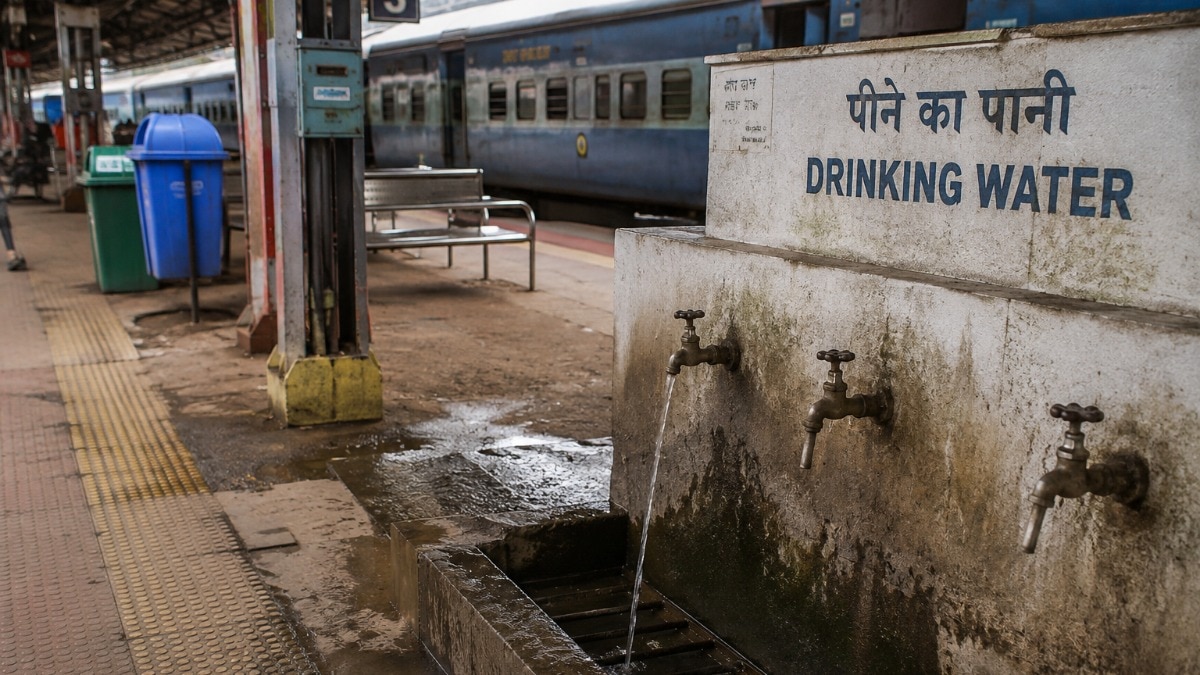
Union Railways Minister Ashwini Vaishnaw ordered immediate corrective steps after a CAG audit found contaminated station water and major amenity gaps. The report has led to a 20,000-point filtration and monitoring overhaul across the railway network.A CAG report has found E. coli in water coolers at eight railway stations. (AI-generated image)Union Railways Minister Ashwini Vaishnaw has ordered immediate corrective measures after a Comptroller and Auditor General report found E. coli in water coolers at eight railway stations, including in Mumbai and Hyderabadd, along with widespread gaps in basic passenger amenities and sanitation. The Railways will install water filtration and monitoring systems at 20,000 locations.The CAG report, based on an audit of passenger amenities at 512 non-suburban railway stations, found E. coli in water cooler samples collected at Coimbatore and Palakkad Junctions in Southern Railway; Hyderabad in South Central Railway; Chhatrapati Shivaji Maharaj Terminus, Bhiwandi Road, Kalyan and Lonavala in Central Railway; and Madhupur in Eastern Railway.E. coli is an indicator of faecal contamination, and some strains can cause illnesses ranging from diarrhoea and food poisoning to more serious complications.Water quality tests conducted at platform taps also raised concerns. Samples collected from 49 stations across eight zones in 2022-23 and 56 stations across nine zones in 2023-24 showed the presence of total coliform bacteria, including E. coli.458 OF 512 STATIONS LACK BASIC AMENITIESThe audit found that 458 of the 512 stations examined — more than 89 per cent — did not meet prescribed standards for Minimum Essential Amenities. The Railway Board had laid down norms in April 2018 requiring basic facilities such as drinking water, waiting halls, seating, platform shelters, toilets, urinals, fans, foot overbridges, dustbins, clocks and public announcement systems to be provided at stations.The CAG found that several of these basic facilities were either unavailable or fell below prescribed norms.An analysis of the Passenger Amenities Management System showed shortages of latrines at 201 stations, urinals at 403 stations and drinking water taps at 2,035 stations.Even some of the country's major NSG-1 stations, including Chhatrapati Shivaji Maharaj Terminus, Howrah, Sealdah, New Delhi and Mumbai Central, were found lacking in facilities such as seating, sanitation, dustbins and electronic train information boards.At NSG-1 stations alone, the audit identified deficiencies in drinking water taps at 12 stations, fans and water coolers at eight stations each, and signage at five stations.Indian Railways has 5,908 non-suburban stations and operated more than 7,424 non-suburban passenger trains daily in 2023-24, carrying around 292.4 crore passengers during the year.RAILWAYS ORDERS 20,000-POINT WATER OVERHAULFollowing the CAG findings, Vaishnaw held a daylong review with senior railway officials and directed immediate steps to improve drinking water safety at stations.The Railway Ministry said a new "tank-to-tap" filtration system would be installed at around 20,000 locations, including water coolers.A broader filtration and monitoring system will also be established at approximately 20,000 points across the railway network.The measures include replacing water tanks, ensuring regular quality testing at both source and outlet points, centralised monitoring and accountability, and scheduled cleaning and maintenance of storage tanks.The Ministry said water quality and progress reports would be periodically published and that the issue would be monitored directly at the Railway Board level.The CAG has also recommended strict adherence to protocols for inspecting water supply systems and comprehensive testing of drinking water in line with the Uniform Drinking Water Quality Protocol.- Ends)With PTI inputs)Published By: Karishma Saurabh KalitaPublished On: Aug 17, 2026 09:00 IST
E. coli found in water coolers at Mumbai, Hyderabad, 6 other train stations
Full Article
Original Source
Read the full article at Indiatoday →KhanList aggregates and links to publicly available news content. We do not host full articles from third-party sources. Always verify important information with original sources.