
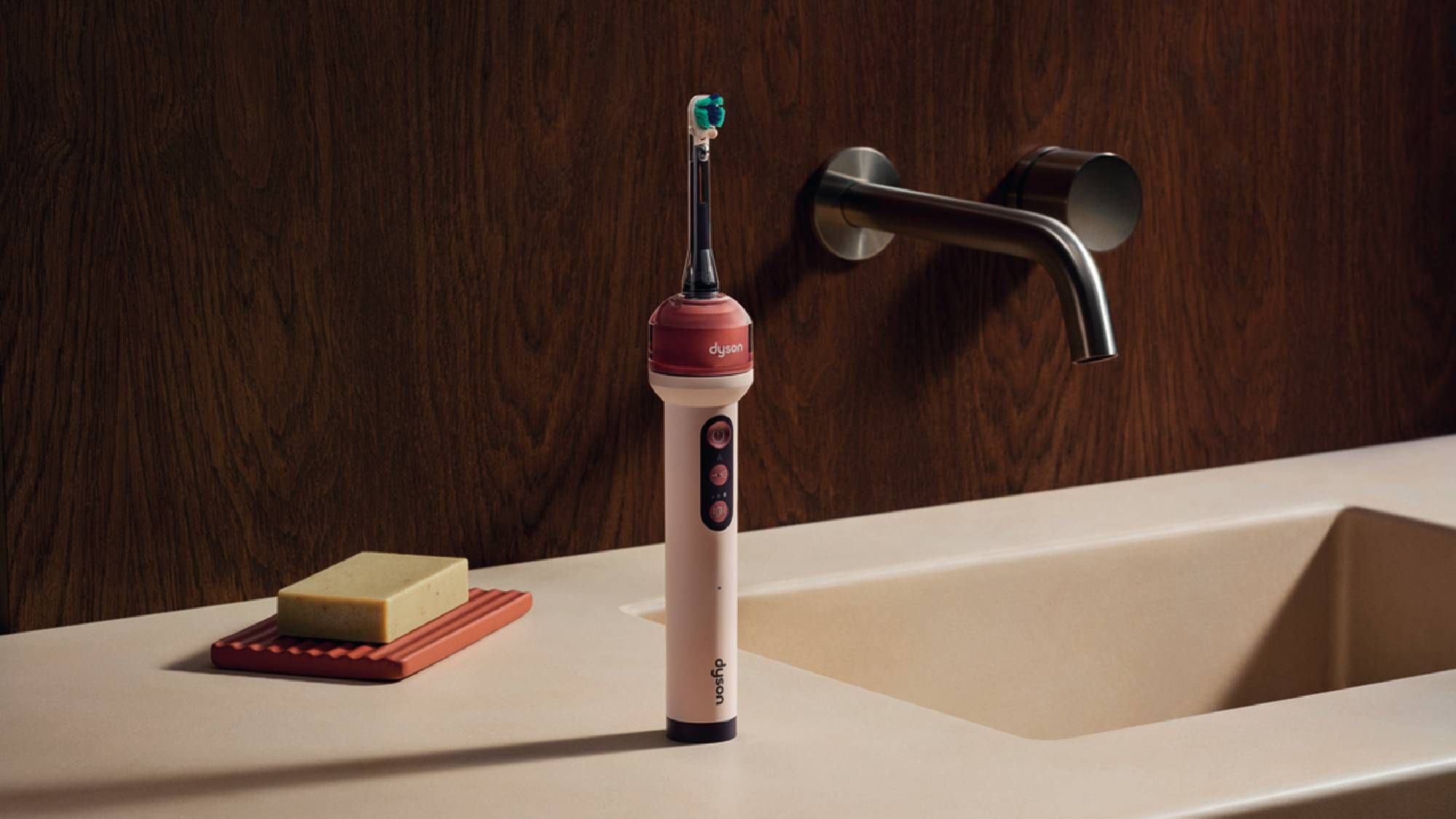
(Image credit: Dyson) Somewhere in the r/gadgets thread about Dyson's new toothbrush, past the surveillance gags and the sticker shock, one commenter asked the only question that really matters: why do I need a camera in my mouth?I've asked myself the same thing since the CameraJet landed, because my first instinct was to file it with every gadget that solves a problem nobody had. Then I read how it actually works, and found myself reluctantly impressed.Dyson does have a reason for the camera, it isn't just a gimmick bolted on to justify the price. Whether that reason is worth $499 is the question I keep snagging on.The engineering is quite astonishing (Image credit: Dyson)Here is what it does, in plain terms. Most of us clean the surfaces of our teeth reasonably well and the gaps between them badly, and the gaps are exactly where plaque takes hold. So Dyson put a small camera in the brush head that scans for those gaps 28 times a second.The moment it spots one, it fires a jet of mouthrinse straight in, a system Dyson has branded, inevitably, Gap Optical Targeting. From spotting the gap to hitting it takes about a tenth of a second, over and over as you go — so in effect the brush flosses for you, spot by spot, while you are still brushing.Most of us clean the surfaces of our teeth reasonably well and the gaps between them badly, and the gaps are exactly where plaque takes hold. So Dyson put a small camera in the brush head that scans for those gaps 28 times a second.The clever part is making that work at all. The brush head is moving nearly a thousand times a second, so to get a clear picture of a target that never sits still, the camera flashes its own light in careful time with that motion. The jet has to land in exactly the right place at exactly the right instant.And the mouthrinse, fed from what Dyson calls an "anti-gravity" tank, has to keep flowing whether you are holding the brush upright or tipped sideways to reach the back teeth.Get instant access to breaking news, the hottest reviews, great deals and helpful tips.Dyson says it spent six years, filed 38 patents and put more than 600 engineers on the problem, training the system on nearly half a million images of real teeth. Whatever else you make of it, that is a serious answer to a slightly ridiculous question.So the engineering isn't the problem. The price on the other hand...$499 is Airwrap money (Image credit: Dyson)The CameraJet costs $499. That is the same $499 Dyson charges for its Airwrap, the cult hair tool people save up for and unwrap on Christmas morning. It is a startling figure to attach to something that lives next to the sink and periodically gets dropped on tile.Nine in ten people don't floss as often as they should. If a camera that flosses for you, automatically, finally gets people cleaning between their teeth twice a day, that is a real health outcome, and no $90 brush delivers it. That is the bet.And here is the part Dyson would rather you didn't dwell on: the core job is already solved, cheaply. Take the Suri, for example, an electric toothbrush consistently rated as cleaning every bit as well as premium Oral-B and Sonicare models — costs about $90, and lasts forty days on a single charge.There are excellent brushes from the big names for less still. The unglamorous truth of oral care is that a good $90 brush and an actual piece of floss will clean your teeth about as well as anything on the market, and dentists have been saying so forever.What does $499 buy that $90 doesn't?Which reframes the question. It isn't whether the CameraJet is clever, it plainly is, but what problem $499 solves that $90 doesn't. Dyson's honest answer is behavior.Nine in ten people don't floss as often as they should, and the average brush lasts 45 seconds, well short of the recommended two minutes. If a camera that flosses for you, automatically, finally gets people cleaning between their teeth twice a day, that is a real health outcome, and no $90 brush delivers it. That is the bet.But it is a bet, and an expensive one. It asks you to spend Airwrap money on the hope that automation will fix a habit — and to keep paying afterwards, for proprietary brush heads and, eventually, Dyson's own paste and rinse.As another commenter in that thread put it, at this price "it better replace your dentist." For the slice of buyers who genuinely won't floss any other way, the math might just work.For everyone else, the sum is harder: a spectacular, beautifully engineered way to do something a cheaper brush and a length of string can do already. I can't wait to find out. Follow Tom's Guide on Google News and add us as a preferred source to get our up-to-date news, analysis, and reviews in your feeds. More from Tom's Guide I tested the Dyson Airwrap i.d. Curly + Coily on my hair — the hype is completely justifiedBest electric toothbrush in 2026The best electric toothbrush I’ve ever used isn’t Oral-B or Philips — it’s the silicone-based Foreo Issa 3 Kaycee is Tom's Guide's How-To Editor, known for tutorials that get straight to what works. She writes across phones, homes, TVs and everything in between — because life doesn't stick to categories and neither should good advice. She's spent years in content creation doing one thing really well: making complicated things click. Kaycee is also an award-winning poet and co-editor at Fox and Star Books.
Dyson's CameraJet is the most over-engineered toothbrush ever made — and I mean that as both a compliment and a warning
Full Article
Original Source
Read the full article at Tomsguide →KhanList aggregates and links to publicly available news content. We do not host full articles from third-party sources. Always verify important information with original sources.