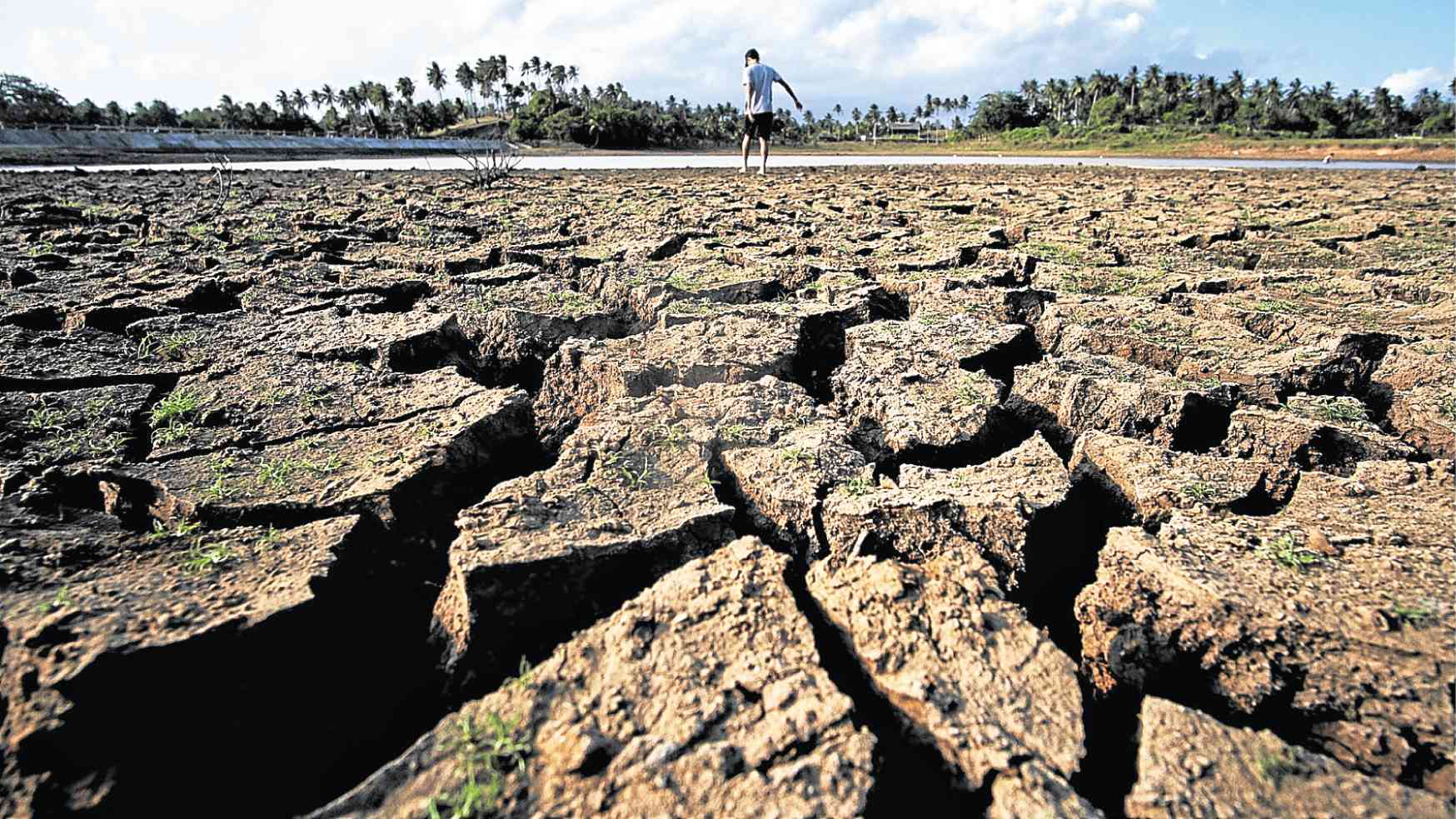
This photo, taken in 2019, shows how extreme heat has dried up a lake in the village of Gabawan in Daraga, Albay, during a dry spell. —File photo by Mark Alvin Esplana MANILA, Philippines — Speaker Faustino “Bojie” G. Dy III urges government agencies to shift from a reactive disaster response to proactive planning before the El Niño dry spell worsens, according to a House statement issued on Wednesday. “It’s about time, as we have already experienced the intense effect of El Niño on crop production, food security, and our economy. From 2023 to 2024, palay production dropped by 12 percent to 15 percent, leading to higher rice prices and affecting millions of Filipinos,” Dy said in Filipino during the El Niño briefing of the House Committee on Agriculture and Food. “The goal of this briefing is for us to form a national preparedness framework to fight El Niño — a system that’s effective, implementable, and will give protection to our countrymen,” he went on. Article continues after this advertisement “It’s important that we become prepared and not wait for the crisis to arrive before we act for the peace of mind of every farmer and every Filipino,” he added. READ: Not only drought but floods: What to expect from severe El Niño? Dy said he had seen firsthand the impact of El Niño in Isabela, his home province, where prolonged dry conditions damaged farmlands, strained irrigation systems, and contributed to fish kills in the Magat Reservoir. Emergency interventions helped cushion the effects on farmers and fisherfolk, he added. But experience, he pointed out, highlighted the importance of acting before a crisis hits. He said the lessons learned from that experience underscored the need for a unified national preparedness framework that would enable the government to anticipate, rather than merely respond to, future El Niño events. Article continues after this advertisement Lessons learned Drawing from Isabela’s experience, Dy said the province immediately convened an emergency consultation with several agencies, groups and individuals to coordinate early interventions. These included the Cagayan Region office of the Department of Agriculture, the provincial government, the National Irrigation Administration’s Magat River Integrated Irrigation System, the League of Mayors, and all city and municipal agriculture officers. Article continues after this advertisement The province also intensified monitoring of Magat Dam’s water levels and worked closely with irrigation managers to plan water releases and project available water supply before conditions worsened. READ: DA gathers data, fast-tracks water projects to fight El Niño He added that Isabela prioritized the timely delivery of assistance to farmers and fisherfolk, including: fuel subsidies, while advancing longer-term investments in irrigation systems water-efficient technologies community-based water management climate-resilient agriculture additional water-harvesting and multipurpose dam projects He said these measures showed that early coordination and preparation could significantly reduce the impact of prolonged drought on communities and the country’s food supply. “My colleagues, we cannot stop the dry season or the rainy season. But we can lessen the damage if we are prompt in our preparations,” he said. Your subscription could not be saved. Please try again. Your subscription has been successful. /atm
Dy urges shift from reactive to proactive response to El Niño
Full Article
Original Source
Read the full article at Newsinfo →KhanList aggregates and links to publicly available news content. We do not host full articles from third-party sources. Always verify important information with original sources.