
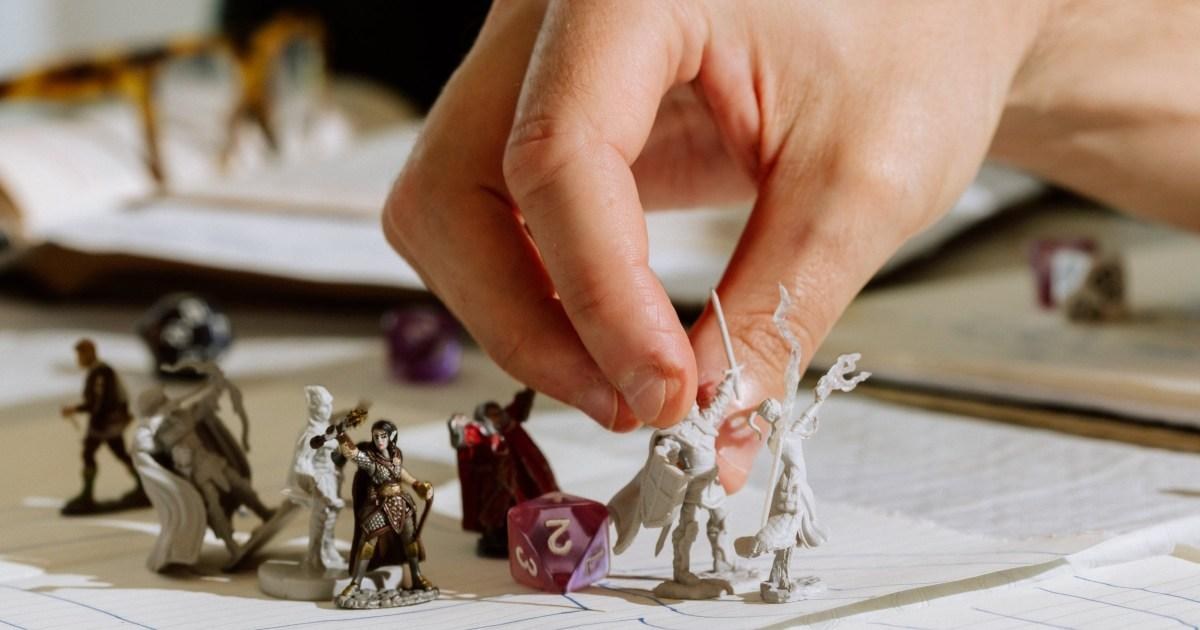
I pulled off my helmet, and for the first time in this Dungeons & Dragons campaign, I let them see who I really was (Picture: Wesley Lapointe/For The Washington Post via Getty Images) As a brave knight, having just slain the wicked sorcerer who had terrorised my village for a generation, I stood over the fallen body and surveyed the room. My companions, a rogue with a heart of gold and a druid who could speak to the wind, gathered around me. The villagers emerged from their homes, their faces lit with gratitude. I pulled off my helmet, and for the first time in this Dungeons & Dragons campaign, I let them see who I really was. It was not a dramatic reveal in the way you might think – my character’s helmet and the villagers were imaginary. But the identity I’d revealed was all too real, having just announced my sexuality. In Dungeons & Dragons, you play a fictional persona you create and control. Someone plays the role of the Dungeon Master, who describes the world and the people in it, while the players decide what their characters do. Look beyond the headlines Get a curated list of the most important stories of the weekend every Sunday from our weekend editor Jess Austin. Look beyond the headlines with exclusive articles, emotive interviews and must-read explainers from our expert team of reporters across news, lifestyle and entertainment. Sign up here. There are no screens, no graphics, no controllers. Just imagination, collaboration, and the shared agreement to pretend together. But I was not just playing a character. I was playing a version of myself that I had been too afraid to be in real life – a queer man. The table was covered in dice and rulebooks and half-empty glasses of wine (Picture: Roberto Machado Noa/LightRocket via Getty Images) For a long time, I was shy about my sexuality. But in front of my fellow fantasy role-playing gamers, I finally found that safety. Ask Metro Use AI to go deeper into the stories you care about – powered by Metro and trusted publications. The other players didn’t make a big deal of it – they just kept playing, and in doing so, they told me that I belonged. Growing up, I did not have the language for what I was feeling. I knew I was different by the age of eleven, but I did not know how to name it. I grew up in Nairobi, Kenya where being queer was not something you talked about – it was something you hid. So, I learned to hide it well. I was quiet and agreeable, whatever people needed me to be so they would not look too closely. Coming out was not a single moment for me; it was a long, slow process of learning to be honest with myself and with the people around me. In my mid-20s, I became isolated – I would go to queer nights out, sometimes alone, sometimes with friends, and feel like I didn’t belong, standing at the edge of the room. Then I found Dungeons & Dragons. Queer Hope & Joy Metro is sharing stories of Queer Hope & Joy, where we are centring stories that platform the vibrancy, diversity and resilience of the LGBTQ+ community. This is running alongside LGBT Foundation's Hope Starts Here campaign, and will represent as many LGBTQ+ identities as possible, while spreading hope and joy at a time it is very much needed. Find out more about LGBT Foundation's campaign here. To submit your story of your Queer Hope & Joy send your pitches to: sharan.dhaliwal@metro.co.uk I had heard of it before. I knew it as a game with weird dice and thick rulebooks, but I didn’t know what it actually felt like to play. I had played video games and board games, but this was different. It was like collective storytelling. I do not remember exactly how I found my first group. I think it was through a friend of a friend, someone who needed another player for a campaign that was starting. I showed up nervous, not knowing what to expect. The table was covered in dice and rulebooks and half-empty glasses of wine. The Dungeon Master explained the rules briefly, then said we could learn the rest as we went. Nobody seemed worried that I had never played before. I spoke in a voice that was not quite mine and nobody judged me for it (Picture: Portland Press Herald via Getty) There were five of us, and over the course of the evening, I came to realise that most of the players were queer. The first moment playing was strange and wonderful. I created a character, a half-elf ranger with a complicated backstory and a name I had chosen because it sounded beautiful: Kael. He was brave, loyal, and a little bit reckless, everything I wanted to be. He fell in love, made mistakes and proudly stood up for his friends. He was a hero, not because he was perfect but because he kept going, even when things went wrong. I spoke in a voice that was not quite mine and nobody judged me for it. Nobody asked me to be anyone other than who I was. Kael taught me that I could be brave too and that the parts of myself I was hiding were the parts worth sharing. I did not come out of my shell instantly, but over the weeks and months that followed, I found myself speaking up more, taking up more space, making choices that the real me would have been too scared to make. The game gave me a place to practice being brave. I go back to the feeling of being seen, of being accepted, of being brave while surrounded by friends (Picture: Marty Caivano/Digital First Media/Boulder Daily Camera via Getty Images) I played with that group for about a year before life and schedules pulled us in different directions. I still keep in touch with some of them and I still play Dungeons & Dragons, though my groups have changed over the years. Living in a fantasy world is exactly what queer people sometimes feel like they have to do, and Dungeons & Dragons was that for me. But it also helps form bonds and build community. I think back to Kael sometimes, about the version of myself that I was when I played him. I go back to the feeling of being seen, of being accepted, of being brave while surrounded by friends. I still carry that joy with me. Now, I can still be shy and struggle to open up. But I know now that there is a place for me – a table where I belong. And that is something I will never forget. Community can be found in the most unexpected places. Being queer is not just about who you love – it is about who you are and the space you take up. It is about the stories you tell. And sometimes, the best way to find yourself is to become someone else for a little while. Do you have a story you’d like to share? Get in touch by emailing Ross.Mccafferty@metro.co.uk. Share your views in the comments below. Arrow MORE: Alanis Morissette, 52, comes out as pansexual after being ‘hurt’ by men Arrow MORE: I went on a blind date in front of 200 strangers Arrow MORE: I asked my boyfriend to get sexy with food — he pulled out a hotdog The Sunday Edit Look beyond the headlines with exclusive articles, emotive interviews and must-read explainers from our expert team of reporters across news, lifestyle and entertainment.
Dungeons and Dragons allowed me to embrace my Queer identity
Full Article
Original Source
Read the full article at Metro →KhanList aggregates and links to publicly available news content. We do not host full articles from third-party sources. Always verify important information with original sources.