
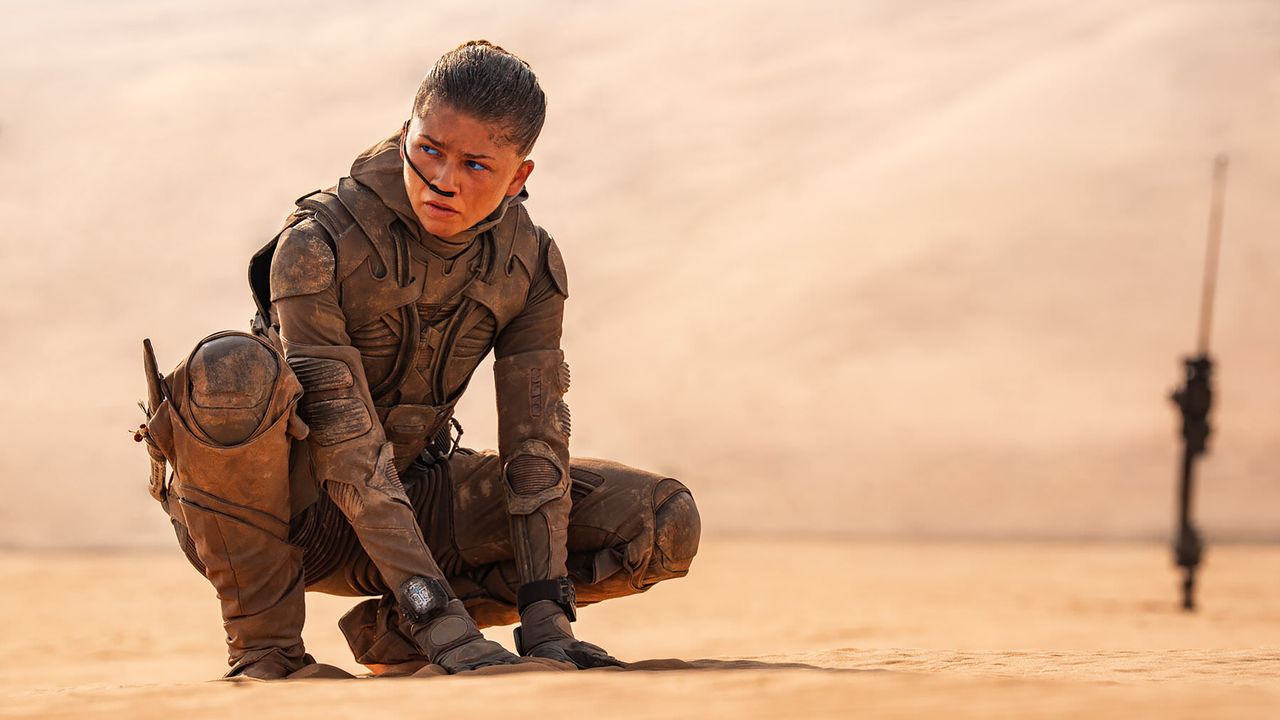
The final installment to the epic sci-fi trilogy shot all over Planet Earth.Niko TaverniseOn Location peels back the curtain on some of your favorite films, television shows, and more. This time, we take a look at Dune: Part Three.The celestial saga that is Frank Herbert’s Dune was practically made for cinema. And yet, for so long, adapting the breathtakingly expansive space opera seemed like something of a curse. David Lynch called his turn at the franchise “a huge, gigantic sadness” in his life, and for Alejandro Jodorowsky, his psychedelically expensive vision for Dune never escaped development hell.On December 18, 2026, Denis Villeneuve’s Dune: Part Three arrives, overcoming the hurdles that had tripped up its predecessors and capping off the decade-in-the-making trilogy in an explosive finale. Key to the creation of the trilogy’s universe was keeping it as grounded as possible in ours, with otherworldly planets raised from the volcanic shores of Iceland’s beaches and the banded dunes of the United Arab Emirates’ Liwa Desert. By this point, fans of the first two installments are well-acquainted with settings like the desert planet of Arrakis, but Villeneuve's latest offering delves deeper than ever into their intricate textures. Condé Nast Traveler spoke with production designer Patrice Vermette, location manager Duncan Broadfoot, and director of photography Linus Sandgren to learn how this much-anticipated conclusion was crafted.Iceland IcelandDune: Part Three opens with Fremen forces landing on Enfeil, a wetland planet that stuns the soldiers—used to desert and drought—with its rain. After the battle concludes, the Fremen forces run to the black sand shores of the planet and wade into the sea. This sequence was filmed in Iceland, specifically at Ingólfshöfði Beach, a nearly 250-foot-tall cape and nature reserve. “Denis [Villeneuve] always envisioned a black surface going on for forever, a super flat surface with those low clouds and a band of light, just the sun piercing through the horizon," said Vermette, “Because of the black sand, we thought, obviously, Iceland. We also looked to see if it was possible to shoot in the Canary Islands.” At the end of the day, Iceland won the booking, leading the team to spearhead an unprecedented film shoot. “When we scouted Iceland, there were multiple options,” said Broadfoot, “but this particular beach that we ended up on is part of a nature reserve, and actually during the summer, you can book puffin tours, but it's never been shot on before, so that was also an appealing aspect.”Liwa Desert, UAE Niko TaverniseThe Liwa Desert, UAETwenty different locations across the UAE's Liwa Desert were stitched together to comprise Arrakis. Across all three films, the Liwa Desert has been used as a stand-in for the desert planet at the center of it all. “There's a reward to travel to the Liwa Desert, which is close to the border of Saudi Arabia, and the dunes there are like the kind you've seen in Lawrence of Arabia,” said Sandgren, “it's magical just to be there; they're beautiful and contain copper sand and beige sand, and the mix of the two creates these incredible patterns of ripples from the wind each night, and every morning, you see new patterns.” While Sandgren arrived at the desert for the first time to film for Part Three, for Broadfoot and Vermette, returning to the region was like a homecoming for the crew. “Denis [Villenueve] and Patrice [Vermette] are always very keen to find something new that we haven't filmed on before, so that was always the challenge," said Broadfoot, “specifically for Part Three, we had to go deeper and further into the desert than we had done in Part Two.” Filming in the ever-shifting landscape with temperatures peaking at a boiling 120 degrees Fahrenheit posed significant challenges to the shoot, especially as the crew based themselves even deeper into the desert, but getting comfortable was almost counter to the brief. “We love making movies because we thrive on challenges, you know?," said Vermette, "If it was easy, I don't think we'd want to make them.”Al Ain, UAE Niko TaverniseAl Ain, UAEWhile nearly all of the Arrakis scenes were shot in the Liwa Desert, select sequences were set in Al Ain, the UAE's “Garden City.” Though scenes shot in Al Ain didn't take up as much screen time as those shot in the desert, they span a considerable range as the area served as the setting for Alia Atreides's personal Golgotha—the site where Paul's sadistic younger sister crucifies traitors to the regime—as well as where Chani plays with her young children. “It's an incredible area that is still very unknown,” said Vermette. “We shot on a mountain called Jebel Hafeet, the only real mountain in the area,” said Broadfoot, “we scouted the entire mountain and found a plateau up high, which gave you this sort of scale and rocky, craggy environment that's very different than the desert which we were filming in. It was a blank canvas for Patrice [Vermette] to take over and create his beautiful set.”BudapestTo enhance all the footage that was shot on location, several landscapes from Part Three were recreated using a combination of practical and digital effects across four facilities in Budapest: NFI Studios, HungExpo Budapest Congress and Exhibition Centre, Korda Studios, and Waberer. Much of the battle scene on Enfeil was shot in Budapest. “Most of it was in the back lot of Waberer,” said Vermette, “the amazingly technical thing achieved by Denis [Villeneuve] and Linus [Sandgren] was that they erected a 65-foot-tall by 470-something-foot-long LED screen wall, which was the biggest wall of that sort ever built." The sheer scale of the shoot even required the crew to break out cranes to navigate the airspace around production to move props and equipment around.NorwayAtreides home planet Caladan has made an appearance in all three films of the trilogy. The visual opposite of Arrakis, Caladan was shot on the northwestern Kråkenes region of Norway. The agrestic shoreline is hugged by verdant cliffs and the frosty Norwegian Sea. Caladan's cameos in Part Three come as brief flashes, but Vermette also winks to the filming location in an Easter egg on Arrakis. “In the movie, in the interior courts of Alia's meditation room, there's a tree,” says Vermette, “I had the idea of putting a pine tree, a Norwegian pine tree there, because it's the roots of their family; it's something that anchors their family. The only pine tree in all of Arrakis is right there.”
'Dune: Part Three' Expands Its Universe, From the Liwa Desert to the Volcanic Shores of Iceland
Full Article
Original Source
Read the full article at Cntraveler →KhanList aggregates and links to publicly available news content. We do not host full articles from third-party sources. Always verify important information with original sources.