
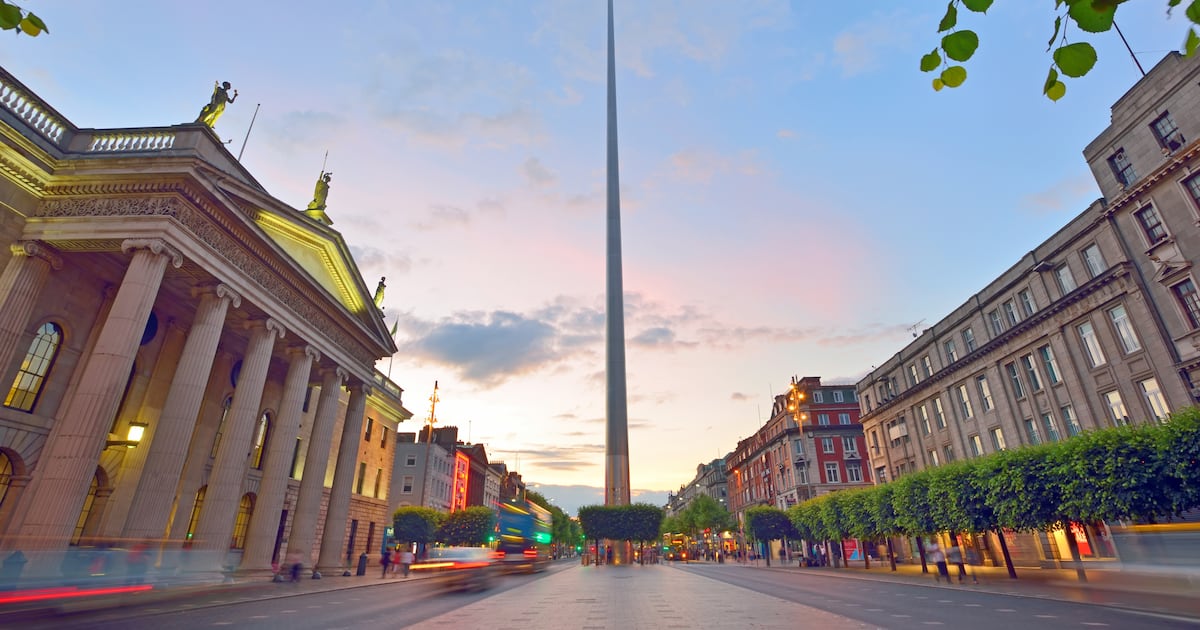
North inner-city Dublin has been unfairly burdened with a “massive overconcentration” of services for “people on the margins of society”, the head of the city’s regeneration body said. Robert Watt said services for homeless people, refugees and people with “particular needs” were concentrated in an area around O’Connell Street, “which has been subjected to neglect, a lot of dereliction, a lot of underdeveloped sites and, sadly, a lot of antisocial behaviour”. The former Department of Health secretary general is heading up the Dublin City Development Company, which has been tasked with regenerating O’Connell Street and the surrounding inner city area. Watt told the Irish Planning Institute’s autumn conference that the area was one where a “large number of various services for people on the margins of society have been located and that has contributed to what is, at times, a very difficult situation”. READ MOREHe said he recognised that accommodating “homeless people or refugees” was a “very difficult issue”, but the State needed to disperse services more fairly. “We’re going to have to have other local authorities step up and provide more of those,” he said. “It’s not fair on the residents of this part of the city, nor is this fair on the people who work there, or want to spend more time here, that we have such a massive overconcentration of certain services, and we need to address that.”The development company has been established to implement the recommendations of the Dublin City Taskforce published two years ago. Watt said he would be focusing on developing a safer, cleaner city and on tackling dereliction to make the inner city a place where people would want to live and invest.However, he said the conversion of vacant or derelict buildings to housing was challenging and costly.“There are issues around planning – planning rules and regulations. There are questions around the relationship between fire safety, building control, conservation, all these different rules. If we’re really going make a difference, we need to have a different approach to planning,” he told the delegates.“We also, I think, need to have less risk-averse approach when it comes to figuring out how we can manage the different trade-offs between fire safety, which is absolutely imperative of course, and questions around conservation of protected structures and preserving those wonderful buildings in terms of what they give to us.”Meanwhile, Conor Sreenan, State Architect at the Office of Public Works, told the conference an application for the temporary use of the GPO on O’Connell Street for the next three years would be submitted to Dublin City Council next month.A master plan was being devised for the long-term use of the GPO, he said, but public access would be widened in the interim to underused and vacant parts of the building.Sreenan told the conference the building would house cultural and community facilities and this would draw people from the ground floor to the old telegraph room, at the top of the building, which has “the very same plan dimension as the old library in Trinity”.“We want to make a project that has a lasting impact for three years,” he said.
Dublin 1 unfairly burdened with ‘huge overconcentration’ of social services – Robert Watt
Full Article
Original Source
Read the full article at Irishtimes →KhanList aggregates and links to publicly available news content. We do not host full articles from third-party sources. Always verify important information with original sources.