
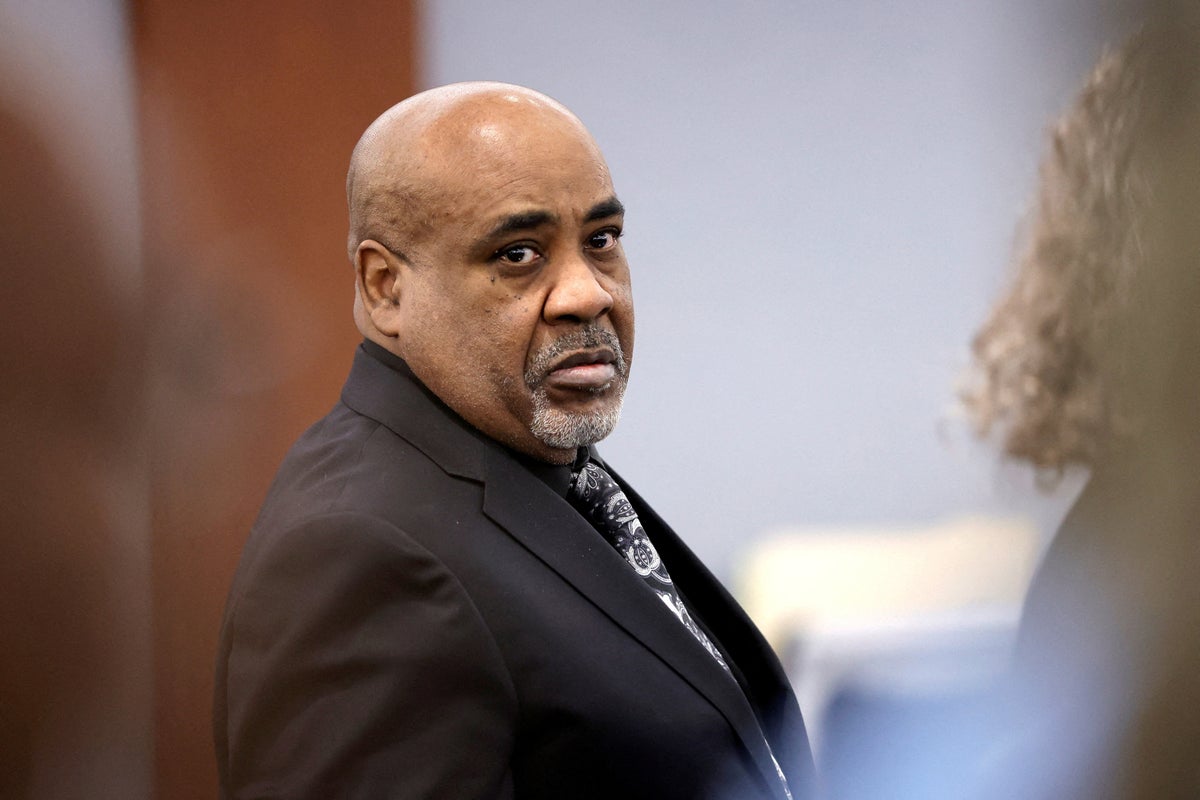
A man has been found guilty of orchestrating the 1996 killing of rap icon Tupac Shakur, marking the first conviction in a case that has gripped hip-hop fans for decades.Duane “Keffe D” Davis, 63, was convicted on Monday of a single count of murder with a deadly weapon and could be sentenced to life in prison. The jury deliberated for less than 3 hours after a weekslong trial in Las Vegas.For nearly three decades, the killing of Tupac Shakur was one of hip-hop's most enduring mysteries, a case marked by reluctant witnesses, dead suspects and questions about whether anyone would ever be held accountable.After the verdict was read, Shakur's sister, Sekyiwa “Set” Shakur, cried and hugged the prosecutors. Also in the courtroom was Davis’ son, who covered his face with one hand.Chief Deputy District Attorney Binu Palal told jurors in closing arguments that Davis acquired a gun and “went hunting” for Shakur and Death Row Records co-founder Marion “Suge” Knight after they beat up Davis’ nephew earlier that night.Palal acknowledged that Davis’ accounts of the killing evolved over the years but argued those differences reflected Davis’ changing motivations and efforts to protect himself. One critical detail, he said, remained consistent: Davis repeatedly placed himself inside a white Cadillac from which the shots were fired.Duane ‘Keffe D’ Davis guilty of orchestrating the 1996 killing of rap icon (AFP/Getty)The panel of 16 jurors, four of whom are alternates, heard testimony from 24 prosecution witnesses and three defense witnesses over nine days.“The core facts remain. The material facts remain,” Palal said.The prosecution said Monday evening that the state would dismiss the gang enhancement part of the charge due to witness logistics.The trial brought to a head a decades-old case that for years has drawn the attention of hip-hop fans and true crime experts alike. Shakur, who was considered one of the most influential rappers of all time, was in Las Vegas on Sept. 7, 1996, and stopped at a red light when a white Cadillac pulled up beside him, and shots were fired. He died six days later from his wounds. Knight was also wounded but survived.For years, nobody had been charged in the rapper’s death until Davis began making public statements, saying he was in the Cadillac and gave the gun to others in the backseat. Davis described the shooting as an act of retaliation after Knight and Shakur’s entourage beat up Davis’ nephew hours before the shooting.Under Nevada law, someone who helps another person commit murder can be convicted of the crime. Davis is the only person still alive among the four men prosecutors say were in the Cadillac. The man who prosecutors say originally gave the gun to Davis is also dead.Palal told jurors that if they believed Davis' statements, they did not have to be independently corroborated with additional evidence.Duane ‘Keffe D’ Davis guilty of orchestrating the 1996 killing of rap icon (Reuters)Still, he pointed to the rivalry between the South Side Compton Crips and Mob Piru, the fight with Orlando “Baby Lane” Anderson and testimony that members of Shakur’s circle identified Anderson and Davis as suspects the night of the shooting. Witnesses had testified to the heated gang rivalry between the South Side Compton Crips and Mob Piru, which were associated with dueling record companies Bad Boy Records and Death Row Records.“Who fired is not the question,” Palal said. Prosecutors haven't argued that Davis pulled the trigger, but instead that he was criminally responsible because he provided the gun and ordered the attack.Palal also argued the shooting was premeditated, pointing to testimony and Davis’ accounts that the group searched for Shakur before spotting him on the road and making a U-turn. “It’s a plan, not an impulse,” Palal said.Palal held up Davis’ 2019 memoir, “Compton Street Legend,” and played an interview in which Davis encouraged people to buy it to get the “real truth.” Although the book contains a disclaimer saying some facts were changed, Palal argued that names, hotels and other details changed while the central account did not.Palal also rejected the defense’s contention that Davis fabricated his accounts to make money. “It is an entirely different proposition to be profiting from a murder,” Palal said. “And that is what Mr. Davis is doing.”Defense attorney Michael Sanft also turned to his client’s memoir during his closing argument. While reading an excerpt, he said the N-word aloud, prompting people watching in an overflow courtroom to recoil and shake their heads.In multiple interviews, Davis said he handed the gun to the back seat, but in others as well as in his book, Davis wouldn’t say who pulled the trigger.In a rebuttal argument, prosecutor Marc DiGiacomo pointed to a scrapbook Davis kept containing articles about Shakur.“This guy's scrapbooking his murder, for God's sake,” DiGiacomo told jurors.The prosecution's witnesses included a gang expert who described Davis as the shot caller that younger gang members had to obey. Sanft asked jurors if there was any evidence that Davis had ever called the shots before or after the shooting.During the trial, investigators said a Las Vegas hotel bill was found at Davis’ residence during a police search, but it wasn’t clear when it was dated — or where that evidence is currently located.The case is nearly 30 years old, which has affected the kind of evidence presented in court. Prosecutors warned jurors that material collected in the ’90s is different from what law enforcement collects today, including hotel surveillance video from the night of the shooting.How Duane "Keffe D" Davis was caughtIn the end, some of the most damaging evidence against the only man ever charged came from the man himself.Duane "Keffe D" Davis spent years talking about the 1996 shooting with many people, including investigators, filmmakers and interviewers and through his memoir, "Compton Street Legend." Prosecutors used those accounts to build a murder case against him, while his attorney argued Davis had been telling stories for money and notoriety.The prosecution's case centered on Davis' own words.Over the years, Davis repeatedly placed himself inside the white Cadillac that pulled alongside Shakur and Death Row Records co-founder Marion "Suge" Knight on Sept. 7, 1996. In interviews with law enforcement and later public accounts, Davis described obtaining a gun and passing it to the backseat before shots were fired.Duane Davis, center, and his attorney Michael Sanft are led back to a courtroom to hear his sentencing date after a jury found Davis guilty of first-degree murder in his trial related to the 1996 killing of rapper Tupac Shakur, at Clark County District Court Regional Justice Center, Monday, Aug. 31, 2026, in Las Vegas. Bizuayehu Tesfaye/Pool via REUTERS (Reuters)Prosecutors did not accuse Davis of pulling the trigger. Instead, they argued he organized the group, provided the gun and helped carry out a retaliatory attack after Shakur and Knight's entourage beat Davis' nephew, Orlando "Baby Lane" Anderson, at the MGM Grand earlier that night.Under Nevada law, someone who aids or helps another person commit murder can also be held criminally responsible.What did Davis say about the shooting?Davis began providing some of his most consequential details during a 2008 interview with law enforcement while authorities were investigating the 1997 killing of Shakur's rap rival, The Notorious B.I.G.Davis said he was riding in the front passenger seat of the Cadillac with three other men, including his nephew. He described spotting Shakur and Knight, making a U-turn and pulling alongside their BMW."If we would have been on my side, I would have blasted," Davis told investigators. Instead, Davis said, he passed the gun to the backseat.Michael Sanft, attorney for Duane Davis, makes closing arguments in the Duane Davis murder trial, related to the 1996 killing of rapper Tupac Shakur, in Clark County District Court at the Regional Justice Center in Las Vegas, Nevada, U.S., August 31, 2026. REUTERS/Steve Marcus/Pool (Reuters)He later spoke publicly about the killing and described it in his 2019 memoir. Prosecutors played jurors an interview in which Davis promoted the book as a way to get the "real truth."Davis' accounts varied on some details, including who ultimately fired the shots. But prosecutors emphasized that he repeatedly put himself inside the Cadillac and described his role in supplying the weapon.Those public statements proved critical.Why did it take nearly 30 years to bring charges?Police had long suspected that Shakur's killing was retaliation for the MGM Grand beating, but investigators struggled to build a case they could prosecute.Witnesses were reluctant to cooperate. Knight, who was sitting beside Shakur when the shots were fired, did not provide investigators with an account that led to charges. Other people believed to have been inside the Cadillac died over the ensuing years.Davis spoke to investigators off the record in 2008 under an agreement with federal authorities and again with Las Vegas police in 2009. The unusual circumstances surrounding those interviews complicated whether his statements could be used against him.But Davis later began discussing the killing publicly, including in documentaries, interviews and his memoir. Prosecutors argued those public disclosures allowed them to use statements he had made years earlier.A renewed Las Vegas police investigation eventually led to Davis' arrest in 2023.What did Davis' defense argue?Defense attorney Michael Sanft asked jurors to reject the very statements prosecutors considered their strongest evidence.Sanft argued that Davis had exaggerated or fabricated accounts of his involvement for money and notoriety. He characterized his client's statements as braggadocio and fiction rather than confessions.More importantly, Sanft argued investigators had failed to independently prove that Davis was even in Las Vegas on the night Shakur was shot.He pointed to the absence of surveillance footage, phone records and other physical or documentary evidence placing Davis inside the Cadillac."They have nothing in this case that says that man was here in Las Vegas on Sept. 7, 1996," Sanft told jurors, pointing toward Davis during his closing argument.Sanft also attacked the integrity of the decades-old investigation, arguing that missing records, questionable police practices and the involvement of multiple law enforcement agencies made the prosecution's case unreliable.Prosecutors countered that Davis' admissions did not have to be independently corroborated if jurors believed them. They also pointed to circumstantial evidence they said supported his account, including the MGM Grand beating, the gang rivalry surrounding the two groups and testimony about the events leading up to the shooting.What happens to Davis now?Moments after the verdict, Judge Carli Kierny ordered Davis to be held without bail while he awaits sentencing on Oct. 13. Davis raised his hand and said, "Excuse me," before asking for the return of jewelry, a phone and other belongings."And I would like to appeal this matter," Davis told the judge.Kierny told him an appeal would come after sentencing.Prosecutors also voluntarily dismissed an extra prison sentence related to gang activity after the verdict, citing logistical issues involving a witness. That eliminated the need for jurors to consider an additional phase of the case.
Duane ‘Keffe D’ Davis found guilty in Tupac murder case after decades of speculation
Full Article
Original Source
Read the full article at The-independent →KhanList aggregates and links to publicly available news content. We do not host full articles from third-party sources. Always verify important information with original sources.