
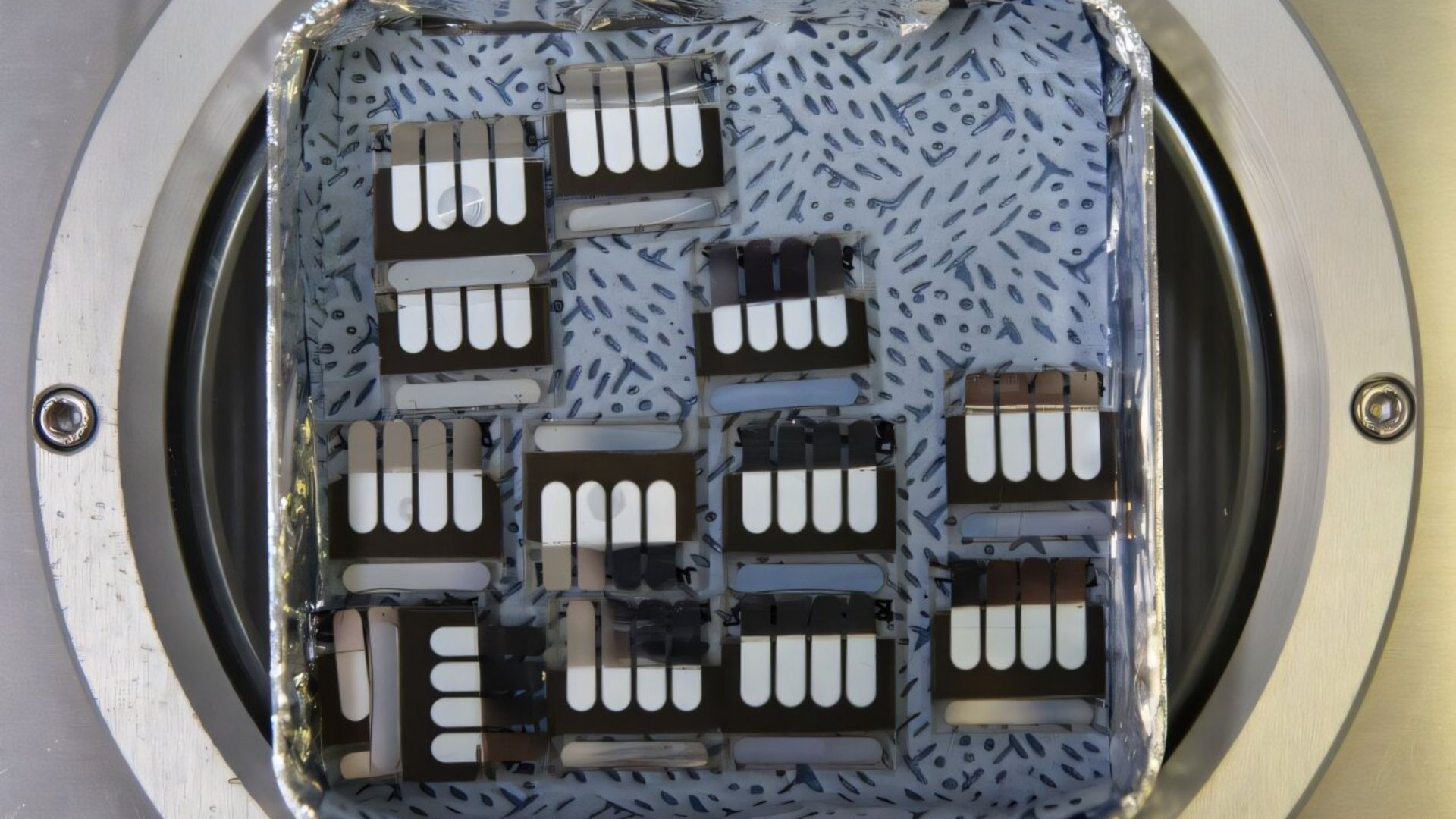
Inverted perovskite solar cells can reach an energy conversion efficiency of 24.6 percent when treated with a new chemical process. The performance marks a clear step up from standard versions of the device. Untreated control cells managed an efficiency of 21.21 percent. Meanwhile, devices prepared using conventional single-chemical treatments reached 23.17 percent. The gains rely on a two-step method using two organic molecules of different sizes and shapes. The process targets structural defects at two distinct depths within the solar material. “The researchers first used the smaller PDAI molecule to fill microscopic voids remaining at grain boundaries and stabilize charge-transport pathways,” said a press release. Filling the internal voids The compound travels into the tiny gaps between individual crystal grains. These narrow spaces naturally trap charge carriers if left unsealed. By filling the internal voids, PDAI secures the pathways that electrical charges use to move through the crystal. Next, researchers deposit a second compound called 4TF over the outside of the thin film. In untreated films, bare lead atoms remain exposed on the outer boundary. These uncoordinated atoms create electrical traps that stall the flow of current. The 4TF molecules bind directly to the exposed lead atoms. “This chemically stabilized the surface and facilitated more efficient charge transport,” added the press release. “The researchers also experimentally demonstrated that sequentially applying the two molecules produces complementary effects in defect passivation and surface stabilization, resulting in better performance than using either molecule independently.” These chemical repairs address a fundamental issue in perovskite thin films. When manufacturers produce the films, microscopic flaws form across the surface and along grain boundaries. When sunlight strikes the cell, it generates positive and negative electrical charges. If charges run into these structural flaws, they recombine and cancel each other out. This recombination prevents the charges from reaching the electrodes, which wastes potential electrical power. Different molecular designs Fixing these defects has proved difficult in the past. Standard engineering methods relied on just one type of molecular layer to cover the flaws. However, a single compound cannot easily squeeze into tight internal fissures while also binding to wide open surfaces. The two physical environments require different molecular designs. Overcoming this defect problem is an important goal for inverted perovskite devices. Engineers prefer the inverted cell layout because it requires lower processing temperatures during manufacturing. Lower temperatures keep production costs down and make the materials easier to fabricate on high-speed commercial lines. This will help engineers print solar cells on flexible, lightweight sheets instead of rigid glass panels. Suitable for various industries The research was carried out through a joint effort in South Korea. Dr. Sungjun Hong from the Korea Institute of Energy Research led the project alongside Professor Young Seok Park from UNIST and Professor Kyung-Koo Lee from Kunsan National University. “This technology provides a key fundamental platform for accelerating the commercialization of high-efficiency, flexible solar cells for applications such as building windows, automotive sunroofs, and portable devices,” concluded Dr. Hong. “We plan to expand its application to a broader range of high-performance next-generation solar cell products and strengthen technological competitiveness in the clean and renewable energy market.” Get the latest in engineering, tech, space & science - delivered daily to your inbox.An active and versatile journalist and news editor. He has covered regular and breaking news for several leading publications and news media, including The Hindu, Economic Times, Tomorrow Makers, and many more. Aman holds expertise in politics, travel, and tech news, especially in AI, advanced algorithms, and blockchain, with a strong curiosity about all things that fall under science and tech.
Dual-molecule method unlocks 24.6% efficiency in low-temperature processed solar cells
Full Article
Original Source
Read the full article at Interestingengineering →KhanList aggregates and links to publicly available news content. We do not host full articles from third-party sources. Always verify important information with original sources.