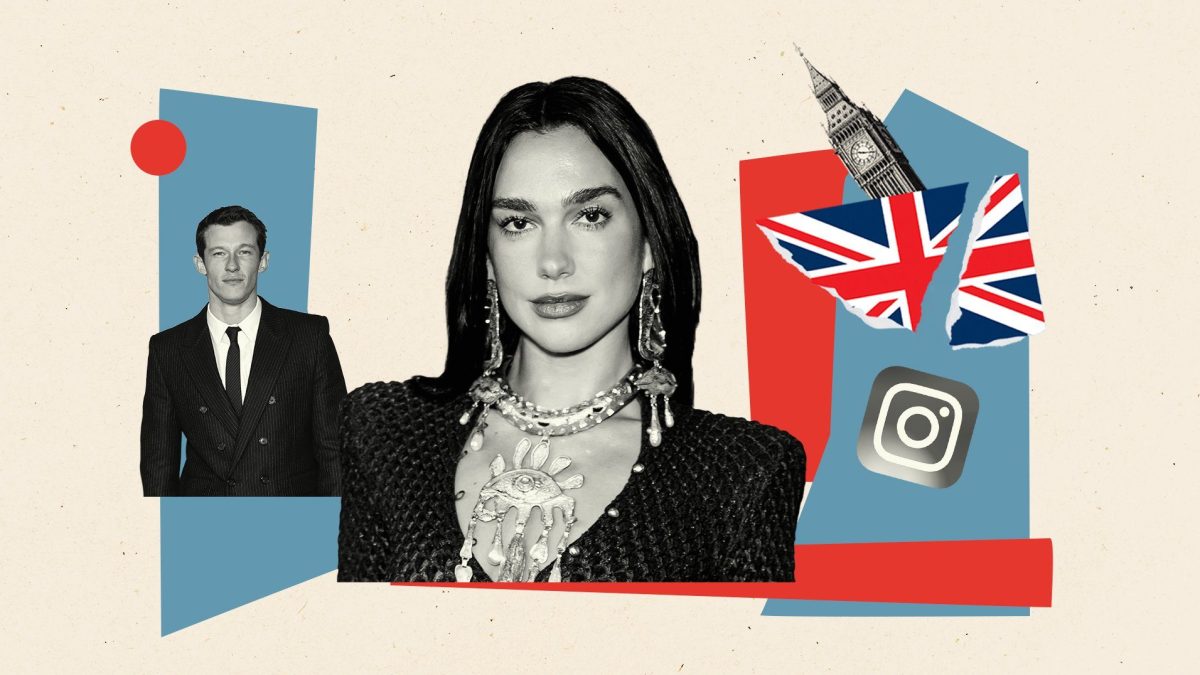
Who broke Britain? Welcome to The i Paper’s opinion series in which experts and writers debate the issues that concern them about modern Britain. • You won’t know James Bevan, but you should know what he did to this country• Boris Johnson wrecked Britain. But this man left even deeper scars• The hardcore socialist whose ruinous idea is why Liz Truss became PM• Martin Lewis: the money-saving expert… who accidentally cost Britons billions• The American woman who ripped the heart out of Cadbury• The shadowy maverick who pulled Labour’s strings… and sunk Starmer• Steven Bartlett: the glorified PR man quietly making Britain worse• The Tory who sold off Britain’s greatest assets – then told us to take back control Dua Lipa has made mediocrity unbearable, and the ordinary feel like failure. In doing so, she has accidentally broken Britain. With ready access to Lipa’s enviable social media feed from the phone in their pocket, young people think they can have it all – if they only they manifest hard enough. They are disappointed time and time again. Lipa has won three Grammy Awards, and was the first female artist to have five songs reach over two billion streams on Spotify. But it’s really the 30-year-old singer’s cultural cachet and influence that sets her apart. She has the biggest Instagram follower count of any British celebrity, even greater than David Beckham – broadcasting life updates, promotions and book recommendations to 88.5 million followers. The danger is this: young people think Lipa’s life is valid point of comparison, rather than an outlier to the human experience. An indication of how Lipa became the face of modern aspiration is that this month the phrase “every time I want something god doubles it and gives it to Dua Lipa” went viral. Spend time with women in their twenties and early thirties and you’ll hear variations of the same sentiment. The majority of those people who follow Lipa’s every move are young. Instagram is overwhelmingly a young person’s platform (in the UK, 25- to 34-year-olds make up 30.5 per cent of its users, and those aged 18-24 19.1 per cent). Nothing epitomises the fairy tale her fans follow in real time than her wedding to classically handsome movie star Callum Turner. It took place at a Sicilian mansion nicknamed “little Versailles”. She wore a feather and crystal-embellished dress which it took 1,155 hours to make. Similarly, Lipa’s honeymoon posts displayed an astute social media strategy – interspersed with scenes of yachts in the harbour and pictures of luxurious hotel interiors, were regular, everyday items. In one she wore a Napoli football shirt, another featured a picture of cherries in a cardboard punnet being handed to her. It makes her feel relatable. For what it’s worth, I like Dua Lipa immensely. I have seen her perform twice – one back in 2017, and then again two years ago, at her Glastonbury debut. She rose to fame via her own ingenuity, by posting covers on YouTube. She always has something insightful to say (her book club, unlike other celebrities’, features books she has actually read, not just what’s trending). She’s principled – take her backing protests against Ivanka Trump’s resort, and vocal advocacy over Palestine. Taylor Swift would never. But I also think that unintentionally, Lipa and others like her have been responsible for a phenomenon whereby young girls think they ought to have it all – and are inevitably disappointed when they don’t get it. Britain’s 15-year-olds are the unhappiest in Europe. The proportion with low life satisfaction increased from 13 per cent to 25 per cent between 2015 and 2022 – one of the steepest rises recorded across the Organisation for Economic Co-operation and Development. It would be facile to claim this is all down to social media. But it is notable that girls – who use social media more intensively than boys and for whom the link between heavy social media use and lower life satisfaction is stronger – have experienced the sharpest declines in wellbeing. A 2024 meta-analysis of nearly 80 different studies found that social comparison on social media was one of the biggest predictors of negative wellbeing. Seminal books likeThe Anxious Generation blame smartphones for the malaise of young people – partly for allowing “constant comparison”. The benchmark used to be the girl next door. Now it’s Zendaya, or Millie Bobby Brown. So when you’re stuck at home on a Saturday night you refresh your Instagram feed – and see the highlight reel of your friends’ lives, then Dua Lipa’s. Where other influencers like Kim Kardashian are nakedly commercial – her Instagram grid is saturated with brands she’s associated with – it doesn’t appear Dua Lipa is trying to sell you anything. She’s funny and often posts photos where she’s wearing a face mask or pulling silly faces. She does short captions devoid of the motivational speeches, lectures or sponsorships that characterise other influencers’ posts. It makes it all feel more of a diary rather than promotional. And so, her life appears accidentally perfect, without being contrived. Nothing is worse for a young woman already feeling insecure. Perhaps you can’t fault Dua Lipa for having a nice life and for sharing that joy with others. But there’s a difference between celebrating extraordinary success, and suggesting others can achieve it simply by believing hard enough. Lipa is the biggest British household name to popularise manifesting – that is using visualisations and affirmations to make something you want happen. Psychologists call this “magical thinking”. Lipa routinely talks about how she manifested her life – when I watched her perform at Glastonbury in 2024, she talked between songs about how she had manifested performing there. People online speak about how she manifested her husband with her 2024 song “Training Season” where she sang of how she was done with unready suitors – she said it was inspired by “the power of manifestation”. That year a Time magazine headline explained the secret to her seemingly perfect life: “Dua Lipa Manifested All of This”. Manifesting might sound like harmless woo-woo, but what if it’s more nefarious? Research shows a link between a belief in manifesting and being more likely to make risky financial decisions and be declared bankrupt. They are more likely to believe it’s possible to “get rich quick” – was there ever a greater metaphor for how the youth of today are deluded? Just last week Allure published a piece about coaches charging clients who believe they can manifest a slimmer jaw. So many manifesters listen to related “subliminals” – songs containing affirmations – that the track “Face Like a Model” has over 1.2 million streams on Spotify. Above all, psychologists point to the self-blame which results from believing in manifesting. It is an added burden to think you haven’t achieved Dua Lipa’s success not because you’re poor or unlucky, but because you didn’t believe hard enough. Twenty years ago Dua Lipa would have collided with young women’s worlds rarely, appearing only on magazine covers and red carpets. But smartphones and social media have collapsed the distance between extraordinary and the everyday. Now Dua Lipa is in your pocket, between photos of your schoolfriend’s wedding, and your cousin’s new puppy. Lipa didn’t break Britain by being successful – rather by making a successful life look ordinary. It made an ordinary life look like failure.
Dua Lipa: the ‘magical thinker’ unwittingly making Britain’s young women miserable
Full Article
Original Source
Read the full article at Inews →KhanList aggregates and links to publicly available news content. We do not host full articles from third-party sources. Always verify important information with original sources.