
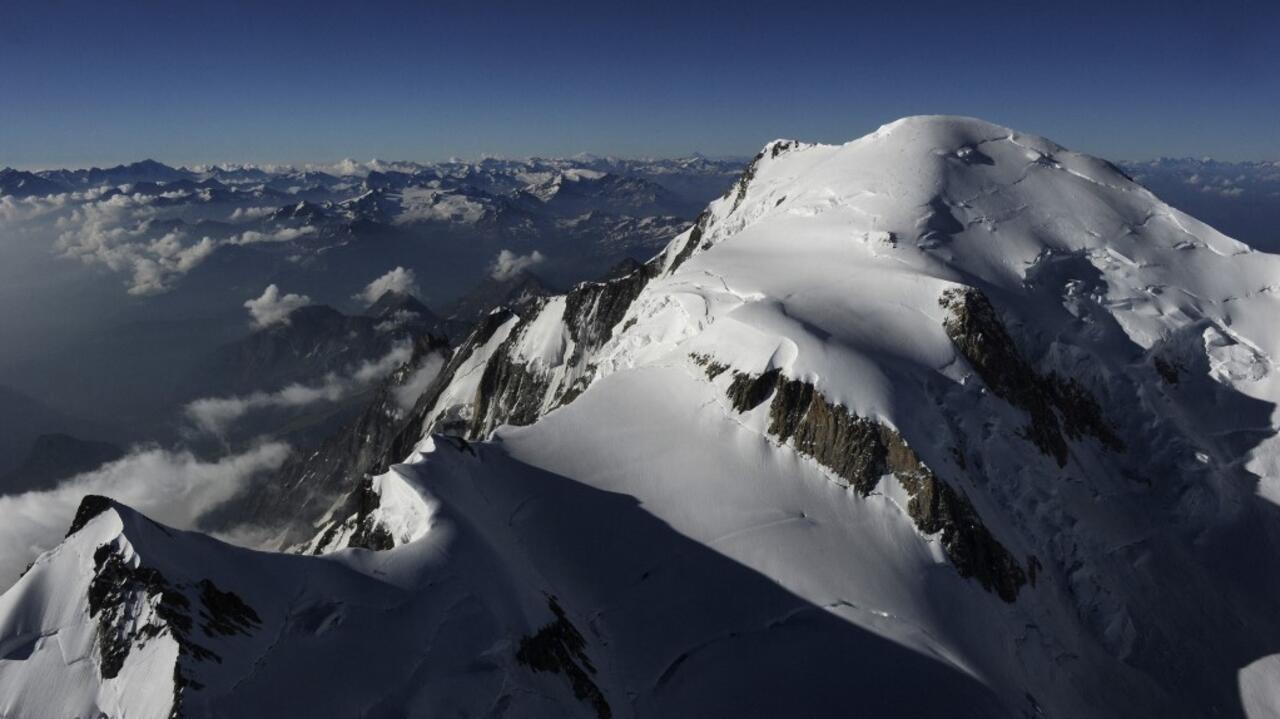
Rivers around the world are running unusually dry as freshwater reserves continue to decline, leaving less water stored away to help countries through drought, the World Meteorological Organisation (WMO) has warned. Glaciers and groundwater are also shrinking, while in Switzerland the retreat of Alpine ice is already forcing changes to infrastructure that supplies hydroelectric power. Issued on: 17/09/2026 - 14:44 3 min Reading time River flows in 2025 were among the driest recorded worldwide in more than 30 years, the WMO found in its annual State of Global Water Resources report, published on Thursday. Freshwater stored in groundwater, lakes, rivers, soil, vegetation, ice and snow has also been declining since the middle of the last decade. These reserves act as a buffer, helping prevent a drought or dry season from turning directly into a water crisis. "We are depleting that savings account. We are spending our reserves," WMO Secretary-General Celeste Saulo said. Outside the norms Glaciers lost mass in every major glacial region for a fourth consecutive year in 2025. Between 2023 and 2025, they lost an estimated 1,400 gigatonnes of water – about a third of annual freshwater withdrawals worldwide. Groundwater showed a similar pattern. "Nearly two-thirds of monitored wells worldwide showed conditions outside the historical norm in 2025," Saulo said. Rivers are also departing from their usual patterns. For a seventh consecutive year, river basins experiencing normal conditions were in a minority in 2025. Around 36 percent of global river basin area recorded normal flows, an equal share was below normal and 21 percent was above normal. These changes are happening alongside an increase in water-related disasters, Saulo warned. Asia and Africa together experienced at least half of all recorded extreme water events over the past five years and more than 80 percent of reported deaths linked to them, the report found. How 100 days of record ocean heat is reshaping life in and around the seas Africa's water extremes The Horn of Africa experienced one of its driest years in 2025, with many people displaced in Somalia, while Central Africa recorded increased water availability. "There were floods in the Democratic Republic of the Congo with more than 100 victims, for example," said Wayne Jenkinson, director of hydrology at the WMO. "The report shows that Central Africa is an area that generally saw an increase in water availability in 2025." Given water crosses national borders, river basins often depend on what happens upstream in other countries. El Nino, a natural warming pattern in the Pacific Ocean that affects weather worldwide, is strengthening, which will also increase the risk of drought in some areas and flooding in others, Saulo said. As catches dwindle, Congo River fishermen turn to plastic waste Retreating glaciers In Switzerland, RFI visited Emosson dam and Batiaz power station in the Swiss canton of Valais, where glacier retreat is already affecting infrastructure. Emosson is Switzerland's second-largest reservoir, holding 225 million cubic metres of water collected from the Mont Blanc massif. Water travels about 20 kilometres and drops 1,500 metres to Batiaz power station in Martigny, where it generates electricity. "We're eating into our capital because we're expecting water inflows to fall by 10 to 15 percent in the long term," site director Olivier Bernard told RFI. Most of Emosson's water comes from rain and snow, although snowfall is also declining. Beneath the Argentière glacier, retreating ice means existing shafts are no longer collecting water. "Today, under the Argentière glacier, we have a lot of tunnels and shafts. But as the glacier retreats, these shafts no longer collect water," Bernard said. "We're going to have to adapt all of this and perhaps build new shafts to follow the retreat of the glaciers." Reservoir filling levels across Switzerland have reached a historic low. For the first time, solar panels produced more electricity in the country this summer than hydroelectric power stations. (with newswires)
Dry rivers and shrinking glaciers deepen global freshwater decline
Full Article
Original Source
Read the full article at Rfi →KhanList aggregates and links to publicly available news content. We do not host full articles from third-party sources. Always verify important information with original sources.