
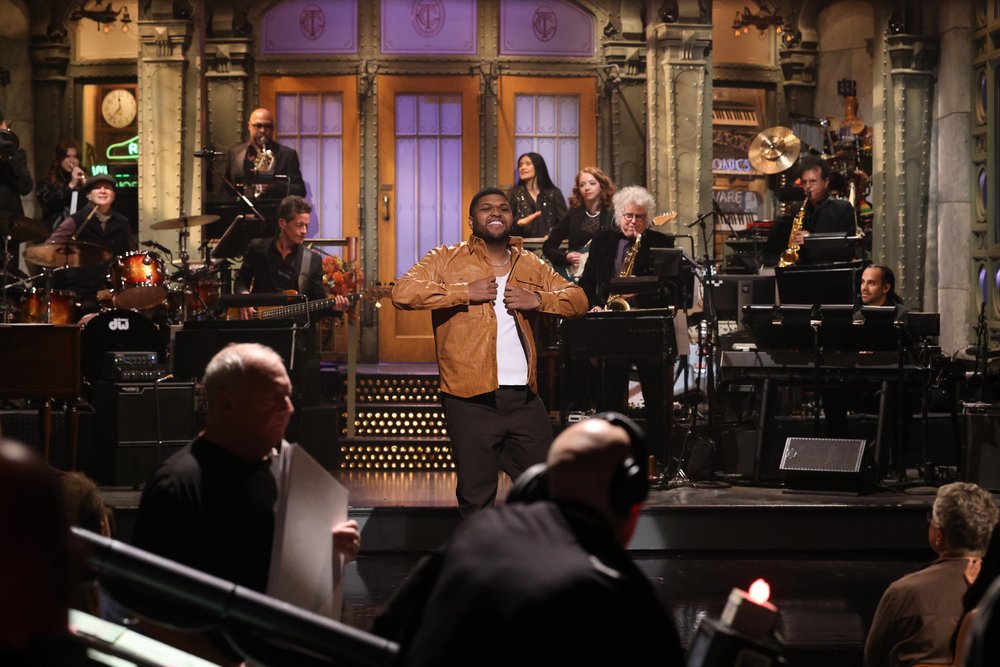
Editors note: Adam Goodman is the founder and CEO of Invisible Narratives, a creator-first entertainment studio focused on developing and scaling multi-platform franchises. He previously served as President of Paramount Pictures’ Film Group and President of Production at DreamWorks SKG. *** On Saturday, Druski became the first host in Saturday Night Live history to have built his career as a social media creator. On December 1, his semi-scripted comedy Collect & Praise premieres on Netflix. A decade ago, an Instagram sketch comedian headlining one of American comedy’s most storied institutions would have sounded like a punchline. Today, it’s a programming decision. Watch on Deadline But the bigger story isn’t that Hollywood is embracing creators. It’s that creators are fundamentally changing how entertainment gets made. Adam Goodman Invisible Narratives The entertainment industry has repeatedly reinvented itself over the course of my career, from working for John Hughes while in high school in the late ’80s to my time overseeing the Motion Picture Group at Paramount Pictures and DreamWorks. From VHS to DVD to streaming, each transformation changed how content is distributed and monetized. But the fundamental process of developing content has remained largely the same. We develop an idea, hire writers and directors, assemble a cast, finance production, and spend millions marketing the finished product. Only then do we really discover whether an audience wants it. We test and research, but by the time meaningful feedback arrives, much of the money has already been spent. It’s an extraordinarily expensive way to find out whether something works. When we released Paranormal Activity, we tried something different. We let audiences demand the film by city before expanding its release. Rather than simply telling audiences what to watch, we let them tell us what they wanted. Creators increasingly operate with that kind of audience feedback built into everything they do. They start with an audience and build programming around it. They introduce characters, test formats, and learn in days what resonates, what gets shared, and what brings people back — all with a sliver of a studio’s infrastructure. That doesn’t mean every creator can make a great movie, or that 30 million followers translates into 30 million ticket buyers. They don’t. But creators have what Hollywood has historically spent fortunes trying to acquire: a direct, ongoing relationship with an audience backed by insights and data. That audience is now watching creator content on the household’s primary screen, not just iPads and cell phones. According to Nielsen, YouTube accounted for a record 15.8% of U.S. television viewing in August, more than double Netflix’s share. Creators are extraordinarily good at building audiences. But Hollywood has spent a century learning to build franchises. A successful channel can reach hundreds of millions of people, but its value can depend on the creator’s ability to keep producing and satisfying algorithms they don’t control. A franchise is intellectual property that can outlive its original format, its platform, and even its creator. It’s a world audiences return to through film, television, games, consumer products, and experiences that haven’t been invented yet. When we launched Transformers, we weren’t just making a movie about robots. We were reintroducing a world to a generation that had never played with the toys, and building something that could keep generating stories, products and audiences for decades. That’s the discipline Hollywood brings. What the creator economy has introduced is the ability to spot signals of franchise potential long before anyone commits hundreds of millions of dollars. Five Nights at Freddy’s proves the point. The independent video game franchise spent nearly a decade building a fan community through sequels, fan theories and YouTube playthroughs before reaching theaters. By the time the movie opened, the audience wasn’t a hope. It was a fact, and the film became one of the biggest horror hits of its year. The Amazing Digital Circus offers another example: an animated YouTube series that built a global fan base entirely outside of the traditional studio system. ‘Five Nights at Freddy’s’ Universal Pictures Creators have built something extraordinarily valuable: audiences with a genuine emotional investment in their success. Their fans aren’t just watching. They’re rooting for them. But building an audience isn’t the same as building intellectual property. Many creators remain caught on a treadmill of producing the next video, chasing trends, and figuring out what to post next week. They have loyal followers, but not necessarily repeatable formats, enduring characters, or a programming strategy. The opportunity is to turn that audience loyalty into intellectual property they can own, expand, and build into lasting franchises. That changes the relationship between Hollywood and creators. Creators don’t need Hollywood to become famous; many already have audiences larger than television networks. What they need, if they want to build something that outlasts the next upload, is a way to turn that audience relationship into intellectual property they can own, develop and expand. Hollywood can provide the creative expertise, financing, production infrastructure, distribution and franchise-building discipline to make that happen. Creators are extraordinarily good at building audiences. But Hollywood has spent a century learning to build franchises. But Hollywood has to learn from creators, too. Creators have mastered continuous programming, community engagement, rapid experimentation and immediate feedback. The studios that define the next decade won’t simply adopt the creator economy’s talent. They’ll adopt its instincts while bringing the creative ambition and franchise-building expertise that Hollywood has spent a century developing. The first chapter of the creator economy was about individuals building audiences. The second was about monetizing those audiences through advertising, sponsorships, and commerce. The next chapter will be about ownership: turning channels into programming brands and original characters and story worlds into enduring franchises. Great stories and compelling characters have always been the foundation of this industry, and Hollywood has never had a monopoly on either. A new generation of storytellers has direct access to global audiences without waiting for Hollywood’s permission. That’s not a threat. It’s the opportunity of the decade. The next generation of franchises won’t all come from Hollywood. But Hollywood can help make them last for generations.
Druski’s ‘SNL’ Gig Marks The Start Of The Creator Economy’s Franchise Era – Guest Column
Full Article
Original Source
Read the full article at Deadline →KhanList aggregates and links to publicly available news content. We do not host full articles from third-party sources. Always verify important information with original sources.