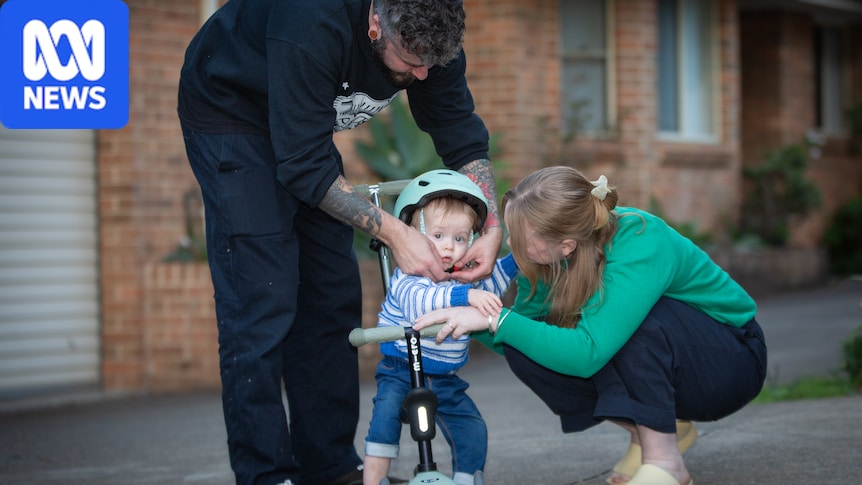
Women with breast cancer or endometriosis will have free and continued access to a lifesaving drug, after a pharmaceutical giant bowed to widespread pressure and committed to supplying the medication in Australia indefinitely.Before the eleventh-hour backdown, the ABC spoke to several women who were contemplating removing their ovaries because they were so fearful of the prospect of going without the drug.As revealed by the ABC last month, AstraZeneca, the maker of lifesaving breast cancer and endometriosis medication goserelin 3.6mg implant, said it would pull the drug from both the Pharmaceutical Benefits Scheme (PBS) and the private market in November.AstraZeneca said the Australian price for the product, sold as Zoladex, was too low, "making it unsustainable to supply the medicine on the PBS".The move triggered criticism from advocates, patients and the broader public and a Change.org petition calling for urgent action gathered more than 42,000 signatures in a matter of weeks.AstraZeneca had initially promised to set up a six-month access program to provide the medication for free to those without alternative treatments.However, it has since announced it would supply the medication indefinitely to those whose doctors determine there are no other suitable treatments available."This includes patients who are currently prescribed and patients who may need to be prescribed the implant as a treatment option after 1 November 2026," an AstraZeneca spokesperson said.Pharmaceutical commentator Paul Cross said the nature of pricing negotiations meant it was likely more financially advantageous for AstraZeneca to supply Zoladex in Australia for free than create a low pricing precedent for other countries.He said international reference pricing — where governments can use lower prices in other countries as a negotiating benchmark — was probably a factor behind the company's decision to remove Zoladex from the PBS."It's quite possible that because it's been provided for free it's not included in the benchmark and that's one of the workarounds," he said.Mr Cross, who worked as an advisor on the PBS for the Howard government and used to be a pharmaceutical executive, said Australia could become increasingly vulnerable to decisions made to keep prices high overseas. That could include drugs being withdrawn from sale in Australia."International reference pricing has been a feature of the global pharmaceutical industry for many, many years," he said."Because you've got two behemoths now in the US and China being far more assertive on pricing, I think it's fair for Australian patients who are already accessing medicines to contemplate whether they could be the next group to be impacted."'If I don't have Zoladex … game over'The medication, delivered monthly as a pellet injected under the skin, stops a patient's ovaries from producing oestrogen, a hormone which promotes the growth of many forms of breast cancer and can fuel endometriosis.Katie Elson says that because her type of cancer was hormonally fuelled, stopping Zoladex could cause it to grow out of control and claim her life. (Supplied)Victorian public servant Katie Elson has had breast cancer twice and said because her type of cancer was hormonally fuelled, stopping Zoladex could cause it to grow out of control and claim her life.At just 31, she said the uncertainty surrounding the drug's availability meant she had considered removing her ovaries."It's either that or die," she said."If I don't have Zoladex, my cancer will spread, I'll produce oestrogen again and then game over."Ms Elson said despite AstraZeneca's latest decision, she remained fearful about accessing the drug."It does feel like they could still pull the carpet from under us at any time," she said."I will definitely still consider a hysterectomy, which is sad, but how can you trust a drug company that says one thing and then switches overnight?"Other women, like Ella Somerville Glover from Sydney, have also considered surgical options.The 35-year-old research scientist was diagnosed with breast cancer in 2020 and has been on Zoladex since then — taking a break to have her son, who is now just over one year old."Anything I can do, no matter the side effects, I'm happy to do it if it gives me a better chance," she said.Cancer treatment was a long, bumpy road for Ms Glover that involved surgery, chemotherapy and radiation, before she started hormone therapy.Ella Somerville Glover, 35, has been on Zoladex for about six years — taking a break to have her son, Pippin. (ABC News: Mary Lloyd)She said finding out she might not be able to access the drug she was relying on to keep her cancer-free had created anxiety for herself and her family.Before AstraZeneca announced the full access scheme, she spoke to her oncologist about surgically removing her ovaries.It was a choice she was uncomfortable with: she wanted another child, but also wanted to ensure she watched her son grow up."Your focus is so on the baby that you've got and making sure that you're here for them," she said.An estimated 8,600 patients were dispensed Zoladex in the first three months of the year, according to health department figures.The drug is also available as a 10.8mg dose administered every 12 weeks, but that formulation is currently only approved and on the PBS in Australia for prostate cancer patients.That means any woman prescribed the drug to treat breast cancer would have to pay about $700 for each dose privately.Many of the women the ABC spoke to said they could not afford that."It feels like to the people who are reliant on Zoladex, like a big middle finger," Ms Elson said.Rachelle Panitz, CEO of advocacy group SoBrave, said uncertainty about Zoladex had added to an already stressful time for many women.She said there were still aspects of the access program they wanted to clarify.AstraZenca announced it would supply Zoladex indefinitely to those whose doctors determine there are no other suitable treatments available. (ABC News: Chris Taylor)"We just need some reassurance about whether that is going to be something long-term or if we can actually rely on that," she said.The Pharmaceutical Benefits Advisory Committee (PBAC), which advises the government about what goes on the PBS, will meet today to discuss listing an alternative medication, known as triptorelin, which also suppresses hormones like oestrogen and testosterone.'They should realise the people this impacts'The federal government has recently been in several protracted, high-profile stand-offs with major pharmaceutical companies over the way the PBS works.In April, Eli Lilly withdrew diabetes drug Mounjaro from the PBS listing process, arguing the price Australia was willing to pay was too low.Earlier this month, a pricing dispute with two major drug manufacturers who make multiple sclerosis medications sparked fears people with MS would have to pay tens of thousands of dollars to access life-changing treatments. The government later confirmed the drugs would remain on the PBS.When drugs are placed on the PBS, patients can receive their medications at a small portion of the cost: currently $25, or $7.70 for concession card holders.US pharmaceutical companies have long been lobbying against the scheme, arguing its pricing processes undervalue innovation and threaten billions of dollars in lost sales.A 2024 review of the PBS — known as the Health Technology Assessment (HTA) review made several recommendations aimed at streamlining processes and expediting the time it takes to list medicines on the scheme.An advisory group is guiding the government's response to that review, but the pharmaceutical industry has argued there is a need for more urgent action."We know patients want more certainty and faster access to cutting-edge medicine and treatments," Health Minister Mark Butler said."That's why our government is working through the recommendations of the HTA review, so Australians can get faster access to the best medicines and therapies, at a cost that patients and the community can afford."Ella Somerville Glover, with her partner Sam and son Pippin. (ABC News: Mary Lloyd)Ms Glover said she thought it was strange that a company would decide to withdraw a drug for "commercial reasons" then announce they would provide it for free."I'm not a commercial decision," she said."I'm a person. I have a family, I have friends, I have people that love me."Ms Elson urged drug companies and governments to remember vulnerable people were impacted by their decisions."They should realise the people this impacts — and it's not just a board full of suits," she said."It's people like myself who have used Zoladex for years to maintain their life or preserve their fertility going through the worst time of their lives."
Drug company backdown sees lifesaving cancer treatment offered for free
Full Article
Original Source
Read the full article at Abc →KhanList aggregates and links to publicly available news content. We do not host full articles from third-party sources. Always verify important information with original sources.