
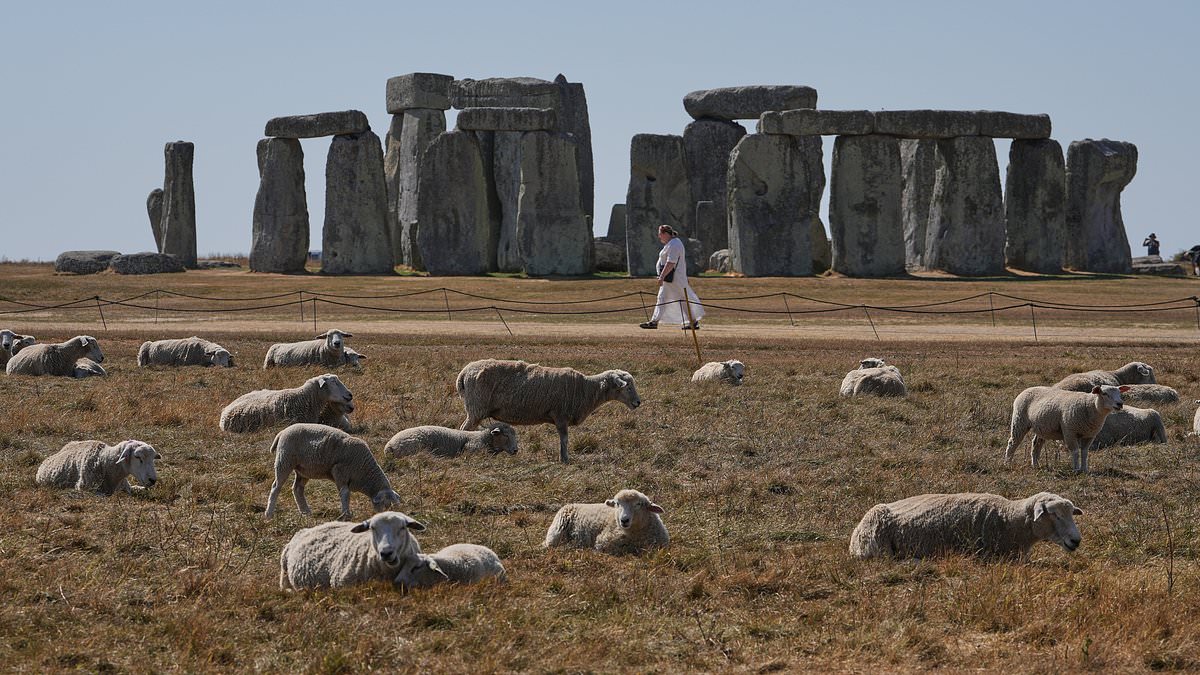
Britain has been told to brace for floods after weeks of extreme heat were forecast to end abruptly with heavy rain.It comes as Wessex Water became the latest authority to announce a hosepipe ban, its first since the notorious 1976 heatwave.Some areas will see their 'first meaningful rain for a long time', the Met Office said after weeks of dry weather plunged swathes of the country into drought.Last night parts of London, Kent, Essex and Sussex saw light or patchy rain after all being declared in drought at the end of last month.England and Wales had their driest July ever recorded while southern England had its driest month ever, according to records going back almost 200 years.But a rainy front will begin to sweep down from Northern Ireland and Scotland towards southern England and Wales from today to begin a wetter week with cooler conditions, the Met Office said.Temperatures are likely to fall to levels closer to average for the time of year and heavy showers expected on Thursday could mean surface flooding in particularly wet areas, the weather authority added.Liz Stephens, professor in climate risks and resilience at the University of Reading, said flooding was still a risk even in drought. Sheep grazed on parched grass last week near Stonehenge, Wiltshire. Wessex Water has announced a hosepipe ban covering the area as Britain braced for surface flooding with the return of rainfall this week A couple walked through scorched field in Bath, also covered by the Wessex Water order, as experts said the dry ground was vulnerable to flooding as rain returned 'Floods can still occur during drought conditions and surface water flooding can even become more likely as baked soils are unable to soak up rainwater as quickly,' she said.And Mike Silverstone, the Met Office's deputy chief forecaster, said Thursday could bring surface water flooding where showers became intense.'Thursday will be a day of heavy showers across much of the UK, while some of these will be heavy, some areas will miss them altogether,' he said.'As some of these showers could be intense, there is a chance of some surface water flooding as the rain falls on very dry and hard ground.'But Professor Stephens said even heavy rainfall this week may not be enough to haul some areas out of drought.She said it may take many weeks of rain for plants to recover and for rivers and reservoirs to return to normal levels.'Here in the South East, we're still a month's worth of rain below what we would normally expect by this point in the year, despite the heavy rainfall in January and February,' she said.'As a result, while any rain which falls this week may help reduce the immediate wildfire risk, it will take many weeks of sustained rainfall for vegetation to recover and our rivers and reservoirs to return to normal.'This means that we should expect hosepipe bans to be in place for some time.' Wessex Water announced a hosepipe ban for its 1.4million customers across Bath, Somerset, Dorset and Wiltshire, which it said would come into force from midnight on Tuesday. It is the company's first such ban in 50 years, stretching back to the infamous scorching summer of 1976.The order means 27million residents in England will now be living under a hosepipe ban as Britain's fifth heatwave of the summer brought the year's hottest day, when temperatures reached 38.1C at London's Kew Gardens on Thursday.Ruth Jefferson, Wessex Water's chief executive, said the 'prolonged and extreme dry weather' meant water demand in the region was almost a third higher than average for the time of year.'While we're not running out of water for essential use, our challenge has been moving water through the network quickly enough to meet these record levels of demand,' Ms Jefferson said.'This also has an impact on our underground storage reservoirs, which normally replenish with treated water quickly.' A home is seen completely gutted after a wildfire in Stourbridge on Thursday as around 36 blazes burned over the weekendNationally five reservoirs of the 31 across England and Wales are at exceptionally low levels, government sources warned, while seven more are notably low.The dry weather has also seen the country ravaged by wildfires, including the blaze in Stourbridge, West Midlands on Thursday which left 37 homes either destroyed or damaged.Around 36 wildfires burned over the weekend, 11 of which were declared major incidents.
Drought-hit Britain braces for floods after weeks of extreme heat as Wessex Water announces first hosepipe ban since summer of 1976
Full Article
Original Source
Read the full article at Dailymail →KhanList aggregates and links to publicly available news content. We do not host full articles from third-party sources. Always verify important information with original sources.