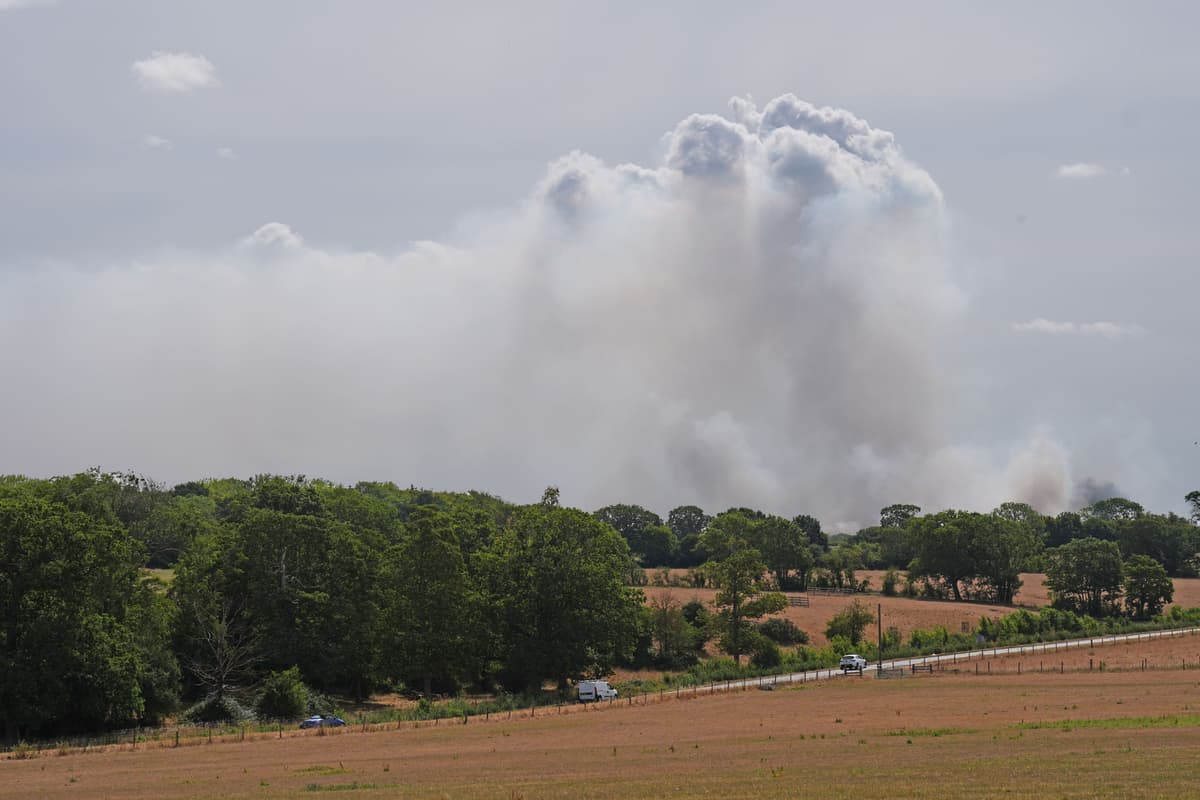
The UK continues to struggle with the impacts of extreme heat and drought, with wildfires blazing and warnings dry conditions may linger until the autumn.The country has endured its fourth heatwave of the summer, with temperatures topping 35C, as health authorities warned the UK is on track this year for the highest number of deaths caused by such hot spells since current figures began.Half of England is now officially in drought, and in the latest wildfire, properties were evacuated as firefighters battled a large heathland blaze on the Suffolk coast, at Dunwich Heath.Suffolk Fire and Rescue service said Sizewell B nuclear power station was not at risk from the fire, due to the distance from the fire and the direction it was travelling, but said it was a “live and dynamic situation”.The blaze broke out amid soaring temperatures, which reached 35.2C in Writtle, Essex, on Wednesday, marking the seventh day of 2026 which recorded a high of 35C or more.The UK has seen repeated heatwaves in 2026 (PA Graphics)PA GraphicsBefore this year, the record was five days in which temperatures were at or above 35C, set in 1976 and matched in 2020.Temperature records have tumbled throughout the summer, with heatwaves in May and June both recording new highs for the time of year.The UK is increasingly suffering from the impacts on lives, livelihoods and landscapes of extreme weather such as droughts and severe heatwaves fuelled by human-caused climate change, mostly as a result of burning fossil fuels.The UK Health Security Agency (UKHSA) said it “is likely that 2026 could see the highest number of heat-associated deaths on record”, surpassing the number seen in 2022 when the UKHSA started studying them.There have been almost double the number of excess deaths caused by heatwaves so far this year than all of last summer, the data shows.Read MoreThe new report estimates there were 2,877 heat-associated deaths during the heatwaves in May and June this year, with an estimated 753 deaths were associated with the May heatwave from May 24-27, and a further 2,124 with the June heatwave between June 21 and 28.An earlier, separate analysis by Imperial College London, the Met Office, and the London School of Hygiene and Tropical Medicine projected 2,700 excess deaths for the two periods – and warned that two fifths of those deaths were due to the extra heat caused by climate change.Half of England, as well as around half of Wales, is now officially in drought, despite a very wet winter, as an extremely dry July compounded a dry spring, and the successive heatwaves have put pressure on water resources.Much of England and Wales are now officially in drought (PA Graphics)PA GraphicsAnd while temperatures are cooling off into the weekend, and forecasters are expecting some unsettled weather and rainfall next week, it is not likely to deliver the persistent, heavy rain that is needed to make up for the current shortfall.With the Met Office’s outlook suggesting August could be hotter and drier than usual, and warmer, drier conditions could continue beyond next month, it could be autumn until there is the wet weather needed to recharge supplies.Some 23 million customers are under hosepipe bans, just under 1,400 businesses have had to stop abstracting water, and the dry, hot conditions have hit river flows and wildlife, as well as affecting crops and livestock.The harvest has come early, with some crops such as cereals experiencing poorer yields, livestock farmers are using winter feed for livestock as a result of poor grass growth, and even those with on-farm reservoirs are likely to run out of supply during August in areas in drought.Successive heatwaves have hit parts of the UK (Yui Mok/PA)PA WireAnd there are warnings that the hard-baked earth will cause issues with harvesting crops such as potatoes and carrots.Farmers are calling for efforts to make agriculture more resilient to climate change, including making it easier to build on-farm reservoirs and flexible abstraction licences so farmers can take and store water when it rains.In response to the heatwaves and wildfires hitting much of Europe, the UK and Spain have issued a joint statement warning that climate change is “a national security emergency” threatening people’s way of life.Following a meeting between Foreign Secretary Ed Miliband and Spain’s foreign minister José Manuel Albares Bueno, the countries put out a joint statement which said addressing the climate crisis was an urgent priority, to tackle the cost of living, protect health and wellbeing, and to ensure European economic and energy security.“At a time when Europe is facing record heatwaves and terrible wildfires as a consequence of the climate crisis, the two Ministers agreed that this summer’s wildfires demonstrated that climate change was now a national security emergency facing Europe and threatening our way of life,” the statement said.
Drought, heatwaves, wildfires, deaths: the toll of UK’s extreme summer
Full Article
Original Source
Read the full article at Standard →KhanList aggregates and links to publicly available news content. We do not host full articles from third-party sources. Always verify important information with original sources.