
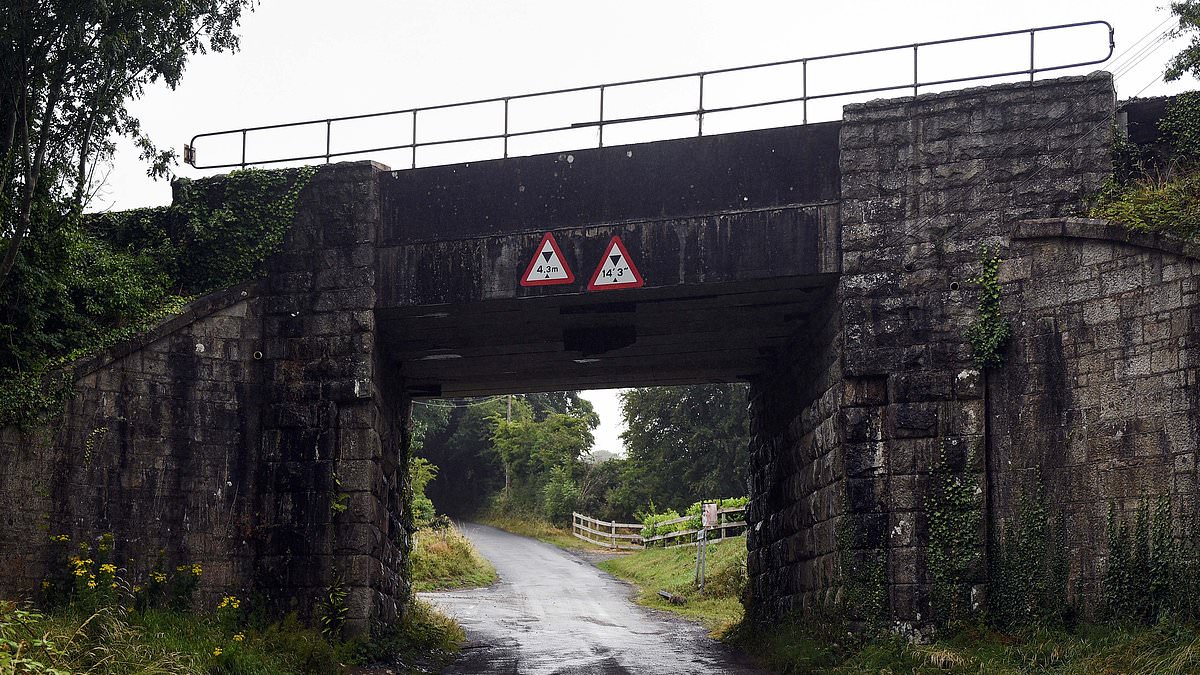
Published: 11:35 EST, 15 November 2026 | Updated: 11:47 EST, 15 November 2026 Drivers smash into railway bridges every five hours on average in Britain - costing £13million in repairs and more than 180,000 minutes of delays.Stats produced by Network Rail this week revealed that some 1,706 vehicles collided with a bridge between 2025 and 2026 as it urged drivers to 'know the height of their vehicle'. The body used new technology to identify 'bridge strikes' when and where they happen.It found that a bridge on Watling Street, Leicestershire, was the most struck of any this year after being hit 26 times - the equivalent of once every two weeks. Bridges on Stuntey Road in Ely and Stonea Road, Cambridgeshire, were meanwhile struck 24 and 23 times respectively. It was revealed that a bridge in Britain is hit by a vehicle every five hours, causing a staggering 183,319 minutes of delays for passengers and around £13.25million in delays. But years gone-by have produced even more concerning figures. Between 2021 and 2022, 1,864 vehicles clipped or properly struck railway bridges. Meanwhile, 2024-25 saw 1,666 such incidents. Network Rail has vowed to work with local authorities to fit new height-warning signs and road markings to alert drivers to dangers. Drivers smash into railway bridges every five hours on average in Britain - costing £13million in repairs and more than 180,000 minutes of delaysThe company has also created 'bridge-strike champions', who will visit road haulage businesses to make them aware about the country's most challenging bridges. Martin Frobisher, Network Rail's Group Safety and Engineering Director, said: 'A bridge strike is never a minor incident. It can put drivers, passengers and railway staff at risk, damage vital infrastructure and cause significant disruption while our engineers make sure the railway is safe.'During Road Safety Week, we are asking drivers and operators to take simple steps before every journey: know the height of the vehicle, check the route and pay close attention to bridge restrictions. 'We're also working closely with industry partners, local authorities and haulage businesses, using technology and physical prevention measures to help stop strikes happening and respond more quickly when they do.'Senior Structures Advisor at National Highways, Mohammad Raza, added: 'Bridge strikes can cause substantial damage, lengthy delays on our roads and even injuries so we are working with various partners to help prevent these incidents.'We continue to support developer Mountpark on their scheme to lower the A5 beneath the Hinckley bridge and reduce the risk of further strikes at this location. 'But it is important to remind drivers that they must plan their journeys, secure loads and know their vehicle height - as well as taking account of any height restrictions on their route.'
Drivers smash into railway bridges every five hours costing £13m in repairs and 183,319 mins of train delays
Full Article
Original Source
Read the full article at Dailymail →KhanList aggregates and links to publicly available news content. We do not host full articles from third-party sources. Always verify important information with original sources.