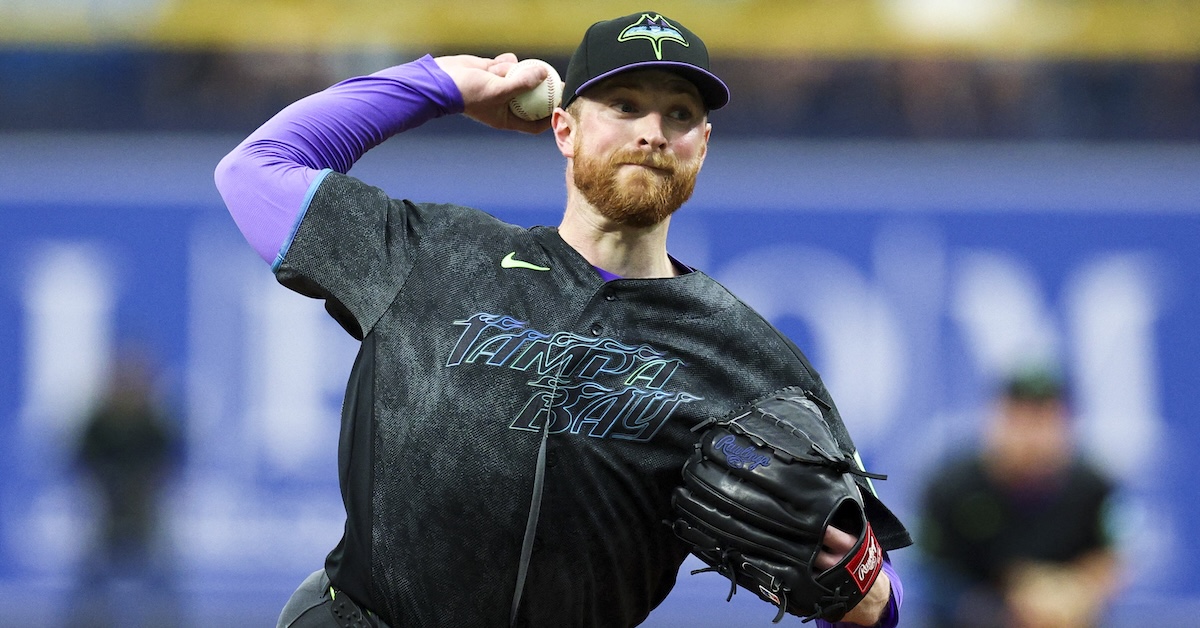
Nathan Ray Seebeck-Imagn Images I generally find discussions of the most underrated player in baseball to be tedious. Whose rating are we using? Relative to what? Does being the most underrated player in the game two years in a row imply something uncomfortable about our own ability to update our priors? Heck, does repeatedly earning the mantel of “most underrated” render you ineligible for the title? How underrated can José Ramírez be when every single FanGraphs reader knows how underrated he is? Anyway, today’s article is a case of “do what I say, not what I do.” Because I’ll just say it: Drew Rasmussen is the most underrated player in baseball. I know, I know! That whole intro paragraph tells you how silly this formulation is. But I was moved to look more closely at Rasmussen for two reasons. First, there was this tweet from Tom Tango: Since 2021, among pitchers with 500+ IP, there are 10 pitchers in the top 15 in each of ERA, FIP and Statcast ERA (xERA) From highest to lowest career WAR: KershawSaleColeWheelerFriedSkubalBurnesWoodruffOhtaniRasmussen Sale + Ohtani are only ones in top 5 in all 3 pic.twitter.com/jF7ZVUWmDs — Tangotiger ? (@tangotiger) August 9, 2026 Not a list I expected to find him on. Second, this interview he did with our own David Laurila fascinated me. Rasmussen doesn’t look much like he did when the Brewers traded him to the Rays for Willy Adames back in 2021. This guy has remade his entire arsenal and approach, and he’s become one of the best pitchers in baseball by doing so. As Rasmussen detailed in his conversation with Laurila, he and Tampa Bay worked together to add a sinker to his arsenal to broaden his options against right-handed hitters. Bo Bichette was the proximal cause; his swing was geared to smash the rest of Rasmussen’s options. But more broadly speaking, Rasmussen wanted to branch out, and as he pointed out, diversity in fastball options is a positive characteristic overall. Rasmussen doesn’t fit the profile of a sinkerballer. He throws from an extremely high arm angle, perhaps a high-three-quarters slot; it’s not one of the very steepest angles in the game, but it’s in the 91st percentile. Pitchers who throw over the top in that fashion mostly work north and south, for obvious reasons. It’s not a perfect correlation, but it’s logical: If you want to throw something with pure backspin, an easy way to get that done is to have your arm as close to vertical at release as possible. Likewise, if you’re trying to get on top of a breaking ball to make it spin straight down, it’s easier to do so when your arm itself is swinging at a steep angle. That’s how Rasmussen worked when he joined the Rays. A backspinning four-seamer, a gyro slider/cutter thing, and an infrequently used curveball were his best pitches. The Rays started working more pitches with glove-side break into his mix right away; after a year in Tampa Bay, he was throwing sweepers quite frequently to righties to broaden the area of the plate they had to cover. But that was only part of the puzzle, because his sweeper just acted like an extension of his cutter. As our Paired Pitches tool demonstrates, he was basically working away with both of those pitches and pairing that with a high fastball: You Aren't a FanGraphs Member It looks like you aren't yet a FanGraphs Member (or aren't logged in). We aren't mad, just disappointed. We get it. You want to read this article. But before we let you get back to it, we'd like to point out a few of the good reasons why you should become a Member. 1. Ad Free viewing! We won't bug you with this ad, or any other. 2. Unlimited articles! Non-Members only get to read 10 free articles a month. Members never get cut off. 3. Dark mode and Classic mode! 4. Custom player page dashboards! Choose the player cards you want, in the order you want them. 5. One-click data exports! Export our projections and leaderboards for your personal projects. 6. Remove the photos on the home page! (Honestly, this doesn't sound so great to us, but some people wanted it, and we like to give our Members what they want.) 7. Even more Steamer projections! We have handedness, percentile, and context neutral projections available for Members only. 8. Get FanGraphs Walk-Off, a customized year end review! Find out exactly how you used FanGraphs this year, and how that compares to other Members. Don't be a victim of FOMO. 9. A weekly mailbag column, exclusively for Members. 10. Help support FanGraphs and our entire staff! Our Members provide us with critical resources to improve the site and deliver new features! We hope you'll consider a Membership today, for yourself or as a gift! And we realize this has been an awfully long sales pitch, so we've also removed all the other ads in this article. We didn't want to overdo it. The frustration he voiced over facing Bichette makes a ton of sense in this context; he was basically just asking righties to lean out over the plate and try to hit the spinning stuff. He almost never ventured inside. That’s the kind of approach that all-fields line drive hitters like Bichette can attack; without the threat of an inside pitch, the matchup was a bad one for Rasmussen. “Just throw a four-seamer inside” isn’t a great solution, either; his version of the pitch has a lot of natural cut, which limits his ability to locate it inside. The sinker changed things completely, though. You can already see a vestigial version of it in that 2022 chart. He threw 85 of them to righties (against 420 four-seamers), and that was his first foray into pitches that move towards right-handed batters. That first attempt at the pitch wasn’t ideal; it didn’t have enough separation from his four-seamer, and had below-average horizontal movement as a result. But as he threw it more, he started to control the seam-shifted wake on it better and better, adding arm-side movement while making it more and more distinct from his original fastball. Even thrown at roughly the same velocity, he’s getting about four more inches of arm-side break on the pitch this year than he did when he first started using it. The result is a clearer separation between pitches, and an upgraded approach against righties: Rasmussen’s sinker is now his primary option here, which means that instead of daring batters to lean out and hit something the other way, he’s attacking them inside and adjusting off of that. “Hard in, soft away” is a cliche for a reason — it works! Even with the four-seam/cutter/sweeper blend still intact as a complement to his sinker, he looks like a completely different pitcher. Of note, it’s not a traditional sinker; as he described it, it’s more of a two-seam runner. But even with less sink than you’d expect – it falls four inches less than similar-velo sinkers on its path to home – opening up the inside of the plate has been hugely beneficial. Here’s one way to look at it: Rasmussen fully integrated his two-seamer in 2024. Before then, he’d demonstrated reverse splits, allowing a .263 wOBA to lefties and a .272 to righties. The “Bichette Problem” he described to Laurila was happening a lot, essentially. Since moving to a sinker as his primary option against righties, he’s allowed a .270 wOBA to lefties and a .240 mark to righties. You should probably regress all those numbers towards the mean a little bit, but make no mistake: His new way of operating has made him a new pitcher against half the batters he faces. Think about it this way: Rasmussen has always been tough on lefties. His approach against them – four-seamers and cutters, with other secondaries sprinkled in to taste – hasn’t changed much over the years. But he’s changed himself almost completely against righties: Rasmussen’s Pitch Mix vs. Righties, Then and Now Year SI% FF% FC% Sweeper% All Other% 2022 7% 32% 32% 28% 1% 2026 35% 20% 32% 7% 6% His new approach – sinkers inside and low, cutters outside and low, and four-seamers high – fascinates me. He throws those three fastballs more than 85% of the time, but they diverge by enough that he’s still quite unpredictable. To make matters worse for his opponents, he releases his four-seamer and sinker with identical grips, only changing the seam orientation. That makes him harder to pick up. So, too, does the mismatch between arm slot and pitch type. Not many pitchers throw sinkers from high slots; the ones that spring to mind for me are José Alvarado, Aaron Ashby, and Hunter Brown, a great trio of comparables. As Rasmussen told Laurila, “… the hardest thing to deal with as a hitter is velocity. That’s why there is such a premium on it at this level.” That’s why he’s throwing as many different types of fastball as possible. Now normally, that would leave me a little confused. If you’re a FanGraphs regular, you’ve probably read a bunch of articles I’ve written about guys who ditched their fastball because it was too hittable and built their game around a secondary instead. It’s a baseball-wide trend, in fact. But to put it bluntly, those guys don’t throw fastballs like Drew Rasmussen. Stuff+ thinks that Rasmussen’s best pitch is his sinker. PitchingBot thinks it’s his cutter, but also thinks that both his four-seamer and sinker are above average. It’s not just about velo, though. He’s in the 70th percentile for fastball velocity, which is solid but no guarantee of elite stuff. Just as a point of reference, he throws his four-seamer as fast as Shane Baz’s on average, and his sinker as fast as Andre Pallante’s. But Rasmussen’s high slot and phenomenal ability to generate spin set him apart. His four-seamer moves almost purely up and down. His sinker gets a ton of arm-side fade, multiple inches more than either of those comparables. His fastballs even blend together well. The sinker and cutter diverge horizontally by roughly the width of home plate, which means that he can start both of them aimed down the middle and threaten both the inside and outside edge. His four-seamer splits the difference exactly, which means that he’s threatening the upper middle of the zone with the same trajectory. And then when he starts the sweeper on the same flight path, it vanishes down and away. It’s a tunneling delight; the more legitimate options that start out looking similar, the harder it is for hitters to identify what’s coming. While Rasmussen’s fastball-dominant approach feels like a refutation of modern trends in pitching at first glance, I don’t think that’s true after looking into the details. Modern pitch design isn’t about throwing fewer fastballs; it’s about finding effective pitches to mix and diversifying your approach based on the handedness of the batter. The three-fastball approach against righties works because Rasmussen has three great fastballs. The four-seamer/cutter/change approach against lefties operates pretty differently, but it works well too. He’s more or less two different pitchers depending on who’s standing in the box, which is the thing I associate most with recent changes in pitch design. One of those two pitchers just happens to throw a ton of excellent fastballs of various types. One final benefit: As Rasmussen also told Laurila, having more options raises his floor by letting him discard pitches that he isn’t throwing well on a given day. He’s had games where he throws righties 45% sinkers, and games where he throws that pitch at half that rate. When he doesn’t have good feel for his cutter, he can basically mothball it; in his most recent start, his cutter wasn’t clicking, so he threw lefties a heavy diet of four-seamers, and actually used more sinkers than cutters. Two starts before that, everything was working, and lefties got an even mix of his offerings while righties got sinkers for days. A few starts prior, his cutter had great movement, and he threw it more than anything else regardless of who he was facing. It’s a delightful mix, and the results have been spectacular for years now. Just about the only thing Rasmussen hasn’t done is work deep into games, but even that appears to be changing. After completing seven innings just five times in his career before 2026, he’s hit that mark six times this year. He’s never thrown more innings per start (5.7). He’s set a career high for strikeouts with a month and a half left to play, and a career best in WAR too. Health issues have long held Rasmussen back from putting up big workloads to go with his great run prevention, but he’s tracking for a second straight year with a career-high innings total. Everything is pointing up. The spotlight isn’t on him all that much, because the spotlight isn’t on the Rays all that much. But Rasmussen has quietly diversified and fastballed his way to one of the best pitching lines of the decade. Now he’s doing it with more volume, for a first-place team looking to make waves in the playoffs. I sincerely hope we’re not talking about how underrated he is this time next year, because someone with this fun of an approach deserves to be celebrated.
Drew Rasmussen Is Better Than You Think, Even if You Think He’s Pretty Good
Full Article
Original Source
Read the full article at Blogs →KhanList aggregates and links to publicly available news content. We do not host full articles from third-party sources. Always verify important information with original sources.