
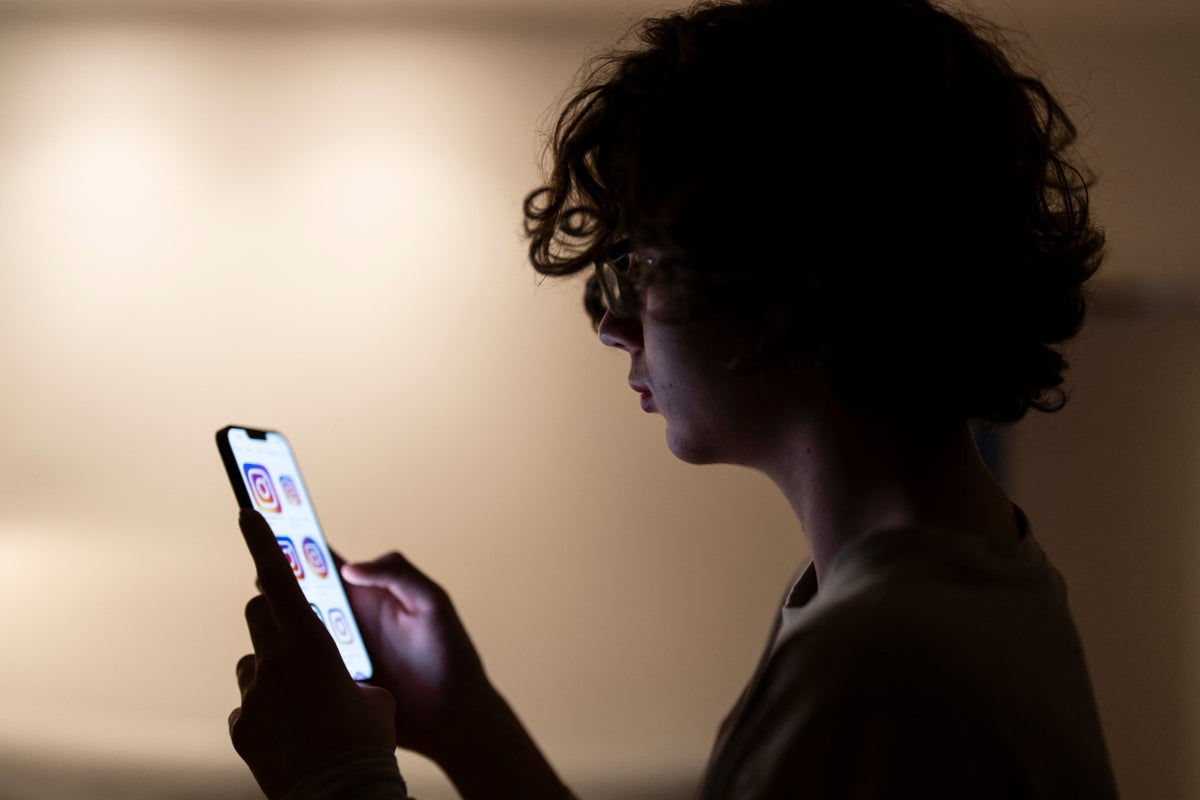
Doomscrolling online should be an international public health concern and needs to be regulated, international researchers said Friday. More than 1 in 10 people around the world may be affected, with economic and social costs totaling billions each year, according to the major international commission published in The Lancet Psychiatry.While the internet itself is not the problem, the behavior can become difficult to control especially for people with mental health conditions.“Digital technologies are now woven into almost every aspect of modern life and bring enormous benefits,” Professor Zsolt Demetrovics, an expert in addictive behavior at Australia’s Flinders University, said.“The challenge is finding ways to reduce harms while preserving the many benefits of being connected.”A group of international researchers insist doomscrolling should be treated as a public health concern (AFP via Getty Images)Young people are particularly susceptible to doomscrolling as their brains are still developing. Adolescents in the U.S. spend nearly five hours on social media platforms a day, according to the American Psychological Association. That’s more than twice the amount U.S. adults spend on the platforms, University of Maine data found.Doomscrolling can trigger the body’s natural stress response leading to high blood pressure, a risk of clogged arteries and a hampered ability to think clearly, according to the American Brain Foundation.The practice is also one of the top reasons Americans stay up at night. More than a quarter of 2,000 people surveyed by the American Academy of Sleep Medicine own up to doomscrolling instead of getting the recommended 7-9 hours of sleep.And using social media a couple of times a week could be as bad for young people as smoking, according to May report from the U.K.'s Academy of Medical Royal Colleges.A teenager scrolls through social media on her phone in San Sebastian, Spain, on February 4, 2026. Spain has proposed social media restrictions for teens, citing health concerns (AFP via Getty Images)To fight these effects, countries such as Australia, Brazil and Indonesia have taken steps to limit social media use for adolescents. Spain announced a similar ban in February. In the U.S., schools are taking away smartphones to help academic performance but there are no national restrictions. However, responsibility isn’t just with users, the researchers said. Meta, the parent company of Instagram and Facebook, recently settled a lawsuit that alleged social media is addictive.“Many digital products are intentionally designed to capture and hold our attention,” Dr. Andrea Czakó, Flinders’ Senior Research Fellow in Psychology, said.“If we want healthier outcomes, particularly for young people, we need digital environments that support wellbeing rather than undermine it.”
Doomscrolling could be putting millions at risk, experts warn
Full Article
Original Source
Read the full article at Independent →KhanList aggregates and links to publicly available news content. We do not host full articles from third-party sources. Always verify important information with original sources.