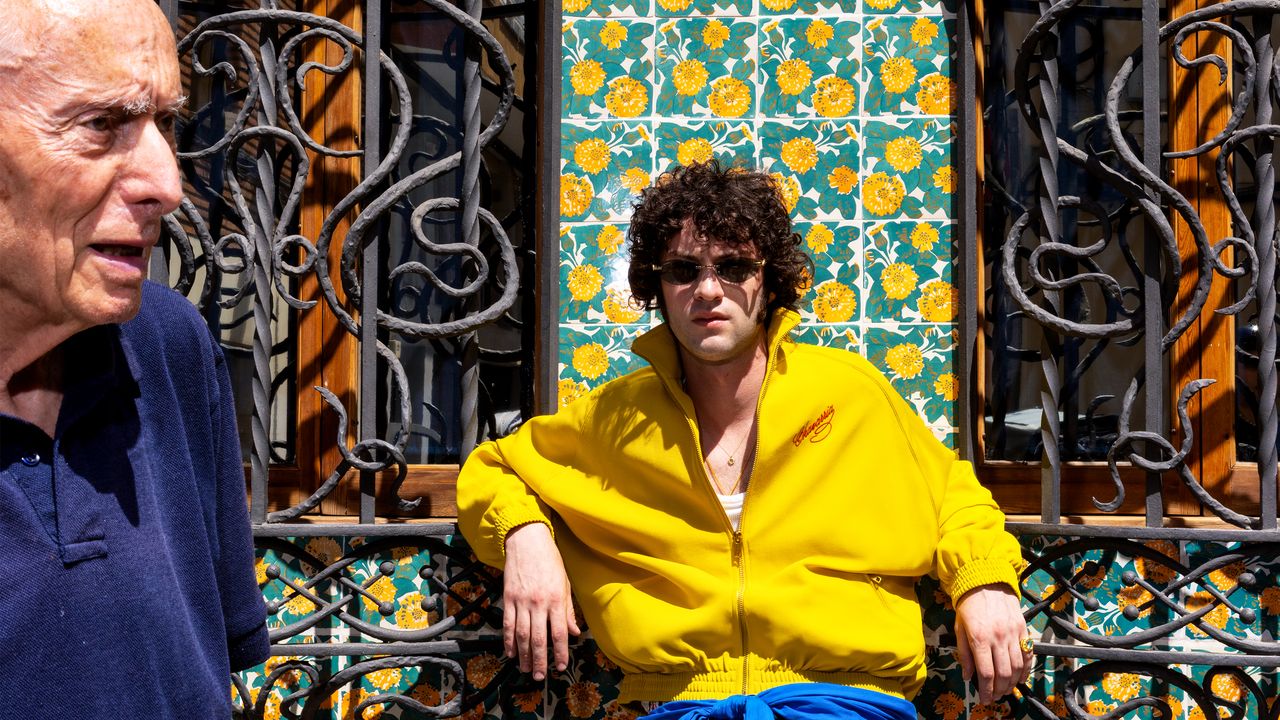
This story was featured in The Must Read, a newsletter in which our editors recommend one can’t-miss story every weekday. Sign up here to get it in your inbox.“What is one looking for in bar food?” Anthony Bourdain once mused, in his conspiratorial baritone, on a 2003 episode of his early Food Network show A Cook’s Tour. He was sitting at the long mahogany bar of the crusty New York institution Corner Bistro, a cheeseburger in one hand and a frosty pint in the other. “Well, you want it simple. You know, I don’t want a tower of foie gras with microgreens here. I want blood and grease on my fingers and chin. That’s what I want.”Almost a quarter century later, on a muggy June afternoon, I’m in the same ramshackle establishment about to dig into the same medium-rare monument of blood and grease. Or, kinda—this is actually Corner Bistro East, a crosstown clone that opened up last September. (These days, even dive bars are cashing in with IP-driven spinoffs.)More Is More Is More | Sometimes all it takes is a killer tie to make a kooky shirt feel sharp and considered. Shirt and tie by Marni. Pants by Louis Vuitton Men’s. Belt by Emporio Armani. Seated across the table from me, a burger and fries of his own just plopped down in front of him, is Dominic Sessa, the 23-year-old actor who plays a teenage Bourdain in the forthcoming A24 biopic Tony. For a guy still relatively new to fame, Sessa has already mastered the male-celebrity-keeping-a-low-profile uniform—light tan T-shirt, dark tan cargo pants, a New York Rangers cap struggling to contain his Sideshow Bob curls. His bushy ’70s sideburns feel like a holdover from The Holdovers, Alexander Payne’s 2023 coming-of-age classic, which slingshotted Sessa directly from his high-school drama class into Hollywood stardom. The dark scruff blanketing his powerful chin is proof that he’s grown up a little in the years since. He’s both quieter and quicker to smile than he is onscreen, managing direct eye contact only occasionally as he slouches in his chair like a sweater draped over the back.After his debut—in which he went toe-to-toe with Paul Giamatti and Da’Vine Joy Randolph, and nabbed a Critics Choice Award for best young actor for his trouble—Sessa purposefully pumped the brakes. “I was offered these big projects where I’d be number one on the call sheet,” he says. “My priority was: Get on another set, surround yourself with as many great actors as you can, but don’t be the face of the project.”He spent the next couple of years doing just that, tackling smaller parts in all manner of movies, from the indie dramedy Tow to the glitzy franchise blockbuster Now You See Me: Now You Don’t. Soon, Sessa is again assuming the mantle of leading man. And he’s doing so with his biggest swing yet, in a film that’s already generating plenty of scrutiny for the sheer audacity of revisiting one of the most adored and magnetic figures of the 21st century.“Generally, [there was] that skepticism of, this is a biopic about Anthony Bourdain,” Sessa says of Tony. “I feel skeptical about it myself. But for a lot of different reasons it felt like the right story to tell about the right person.”One of those reasons: The Anthony Bourdain we see in Tony isn’t the smooth operator you remember from Parts Unknown, cruising the California desert in Persols with Josh Homme or slurping bún chả on a plastic stool with President Obama in Vietnam. Sessa portrays him as a wayward college kid looking for purpose—and finding it in the seedy kitchen of a Provincetown, Massachusetts, seafood joint. The movie opens with a quote about Bourdain’s teenage self from his star-making 2000 memoir, Kitchen Confidential: “I was—to be frank—a spoiled, miserable, narcissistic, self-destructive and thoughtless young lout, badly in need of a good ass-kicking.”Clash Out | One punchy primary color is a fun accent. Two punchy primary colors is a righteous act of exuberance. Jacket by Celine. Shirt by Paul Smith. Sunglasses by Ray-Ban. Sessa thrived in that mode in The Holdovers, and with some more life under his belt, he goes even further in Tony. As Bourdain, he flexes his prodigious ability to flit back and forth between temperaments—charming and exasperating, swaggering and sensitive—often multiple times in the space of a scene.“There isn’t a single person in the world who could have played Anthony Bourdain better than him. I sincerely believe that,” says Matt Johnson, the movie’s cowriter and director. “We got so lucky to have Dominic at this exact age, at this exact moment in his life.”In other words: This kid who never expected to become an actor, let alone have a legitimate shot to grow into one of our next great movie stars, does a great job playing a kid who never expected to become a chef, let alone grow into the very center of the culinary universe.Sessa is admittedly a little itchy to move past the retro bildungsromans now. “I’m kind of done with the ’70s,” he says, laughing. (To be fair: He really has ’70s Face.) “It’s not that I want to be playing these mopey teenage boys all the time.” But in the meantime, as his next chapter comes into focus, Sessa is the best big-screen avatar for the perils of young manhood that we have right now.One key to his genius at this particular type of role? He’s also living it in real time. “It’s that feeling of, like, you’re young and it’s okay to not know,” he says. “It’s okay to not have a clear direction. But I have the sense of wanting to feel that way, so it gets the best of you sometimes.”If The Holdovers hadn’t turned him into an overnight sensation, Sessa had a few different career paths in mind: plastic surgeon, teacher, finance guy. When he’s really being honest with himself, though, Sessa admits that he’s always had something of a performative streak. Growing up in southern New Jersey, that manifested itself in a bunch of different ways. “I feel bad for my parents now,” he says, “because I just wanted so much attention all the time and would do anything to get it.” That included running around the house butt naked and singing at the top of his lungs, before his folks decided to channel that energy into extracurriculars—first dance classes, and then ice hockey.He got good enough at the sport that—not long after his dad died suddenly at 46, when Sessa was just 14—he was accepted to the prestigious Massachusetts boarding school Deerfield Academy on an athletic scholarship. Just weeks before his first hockey season, though, Sessa suffered a career-ending femur injury. That led him to fall back on his natural talent for getting a laugh.“At my high school, you were either the kid of someone really rich or famous, or you were a varsity lacrosse player,” Sessa says. “I was neither of those things, so I knew I had to kind of be the class clown.” His sense of humor was shaped, in large part, by the slew of Jackass and Sacha Baron Cohen movies his dad showed him at an (arguably too) early age.Before long, he fell headfirst into Deerfield’s theater productions, and by the time his senior year rolled around, he found himself cast in The Holdovers with the prospect of a real career as an actor suddenly on the horizon.The Holdovers dropped Sessa right into the center of the Hollywood buzz machine, shuffling him through a gauntlet of red carpets and award ceremonies as critics breathlessly compared him to The Graduate–era Dustin Hoffman. “It was so gratifying,” he says. “But even at that time I still had stress about, like, ‘Can I still do this? Can I even do another movie? Was this just a fluke?’”The three films he made in quick succession after that awards run helped assuage those fears: the Rose Byrne vehicle Tow, in which Sessa aged up as a sympathetic lawyer; Michael Showalter’s holiday romp Oh. What. Fun., which let him flex his comedic instincts; and Now You See Me: Now You Don’t, where he got to smoke a joint in Woody Harrelson’s trailer and get career advice from Jesse Eisenberg. “He really made a point about just living in the moment, enjoying it, taking things as they come, because anything can happen in this industry,” Sessa says of the latter. “We’re so lucky to be able to do this, so don’t treat it like shit.”Here’s where I need to come clean that I’m a millennial male cliché: Anthony Bourdain meant the world to me. I’m talking full-blown parasocial hero worship. I mean that I binged enough No Reservations to convince myself it was a good idea to quit my job at 24 and move to Southeast Asia with the wrong girl to “find myself” and make a run at freelance travel writing. When that whole deal inevitably blew up in my face, I self-soothed by clinging to that one LinkedIn-coded Bourdain quote about nearly dying in his 20s and becoming successful in his 40s, which made me feel like I still had time to figure it all out. I fell to pieces when he died by suicide in 2018 and couldn’t bear to read his books or watch his shows for years afterward.I’m telling you all this to say that nobody was more dubious about Tony than I was. I truthfully thought a Bourdain biopic was a terrible idea, one that could only do more harm than good to his legacy. Turns out, I couldn’t have been more wrong—I genuinely loved the movie. And it works precisely because it was made by people who aren’t the least bit like me.Take Matt Johnson, the director. “One of Dom and my real secrets, that we didn’t even know was a tool for us, was that neither of us had literally any baggage around this guy,” he tells me when I ask what Bourdain had meant to him. “We both had a strident lack of interest in Anthony Bourdain. He wasn’t a role model to either of us. And because we didn’t view him as a role model, it let us look at the character as somebody who could be influenced by others.”“My mom was always watching Food Network,” Sessa says. “So I had an awareness of him as this kind of free-spirit travel guy. But I knew nothing really aside from that.”In the years since his death, Bourdain has been given the Che Guevara T-shirt treatment, reduced to fodder for cornball Instagram quote cards that say things like “Travel is not reward for working, it’s education for living” over a photo of him blasting a cig in chef’s whites. But Tony manages to cut through all that deification (while also crucially sidestepping any of the ugly gossip that’s marred other posthumous look-backs, like the 2021 documentary Roadrunner). Instead, thanks in part to Sessa’s and Johnson’s blissful ignorance, the movie presents its subject as the highly fallible and supremely complicated human being he was—and continued to be, even as the culture venerated him as a paradigm of modern masculinity.“I got to pick my words carefully here, because it could come off as me talking down on this guy when I actually mean it to be the exact opposite,” Johnson says. “Anthony Bourdain, I think, was much more wounded and insecure than how people perceived him. He had a kind of unflappability that people were really drawn to, but my sense was that he was much more vulnerable than you would imagine. And that really was his superpower.”Find Your Balance | The secret to pulling off mismatched patterns? A soothing—and unifying—neutral jacket. Jacket, shirt (underneath), and jeans by Dries Van Noten. T-shirt by MSGM. Belt by Artemas Quibble. Sunglasses by Selima Optique. Keychain by Willy Chavarria. Tony draws heavily from two short, punchy chapters of Kitchen Confidential, in which Bourdain romanticizes a couple of druggy mid-’70s summers he spent washing dishes at crappy tourist restaurants in Provincetown. “They drank everything in sight, stole whatever wasn’t nailed down, and screwed their way through floor staff, bar customers, and casual visitors like nothing I’d ever seen or imagined,” he writes of the swashbuckling vets who lure him into his eventual profession. “The life of the cook was a life of adventure, looting, pillaging, and rock-and-rolling through life with a carefree disregard for all conventional morality.”For those mythical back-of-house roles, Johnson cast Leo Woodall, again in his White Lotus scumbag mode; the podcaster and comedian Stavros Halkias, who steals scenes by more or less playing himself; Michael Jibrin as a strong and mostly silent no-nonsense type; and a paternal Antonio Banderas as the grizzled Portuguese chef who takes Bourdain under his wing. Despite all that firepower crowding the kitchen, though, there was never any question whose movie this was.“I’m in every shot, basically,” Sessa tells me. “I don’t recall ever really sitting around in a greenroom or anything like that, because the way Matt wanted to shoot the film, you’re telling the story from this person’s perspective, so there would always be a glimpse of my shoulder or a piece of my hair in the frame.”Even his veteran costars were impressed by his ability to handle the tornado of pressure and responsibilities. “I saw the truth in him from day one,” Banderas says of Sessa. “He understood the complexity of the character, and he didn’t even play it—he lived it during the time that were shooting in Cape Cod. He is, for me, a real actor.”“First of all, he’s perfect for this,” Halkias agrees. “He’s what you want in a biopic, where he looks like the guy but 15% sexier. You put young Bourdain through the yassified filter, and it’s Dom. I came away really impressed by how locked in he was, how much you could tell he wanted to do a great job. It’s kind of perfect, because I think he’s dealing with a lot of the stuff that Bourdain might’ve been dealing with at the time. He wants to become exactly who he is—and I think he’s a movie star.”The parallels between Bourdain’s journey and his own weren’t lost on Sessa during the film’s production. “Matt and I talked a lot about those emotions of when you’re a young man,” he says. “You want respect. You tell yourself and other people things that aren’t true to feel respected and important. And then ultimately you learn that you can’t actually be important or reach your potential unless you’re honest with yourself. And the kitchen was the place where Bourdain learned that.”Lay the Groundwork | There’s no better foundation for piling on freaky hues than a tried-and-true Canadian tuxedo. Jacket by Amiri. Shirt and jeans by Fendi. T-shirt by Bluemarble. Shoes by Marsell. Belt by Artemas Quibble. When we first got to the bar, the dining room was dead empty—just me, Sessa, and 311’s “Amber” blaring over the speakers. Now, though, a couple of other parties have been seated near us, and I feel hyperaware of the prying eyes trying to figure out who the guy is with the tape recorder placed in front of him. But when I ask Sessa, who lives close by in the East Village, how often he gets stopped in the streets these days, he shrugs and says it’s pretty chill.“If you’re an influencer, you’re constantly posting and you’re on someone’s feed,” Sessa tells me. “Those are the people that are getting recognized. Not as many people watch movies as they do Instagram Reels, unfortunately. But I guess in terms of my privacy, it’s good.”To that point, he mostly steers clear of social media, and has a Gen X–level of aversion to selling out. “I love being the center of attention, and I don’t get that from Dom,” Halkias says. “He cares about the work, and that’s really cool to see from somebody who right now could be everywhere if he wanted to. He could be doing commercials…he literally looks like a fashion model. But he’s just focused on the right stuff right now.”Take Up Microdosing | Don’t underestimate how even the smallest of surfaces—say, your belt strap or watch dial—can liven up a fit. (The blush-pink shirt doesn’t hurt either.) Shirt and T-shirt by Bottega Veneta. Jeans by Celine. Sandals by Marsèll. Belt by Artemas Quibble. Sunglasses by Kaelos. Watch by Swatch. Bracelet (on top) by Unode50. Bracelet (on bottom) by Bvlgari. Ring by Bleue Burnham. Not that he’s the least bit pretentious. During The Holdovers press cycle, Sessa admitted he wasn’t much of a cinephile growing up and was looking forward to immersing himself in movies. Three years on, I wondered, what had he been watching?“I’ve watched everything by Danny McBride in the past year, actually,” he tells me, immediately lighting up. “Vice Principals, Righteous Gemstones, Eastbound & Down. Zach Cregger is someone that I really want to work with someday—I was a fan even in his early YouTube days. I got into Paul Thomas Anderson; Hard Eight is one of my favorites. One of my friends showed me Point Break, and that’s probably one of my favorite movies now too.“A lot of people feel it’s essential to be watching and have knowledge of the filmmakers and the movies and all that stuff,” he continues. “I don’t know if I agree or disagree. I just try to not be precious about my taste. If something is enjoyable to me, I can be honest: I fucking loved the first Mario movie. That’s something I learned from Paul Giamatti: He got nominated for an Oscar and then went and played a Star Trek villain, because he loves that stuff. It’s true to him.”Sessa would love to be a monster in a horror movie, star in a 1600s costume drama, do Broadway. Hell, he’d be open to trying a superhero flick someday. Paging James Gunn: “I really want to play Jason Todd—Red Hood—in a DC movie,” he says, alluding to Batman’s ill-fated second Robin, who was murdered in an infamous ’80s storyline before being resurrected as a violent antihero two decades later. “That would be a dream.”In the meantime, he’s just wrapped an indie crime drama called Shades of Paradise in Barcelona (where we caught him for this photo shoot) that he’s thrilled about. “I get to kill people, shoot people, scream at people, just be more of an intimidating figure, I guess,” he says of his role. “More powerful, where usually I’m this skinny kid. It’s really stretched me stunts-wise, which was a big reason I wanted to do it—I want to be able to say I can stunt-drive a manual car.”Because of all his nonstop travel, however, today marks Sessa’s first visit to (either) Corner Bistro. And so I get to watch his eyes go wide with pleasure the moment he takes his first bite of cheeseburger.“Oh man, that’s so good,” he says, the blood and grease hitting his fingers and chin. “It’s perfect.”PRODUCTION CREDITS:Photographs by Celine Van HeelStyled by Martin MetcalfGrooming by Álvaro DomínguezTailoring by Aloma LafontanaProduced by Daniel Alpernia & Cristina Jade at BUSYSpecial thanks to Casa Vicens Gaudí, Bar La Plata, Mercat de la Boqueria, Moirai Market, and Llibreria Terranova
Don’t Worry, the Anthony Bourdain Biopic Is Good. Dominic Sessa Is the Reason Why
Full Article
Original Source
Read the full article at Gq →KhanList aggregates and links to publicly available news content. We do not host full articles from third-party sources. Always verify important information with original sources.