
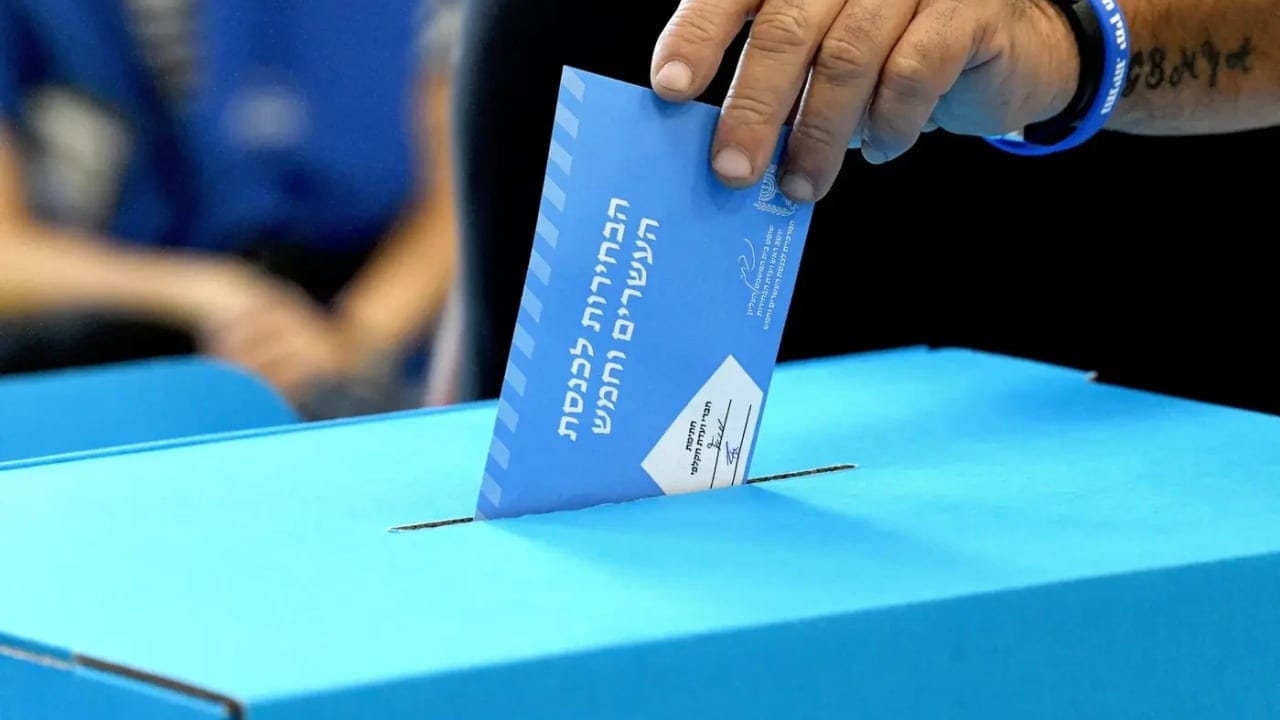
OCTOBER 25, 2026 18:27Despite my two academic degrees in political science, 12 years working in the Knesset for three different MKs, as well as a few more years there as a lobbyist, and a lifelong interest in Jewish politics in the Diaspora and in Israel, what follows, while reasonable in my opinion, is only a recommended guideline for voters in this week’s elections for the Knesset.In a democracy, every citizen is free to choose which party’s slip he or she will place in the envelope on election day. Following that principle, I think the best way of assisting voters to make their choice is to concentrate on the factors and elements that should be considered when voting for a candidate and the party one is thinking of supporting.In other words, I hope to offer an outline of warnings or alerts that should give one a chance to rethink a possible choice one is contemplating. In a sense, my guide highlights who not to vote for. My suggestions that follow are not listed in order of importance, but they are an essential whole.An Israeli voting booth. (credit: MARC ISRAEL SELLEM)Polls: Anyone following the polls, and there are at least half a dozen, knows the differences between them.Differences? I would think there are surprising gaps. The average voter is not privy to the methodology the pollsters are using, the phrasing of the questions, nor the demographics serving as the poll pool.Even Shimon Peres once said that public opinion surveys, while useful to an extent, “are like perfume: nice to smell, dangerous to swallow.” In fact, in the past few decades, the overwhelming number of polls for the elections have not been accurate, to put it mildly.I am inclined to remind the voters that our polls have often failed to predict the final distribution of Knesset seats accurately. Moreover, they have overlooked major surprises. Mina Zemach, a famous pollster, had to admit major errors in her reports in the 2003, 2006, and 2019 campaigns.Threshold clearance: Estimating the vote at 70% of the eligible population in order to cross the threshold for the distribution of the 120 mandates would require a party to gain 166,000 votes. At 65%, the amount would be 154,000, and at 75%, it would total 177,500 votes. Think hard about whether you will be wasting your vote, even for principled reasons, or you have a second-best choice.Protest vote: Following my previous point, if you are determined to vote for a party hovering around the threshold cut-off, or considering not paying attention to that aspect, are you aware of the ramifications of losing a vote for the camp you belong to? Think how many mandates could be lost to a parallel party.More questions to consider when deciding whom to vote forPlans and proposals: Are clear, actual plans being presented? Is the party or the candidates presenting actual plans, or are we being told either platitudes or slogans? Admittedly, very few party platform booklets appear nowadays, but there are party websites where proposals can be fleshed out and read carefully.Furthermore, do those proposals have a chance of being either legislated or put into practice? Is what the voter is looking for truly achievable?For example, can all funds be withheld from those who do not serve in the army, including women and children, or at least from the basic civic service they benefit from? Would Israel’s Arab population be included in that plan? Would the courts uphold it?Another aspect is whether your candidates have enough experience and background to put those plans into action. Has he a proven record of sorts? Political maneuvering is not a battlefield exercise or a laboratory experiment procedure. Are you aware of his previous performance in a critical field of endeavor?Vote for, not against: It is much better to use your voting slip for someone, on behalf of a program and a political agenda, that you wish to advance. To vote against is a negative action that may help you but may not help the country.Ability to represent: The reality of Israel’s position and status in world affairs has grown exponentially. Whether engaging with world leaders, speaking at the UN, and confronting foreign ministers or CNN interviewers, a voter would want that; in addition to all the other qualities and ideas a candidate brings, his rhetorical skills will serve him and the country as best as possible.Ideological stability: Has your candidate made a complete reversal of positions recently? Politicians can change their minds, of course, or even experience an epiphany of sorts. On the one hand, they could feel slighted, insulted, or even threatened. Or the candidate could simply be seeking to continue to receive a salary and an eventual pension.Candidate lists: Are the rest of the list’s candidates for show and display? Or do they also have some sort of public engagement record? Perhaps there are politicians with previous multiple party affiliations who are just seeking to maintain their public persona or looking for a home? Rethink your choice constantly.Multiple information sources: Watch as many television channels as you can tolerate, such as 11, 12, and 14. After all, they’re all on your cell phone. Also, if possible, read items from at least two opposing newspapers, like Haaretz and Makor Rishon.Remember that a media setting of agendas is at play to fix a dominant memory in your minds. Also, when scanning social media platforms, don’t forget the bots trying to play you.Above all, even though it is your personal vote, think of the country at all times.The writer is a researcher, analyst, and commentator on political, cultural, and media issues.Follow us on Google
Don't waste your vote: What Israelis should consider before election day - opinion
Full Article
Original Source
Read the full article at Jpost →KhanList aggregates and links to publicly available news content. We do not host full articles from third-party sources. Always verify important information with original sources.