
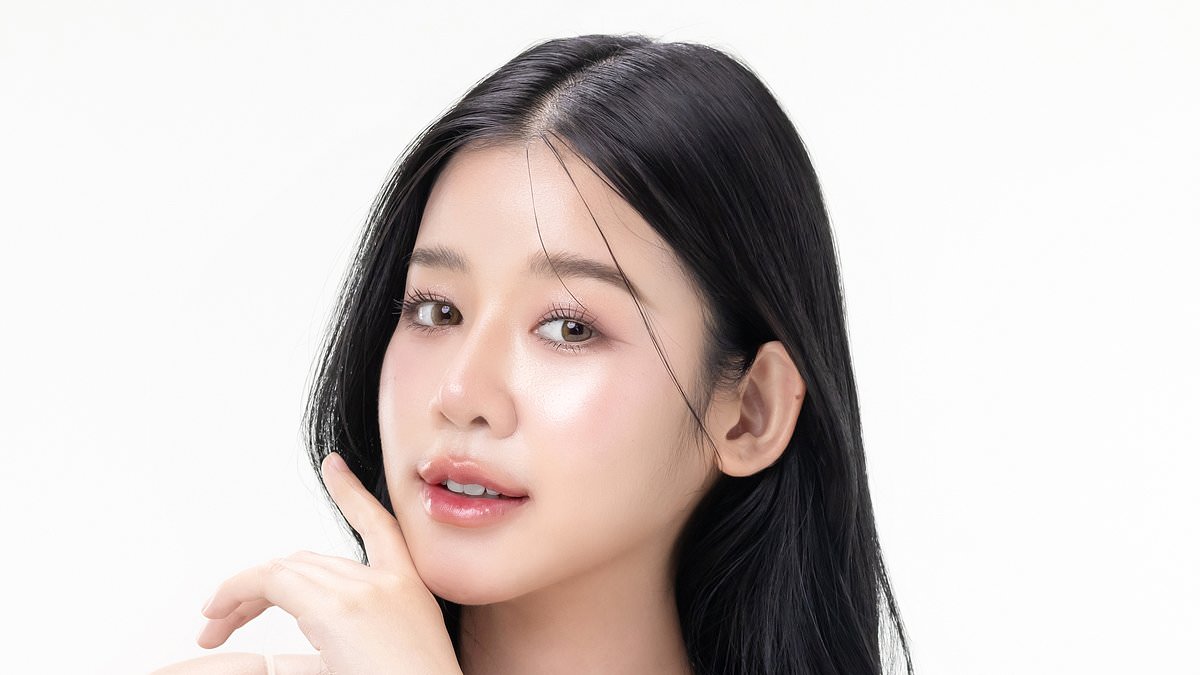
The 'glass skin' trend has taken social media by storm in recent years, with youngsters striving to achieve clear, smooth and deeply hydrated skin.But a new study might make you think twice before taking advice from TikTok.Researchers from the European Academy of Dermatology and Venereology analysed Korean skincare and glass skin videos on the platform.Their results revealed that almost 95 per cent contain at least one potentially misleading claim.'What surprised us most was how consistently basic safety information was absent,' said lead author Dr Maria Lúcia Paysano.'Only one of the 38 videos mentioned irritation risk, only two addressed sun protection, none mentioned contact dermatitis risk and none recommended consulting a dermatologist.' The 'glass skin' trend has taken social media by storm in recent years, with youngsters striving to achieve clear, smooth, and deeply hydrated skin (stock image)For the study, the team set up a new TikTok account to minimise algorithmic bias, before searching for Korean skincare and 'glass skin' videos.In total, they collected 38 videos, assessing them for dermatological claims, safety information, quality and reliability.The Daily Mail has contacted the researchers for clarification on the specific videos assessed. The results revealed that almost 95 per cent of the videos contained at least one misleading claim, while 84 per cent failed to account for different skin types.Forty–five per cent promoted excessive combinations of active ingredients without appropriate safety guidance, and 32 per cent promised 'instant results'.What's more, none of the videos were produced by dermatologists, or even cited an external source or reference.Instead, 82 per cent were created by influencers, 11 per cent by beauty brands and eight per cent by other beauty content creators.'Our findings show a clear gap between the popularity of this content and the quality of the information provided,' said Dr Paysano.'Following these routines without individualised guidance may contribute to irritation, over–exfoliation, acne flares or skin barrier disruption, particularly when multiple active ingredients are combined.'In response, a TikTok spokesperson told the Daily Mail: 'Drawing conclusions from just 38 videos on a platform with more than 100 million daily posts is a deeply flawed methodology. 'The facts are that we proactively remove harmful health misinformation, and we partner with fact–checkers, public health authorities, and medical experts to connect our community with reliable medical content.' Chemical exfoliants containing alpha–hydroxy acids (AHAs) or beta–hydroxy acids (BHAs) were the most frequently implicated products, reported in 34 per cent of cases. These were followed by over–the–counter retinoids (27 per cent), vitamin C serums (14 per cent) and niacinamide–containing products (11 per cent) (stock image)In a separate study, the potential consequences of following viral skincare trends were revealed.In this study, the researchers assessed 94 patients who developed a new or aggravated skin condition after following advice promoted on social media.The results revealed that chemical exfoliants containing alpha–hydroxy acids (AHAs) or beta–hydroxy acids (BHAs) were the most frequently implicated products, reported in 34 per cent of cases.These were followed by over–the–counter retinoids (27 per cent), vitamin C serums (14 per cent) and niacinamide–containing products (11 per cent).Meanwhile, 48 per cent of patients said they'd been inspired to adopt an entirely new skincare routine, while 63 per cent were using more than three active skincare ingredients.'What was particularly striking was not simply the popularity of these products, but the way they were being used,' said Dr Ouissal Hormi, lead author of this second study.'Many patients were reproducing complex skincare routines involving several active ingredients simultaneously, often based on advice from non–medical influencers.'In terms of the reactions themselves, irritant contact dermatitis was the most common (42 per cent), ahead of acne (28 per cent), rosacea or rosacea–like dermatitis (12 per cent), post–inflammatory hyperpigmentation (11 per cent) and superficial chemical burns (7 per cent).'Combining several active ingredients can place excessive stress on the skin barrier since some have overlapping irritant effects,' said Dr Hormi.'Our message is simple: "Viral" does not necessarily mean safe, validated or suitable for everyone.'Before you bin all your favourite products, the researchers stress that Korean skincare itself is not the problem.Instead, they blame the one–size–fits–all routines promoted on social media.'Consumers should be cautious of content promising instant or universal results,' Dr Paysano added. 'Anyone with an existing skin condition who develops irritation or is unsure whether a routine is appropriate for them should seek advice from a dermatologist.'Dermatologists also have an important role to play. 'Rather than dismissing social media trends, we have the opportunity to participate in these conversations and make evidence–based skincare information accurate, accessible and engaging.'
Don't trust those 'glass skin' TikTok videos! Almost 95% of them contain misleading claims, study finds
Full Article
Original Source
Read the full article at Dailymail →KhanList aggregates and links to publicly available news content. We do not host full articles from third-party sources. Always verify important information with original sources.