
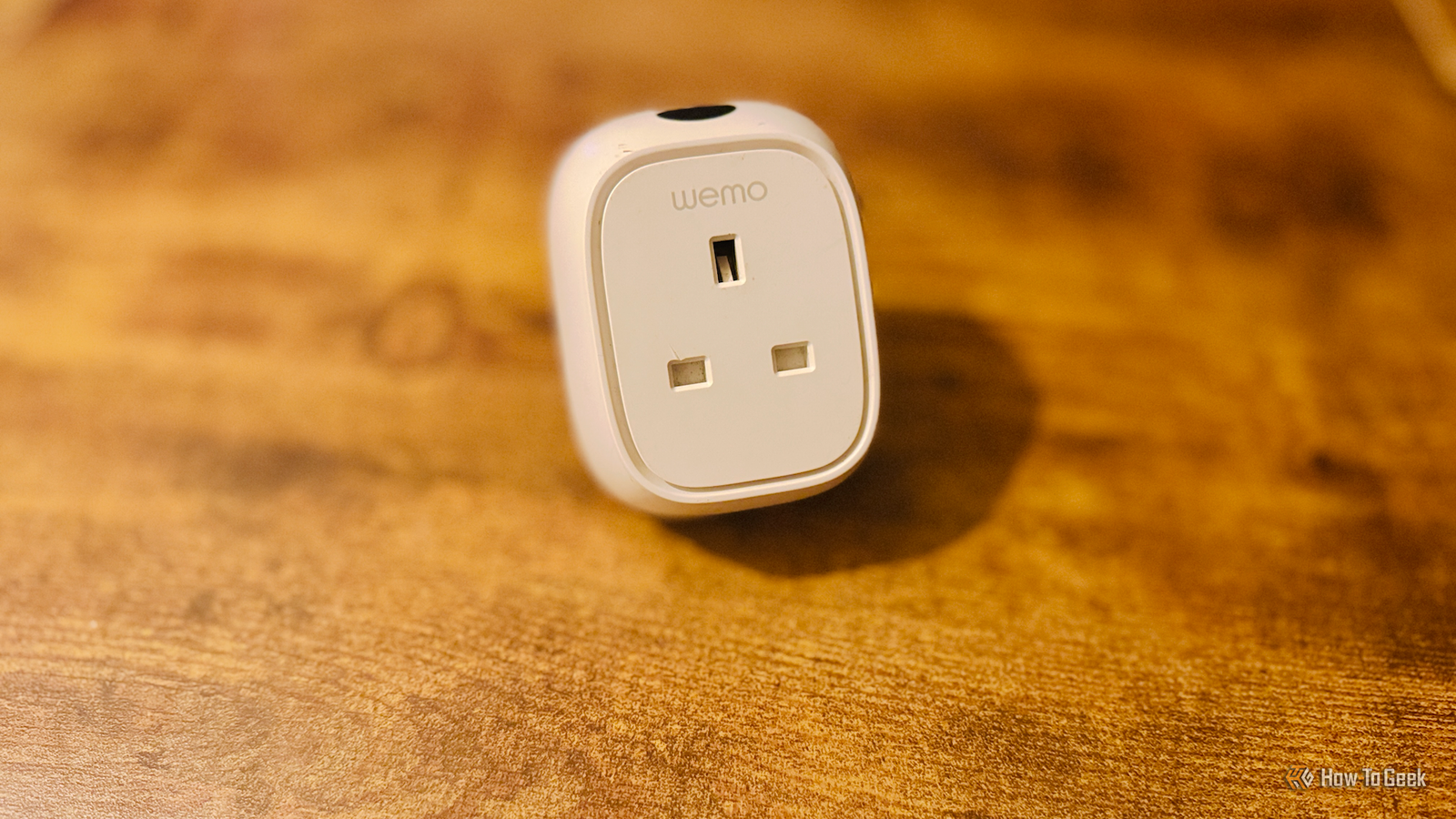
Published Sep 23, 2026, 11:00 AM EDT Adam has a degree in Engineering and has a life-long interest in technology. He has been writing for over a decade for various print and online publications, with a focus on consumer tech. He joined How-To Geek in 2024 while working at Pocket-lint. As well as being a long-term fan of Apple products, he also has a strong interest in smart home tech, running a Home Assistant server at home to automate all his smart home devices. He believes that the ideal smart home should work with minimal interaction from the user, with automations running as if by magic rather than requiring you to push buttons on a control panel. You can find more of his work on Muck Rack. Buying smart home devices that rely on cloud-based services is always a risk. If the cloud service goes down, or worse, is discontinued completely, then your smart home devices can become nothing but expensive paperweights. Thankfully, there are plenty of open-source projects that can rescue smart home devices that have been abandoned by their manufacturers. Your unsupported Nest thermostat doesn't need Google First- and second-generation models can still be useful Credit: Google The original Nest Learning Thermostat was a genuine game changer, showing exactly how useful a smart thermostat could be. It looked great, too. Sadly, Google ended support for first- and second-generation models in 2025, removing their cloud connectivity and remote features. You can control them locally, but many of the smart capabilities are gone. The awesomely named No Longer Evil project is open-source firmware you can flash to these abandoned models, letting you self-host a replacement service, including through Home Assistant. This brings back many of the most useful features, such as remote temperature control, operating modes, and more, making your smart thermostat smart once again. An ESP32 can bring your abandoned Neato robot vacuum back to life The cloud service and app may be gone, but the hardware is still usable Neato's range of robot vacuum cleaners offered useful features such as app control, cleaning schedules, and LiDAR navigation. When Neato ended its cloud service, many models lost some of the most useful connected features. OpenNeato is an open-source project that uses an ESP32 to connect to the robot vacuum's debug port. The ESP32 then hosts its own local web interface that you can use to control the robot vacuum without the need for a Neato account, Neato app, or cloud connection. You can access the standard controls, set schedules, see battery information, and even access a representation of the vacuum's LiDAR data. Make SmartDry sensors smart again The cloud service may be gone, but Home Assistant can help Credit: Josh Hendrickson / Reviewgeek SmartDry was a clever product that you could use to monitor your clothes dryer. The small sensor measures temperature and movement, and the device could accurately tell when your clothes were dry. Sadly, the company behind SmartDry shut down, and so did the cloud service, leaving owners with devices that lacked many of their smart features. The open-source community managed to reverse-engineer the data that these devices broadcast over Bluetooth, so that it can be shared with smart home systems such as Home Assistant through standard Bluetooth integrations. You can now use your SmartDry sensor with many of the original features, without needing to rely on the cloud at all. You can still automate your Chamberlain garage door opener MyQ may have blocked third-party access, but you don't need it Many Chamberlain and LiftMaster garage door openers use the MyQ service to allow owners to control their garage doors remotely. In the past, you were able to connect third-party services such as Home Assistant and IFTTT to the MyQ API so that you could create your own automations. In 2023, Chamberlain stopped allowing third-party access, breaking automations for anyone who had been using the API. The open-source community soon got down to business, creating ratgdo (Rage Against the Garage Door Opener), a small control board that you can connect to the terminals of your Chamberlain garage door opener, allowing you to control it remotely without using MyQ at all. They can make excellent smart home dashboards The Meta Portal (originally the Facebook Portal until the unnecessary rebrand) was a smart display designed for making video calls with Meta apps such as WhatsApp and Messenger. The product never really took off, and Meta discontinued the devices and wound down many of the services. In 2026, the firmware was updated to allow you to use Android Debug Bridge (ADB), enabling people to develop new software for Meta Portal devices. Many useful options have sprung up, such as Ava Pro, which lets you use a Meta Portal as a local smart home interface. An abandoned device is once again a genuinely useful tool. Keep your Wemo plugs working without Belkin's help Control your smart plugs locally instead My very first smart plug was a Belkin Wemo model. At the start of 2026, Belkin ended support for many of its older smart home products, including my smart plugs. Many of the cloud features and app controls are no longer usable. Thankfully, I didn't have to throw my Wemo plug away. Home Assistant's Belkin Wemo integration can communicate directly with my smart plugs over the local network rather than through the cloud. I can still use the smart plug, despite Belkin abandoning it. Your Iris sensors are still useful, even without Lowe's Zigbee2MQTT and ZHA can talk to them directly Credit: Lowe's Iris was Lowe's attempt to create an all-in-one smart home ecosystem, complete with a proprietary hub and a range of sensors including door and window sensors, motion sensors, and smart plugs. In 2019, Lowe's shut Iris down, so you could no longer control Iris devices via your Iris hub. Thankfully, these devices communicated with the Iris smart hub using Zigbee. Open-source projects such as Zigbee2MQTT and ZHA added support for Iris devices, allowing smart home software such as Home Assistant to communicate directly with the devices. Iris sensors can still be a useful part of your smart home. Even if your old hardware isn't supported yet, it may be one day Open-source projects such as Home Assistant add new features all the time. Even if you have an abandoned product that the open-source community doesn't currently support, it may gain support in the future. It's worth hanging on to your old smart home devices, because just like the Meta Portal, they could suddenly become very useful again.
Don't throw out these 7 old smart home devices, the open-source community found a way to rescue them
Full Article
Original Source
Read the full article at Howtogeek →KhanList aggregates and links to publicly available news content. We do not host full articles from third-party sources. Always verify important information with original sources.