
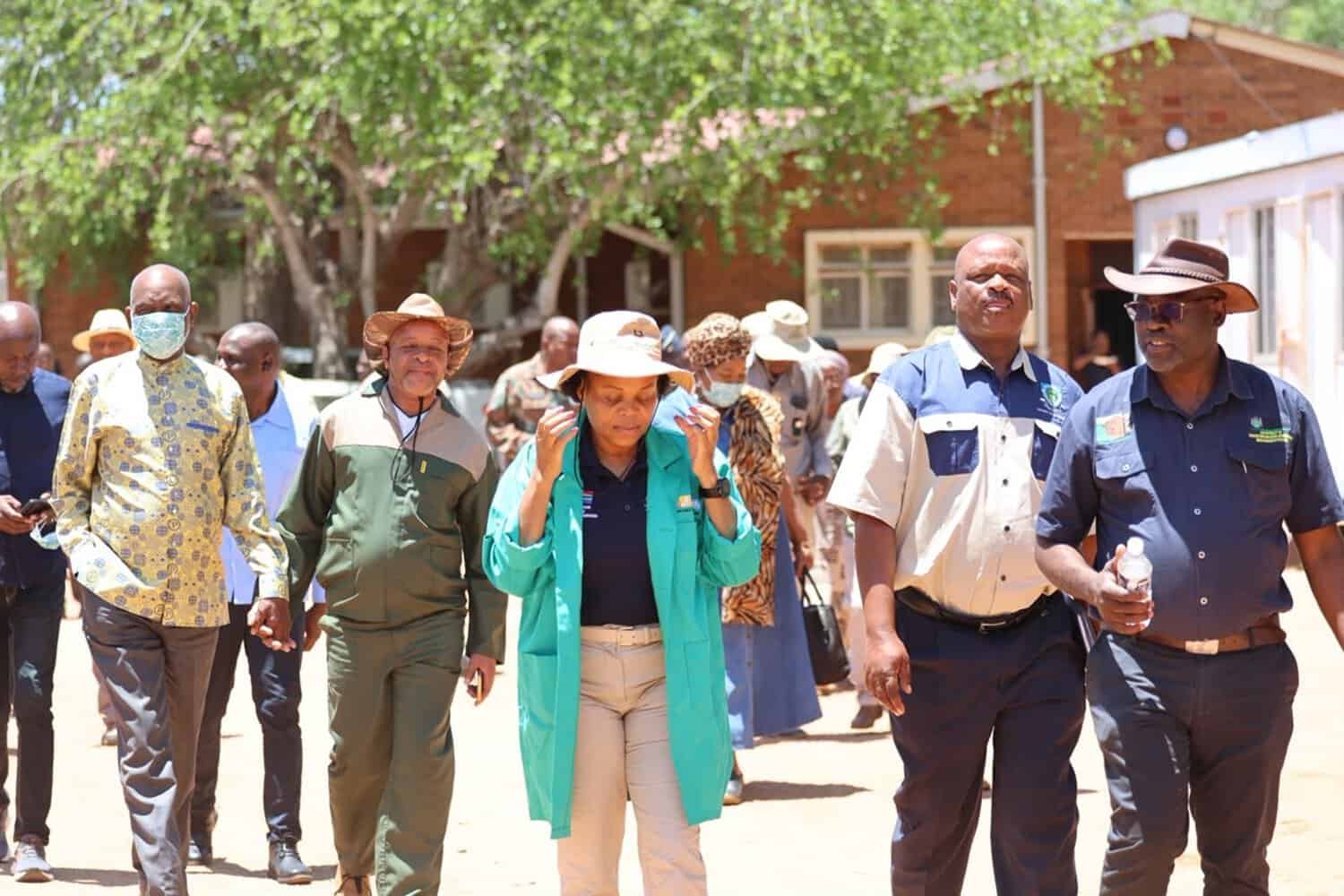
Ramathuba said Limpopo has considerable livestock production potential, but poor breeding practices. Limpopo Premier Dr Phophi Ramathuba has warned 13 senior traditional leaders who received breeding livestock from government not to sell the animals, saying the programme is a development investment that comes with public accountability. Ramathuba was speaking on Tuesday during the distribution of breeding livestock to senior traditional leaders at Mara Research Station, under Makhado Local Municipality in Vhembe District. The distribution forms part of the Traditional Leadership Livestock Improvement Programme, which aims to transform communal livestock farming from subsistence to a commercially viable sector. “A seed planted in fertile soil carries the promise of a harvest, but that promise can only be fulfilled through patience, nurturing, and hard work. A healthy herd tells a similar story,” Ramathuba said. “Today, we are planting the seeds of agricultural transformation by placing breeding livestock into the hands of our senior traditional leaders. “This is more than a distribution ceremony; it is a milestone in our collective journey to empower traditional leadership, strengthen communal livestock farming and unlock the agricultural potential of our province.” Unrealised potential Ramathuba said Limpopo has considerable livestock production potential, but poor breeding practices, diseases, overgrazing, and limited access to formal markets continue to constrain communal farming. “The breeding livestock distributed today represents a practical intervention by government towards addressing these challenges,” she said. She said 13 senior traditional leaders have responded positively to the Limpopo Livestock Programme Re-Sale Scheme for 2026-27, which was advertised and closed on 20 July 2026. Through the Department of Agriculture and Rural Development under MEC Basikopo Makamu, each beneficiary receives a breeding package comprising four pregnant heifers and one breeding bull, accompanied by technical support from Extension and Veterinary Services. “This support represents a deliberate investment in improving livestock genetics, strengthening communal farming and creating opportunities for sustainable rural economic development,” Ramathuba said. She warned that the support comes with responsibility. “The livestock entrusted to our beneficiaries is not merely an allocation to be received without obligation. It is a development investment that must be protected, managed responsibly and used for its intended purpose.” “Ensure that the livestock receives proper nutrition, adequate water, suitable grazing and regular veterinary attention. Comply with vaccination schedules, maintain proper livestock identification, and take all reasonable measures to protect the animals against disease and theft.” ‘Don’t sell the livestock’ Ramathuba also issued a blunt warning. “You must comply with all applicable requirements, particularly those relating to the disposal or transfer of breeding animals. Do not sell, transfer or dispose of the breeding animals contrary to the terms of your agreements. Any decisions concerning the animals must be handled in accordance with the contractual conditions.” “We must be clear that public resources come with public accountability. Government has a responsibility to ensure that public resources are used for their intended purpose and that the support provided translates into measurable developmental benefits.” She said the rollout will continue to other farmers who meet the Re-Sale criteria in the next financial year, and urged other community members to participate in the Livestock Re-Sale programme, Nguni Cattle loan scheme, Illima-Letsema, and production Inputs Support programme. Not for dinner On receiving the cattle, Limpopo chairman for the House of Traditional Leaders, Hosi Peni Ngove, said the cattle were not for personal household meat supply but for gradual self-sustainability and improving community livestock quality. “All qualifying traditional leaders had to show commitment by providing their farming plans and financial contribution, which was duly assessed by the department of Agriculture and Rural Development before a determination was arrived at. “This is one amongst many other self-sustainable agriculture initiatives that the provincial government has committed to implement to empower traditional leaders and their communities going forward. “We view agriculture as the key to sustainable rural development, especially from the communal land use point of view,” he said.
‘Don’t sell the livestock’: Ramathuba warns traditional leaders
Full Article
Original Source
Read the full article at Citizen →KhanList aggregates and links to publicly available news content. We do not host full articles from third-party sources. Always verify important information with original sources.