
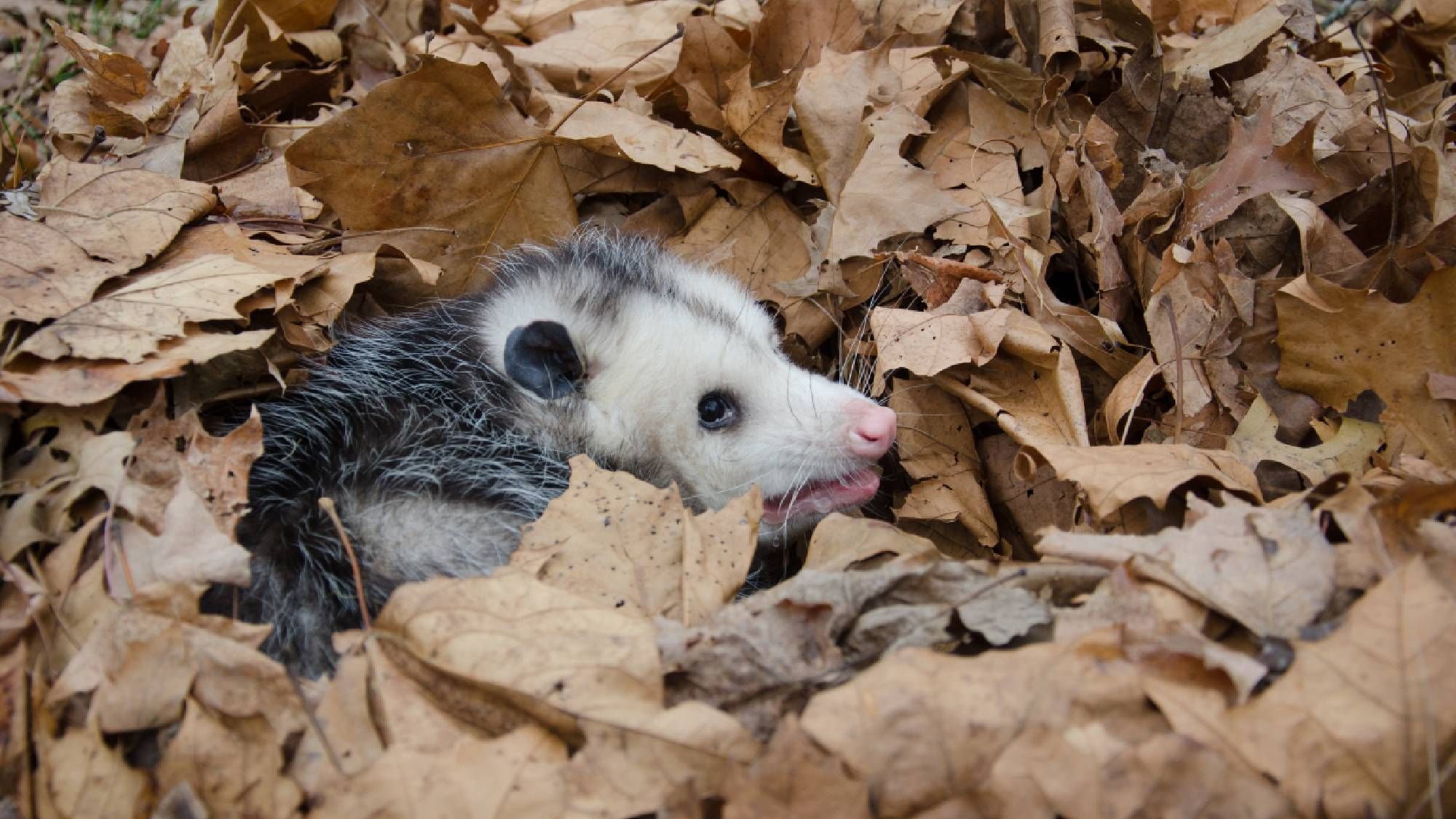
(Image credit: Shutterstock) There is nothing quite as puzzling as finding a random, messy clump of leaves crammed beneath your shed ramp or behind stacked boxes in your garage. Most homeowners assume a stray cat, rat, or squirrel is making a mess on their property, reaching straight for the broom to sweep it away and block off the gap.Before clearing it out, take a closer look. That unsung leaf pile might not be random yard debris at all. It could be a temporary den built by an opossum. Unlike birds or mice, North America's only native marsupials build nests that look completely different from other common yard critters.Once you know what to look for, you can stop worrying about structural damage and recognize that you simply have a temporary guest taking shelter for a few days.What an opossum nest actually looks likeUnlike birds that weave intricate cups or squirrels that build neat dreys high in trees, opossums build simple, un-woven dens designed purely for short-term insulation. (Image credit: Shutterstock)An opossum nest looks like a tight, compressed bundle of yard debris stuffed firmly into a cavity. It lacks any neat architectural pattern, often resembling a simple pile of swept-up leaves.They primarily gather dry leaves, fallen grass, twigs, and shredded bark. In suburban areas, they will also tuck in human scrap like paper, fabric, or plastic wrappers.Opossums stay low. Look for dens tucked beneath deck steps, under shed foundations, inside hollow logs, or behind stacked boxes in cool, dark garage corners.Get instant access to breaking news, the hottest reviews, great deals and helpful tips.The leaf trail telltale signOpossums have a unique way of gathering nesting materials using their prehensile tails. They pick up leaves or grass with their mouths, pass the bedding under their bodies with their feet, and wrap the tip of their tail tightly around the bundle to carry it back to their den.If you spot accumulated piles of dry leaves stuffed into small gaps or cavities under a porch or shed, an opossum may be building its nest nearby.3 common opossum mythsBefore trying to remove an opossum, it helps to separate internet myths from wildlife facts: Myth 1: Opossums are major rabies spreaders (and entirely immune) While any mammal can technically contract rabies, it is extraordinarily rare in opossums, accounting for less than 1% of wild animal cases. Crucially, opossums are not biologically immune to the virus, and documented cases do exist. Wildlife organizations widely attribute their low infection rates to the opossum's naturally low body temperature (around 94°F to 97°F), which is popularly believed to create an inhospitable environment for the rabies virus to replicate effectively. While this notion is a popular one, it's never been scientifically proven. In reality, opossums stay rabies-free because of their lifestyle. They are solitary creatures that prefer playing dead over fighting, so they rarely interact with high-risk rabies carriers. Myth 2: Opossums are tick-clearing machines The internet loves the viral stat that a single opossum eats over 5,000 ticks every season, but it simply isn’t true. This popular belief came from a flawed 2009 laboratory study that guessed missing ticks were eaten, rather than actually looking inside the animals. In a follow-up 2021 study published in Ticks and Tick-borne Diseases, researchers dissected wild opossum stomachs and found exactly zero ticks. While opossums are obsessive groomers and might swallow a tick by accident while cleaning their own fur, they do not hunt them. Instead, their actual diet relies on garbage, fallen fruit, mice, and insects — meaning attracting them to your yard won't keep your grass tick-free. Myth 3: They destroy house foundations Despite their reputation as pests, opossums lack the physical tools to dig up your yard or chew through your home. Unlike rats, mice, or squirrels, an opossum's teeth and claws are not built for gnawing through wood or tunneling under concrete foundations. Instead, they are purely opportunistic squatters. If you find one under your deck or inside your crawlspace, they didn't break their way in — they simply moved into a pre-existing gap or an abandoned burrow left behind by another animal. They are merely looking for a dry, temporary place to sleep and will usually move on to a new den within a few days. Follow Tom's Guide on Google News and add us as a preferred source to get our up-to-date news, analysis, and reviews in your feeds. Subscribe to Tom's Guide on YouTube and follow us on TikTok. More from Tom's Guide How to tell if a hole in your yard belongs to a snake — and what to do nextThis tiny pest causes the biggest damage to your plants — here's how to stop thripsHow to repel spiders with indoor plants — grow these for free pest control Kaycee is Tom's Guide's How-To Editor, known for tutorials that get straight to what works. She writes across phones, homes, TVs and everything in between — because life doesn't stick to categories and neither should good advice. She's spent years in content creation doing one thing really well: making complicated things click. Kaycee is also an award-winning poet and co-editor at Fox and Star Books.
Don’t rake that pile of leaves! It might actually be a hidden opossum nest
Full Article
Original Source
Read the full article at Tomsguide →KhanList aggregates and links to publicly available news content. We do not host full articles from third-party sources. Always verify important information with original sources.