
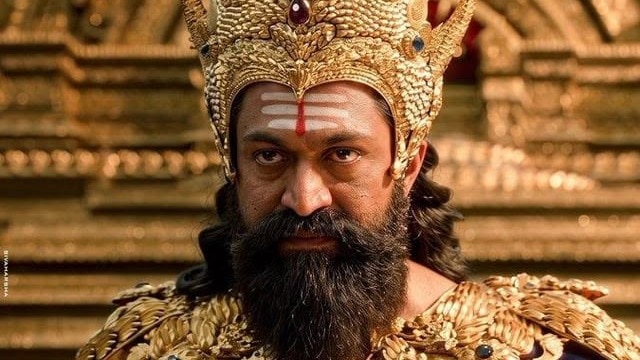
At the pre-release event of Ramayana in Hyderabad, actor Yash had a message for audiences: watch the film with an open mind and don't go looking for small faults in its visual effects. The actor, who plays Ravana in Nitesh Tiwari’s ambitious adaptation of the Indian epic, also made an impassioned case for producer Namit Malhotra, arguing that India needs to support people willing to take its cinema to a global stage.Here's what he exactly he said: "Sometimes, when someone tries to do things like this . . . he has gambled on his reputation and money to put this film on a global platform. Please don't try to find small faults in the VFX. It will never happen again if we lose people like him (Namit) now. It will take more years. We will go back in time. Let’s see the film with an open mind. He has always taken every piece of feedback and criticism and tried to do it better. I request you from my side. If you like the film, let’s come together and show the world."But here's the question: if a film is being positioned as a landmark for Indian cinema, why shouldn't audiences scrutinise every aspect of it? If the reported budget is around Rs 4,000 crore, shouldn't the expectations be just as enormous as the investment? And when viewers pay to watch a film, shouldn't they be allowed to decide whether its visuals live up to the promise?This is not an argument against Ramayana, nor is it a dismissal of the enormous undertaking involved in bringing a culturally significant epic to the big screen. It is about the relationship between a film and the people who pay to watch it. If the film wants audiences to buy into its grand vision, surely those audiences are entitled to scrutinise what they see on screen and what they are paying for. The VFX criticism that came before Yash's appealWhen the makers unveiled the first glimpse of Ranbir Kapoor as Lord Rama in April, the response was far from uniformly celebratory. While the project had generated enormous anticipation, viewers criticised the visual effects, colour grading and what some felt was a lack of authenticity and grandeur in the imagery. The criticism was particularly pointed given the scale of the project and the involvement of DNEG, the visual effects company led by Malhotra, and behind international spectacles like Inception (2010), Interstellar (2014) and Avatar: The Last Airbender (series).The makers did not simply ignore the feedback. Malhotra acknowledged the criticism and said the team was listening. Yash, too, had earlier described the film as a work in progress and said the team would try to improve it. Subsequent promotional material has been reported to feature enhanced visuals, with some viewers responding more positively to the updated trailer. So, if the criticism helped prompt improvements, why should audiences now be discouraged from looking for flaws? Wasn't the point of acknowledging the feedback that the makers understood what viewers were concerned about? That history makes Yash's latest remarks particularly interesting. His appeal seems to carry a pointed undertone, given the backlash that greeted the first teaser. Whether or not he intended it as a dig at those reactions, the message risks sounding dismissive of viewers who questioned the visuals in the first place.There is a difference between asking people to keep an open mind and asking them to lower their expectations. The former invites audiences to experience a film before passing judgement. The latter can sound like a request to excuse shortcomings before the final product has even been assessed.And what exactly counts as a "small fault" in a film whose visual effects are central to its promise? A minor inconsistency in a frame may be easy to overlook. But if the visuals fail to create the world the film is attempting to build, isn't that a legitimate concern? After all, what is Ramayana: Part I if not a world-building experience for the big screens? Yes, its spirit remains intact, and its cultural relevance is one of its biggest strengths. But if it fails to deliver visually or match the audience's expectations of the grandeur associated with the epic, then what's the point, really?A producer's gamble is not the audience's responsibilityYash's defence of Malhotra is understandable. The actor praised the producer's commitment to taking Indian cinema to a global platform and suggested that losing people willing to make such investments could set the industry back by years. He also urged Indians to protect and support Malhotra, who, according to Yash, could have continued doing business comfortably in Los Angeles.There is merit in recognising the risks involved in mounting a production of this scale. Making a film like Ramayana requires resources, technical expertise, time and a willingness to attempt something that has rarely been undertaken at this scale in Indian cinema. Malhotra's ambition deserves to be discussed on its own merits.But does that mean audiences should feel responsible for protecting a producer from criticism? Are they watching the film as investors in Malhotra's ambition, or as moviegoers who have paid for a cinematic experience? The producer's investment and the audience's experience are two separate things. Viewers are not buying a stake in the production house. They are buying a ticket to watch a film. They do not owe a filmmaker or producer unconditional support simply because the person has taken a financial risk or because the film resonates with the cultural history of the nation. Nor should they feel guilty for pointing out shortcomings because the project is an ambitious one.A film can represent a bold step for an industry and still fall short in certain areas. Both things can be true. Supporting Indian cinema does not mean suspending critical judgement, and questioning a film's visual effects does not automatically mean wanting it to fail.In fact, criticism can be part of the process that helps a film improve. If the first glimpse of Ramayana prompted conversations about the visuals and the makers subsequently worked on them, that is an argument for taking feedback seriously — not for discouraging audiences from offering it.Familiarity with the epic raises the stakesThere is another layer to this debate. Ramayana is not an unfamiliar fictional universe that audiences can approach without expectations. It is an epic with deep cultural resonance, generations of retelling and imagery that many viewers already carry in their minds. That familiarity raises the bar for a modern cinematic adaptation.Audiences may forgive minor technical imperfections if the performances, storytelling and emotional core draw them in. A compelling scene can make people forget a questionable visual. A moving interpretation of a familiar character can matter more than whether every frame is technically flawless.But isn't that a response the film must earn? Why should viewers be asked to extend that generosity before they have seen whether the film deserves it?The reported scale of Ramayana also makes scrutiny inevitable. A production positioned as a landmark for Indian cinema will naturally be compared with global spectacles and judged against the expectations it creates. The involvement of a major VFX studio does not make the work immune to criticism. If anything, it raises expectations of what the finished product should deliver.And audiences are capable of distinguishing between a film that is still being developed and one that has reached theatres. They can understand that promotional material may not represent the final version while also discussing what has been released to the public. Asking questions about a teaser or trailer is not the same as declaring the entire film a failure.Let the film make its caseYash is right about one thing: Ramayana is an ambitious project, and Indian cinema needs people willing to think beyond familiar boundaries. But protecting that ambition should not mean protecting a film from scrutiny.The best way to win audiences over is to deliver a film that justifies their anticipation. If the visuals are spectacular, viewers will say so. If the storytelling moves them, they will recommend it. And if something falls short, they have every right to explain why.A producer's commitment can be admirable. An actor's faith in the project can be sincere. Neither guarantees that the finished film will work for everyone. Ultimately, audiences decide what they think of a film, not the amount of money invested in it or the intentions behind its making.If the makers have listened to criticism and improved the visuals, shouldn't that be proof that audience feedback has value? And if the final film is as spectacular as its makers hope, won't it be the film itself that silences the sceptics?You can ask audiences to watch Ramayana with an open mind. You cannot ask them to leave their critical judgement at the theatre door.- Ends
Don't look for VFX flaws in Ramayana, Yash asks fans. But why shouldn't they?
Full Article
Original Source
Read the full article at Indiatoday →KhanList aggregates and links to publicly available news content. We do not host full articles from third-party sources. Always verify important information with original sources.