
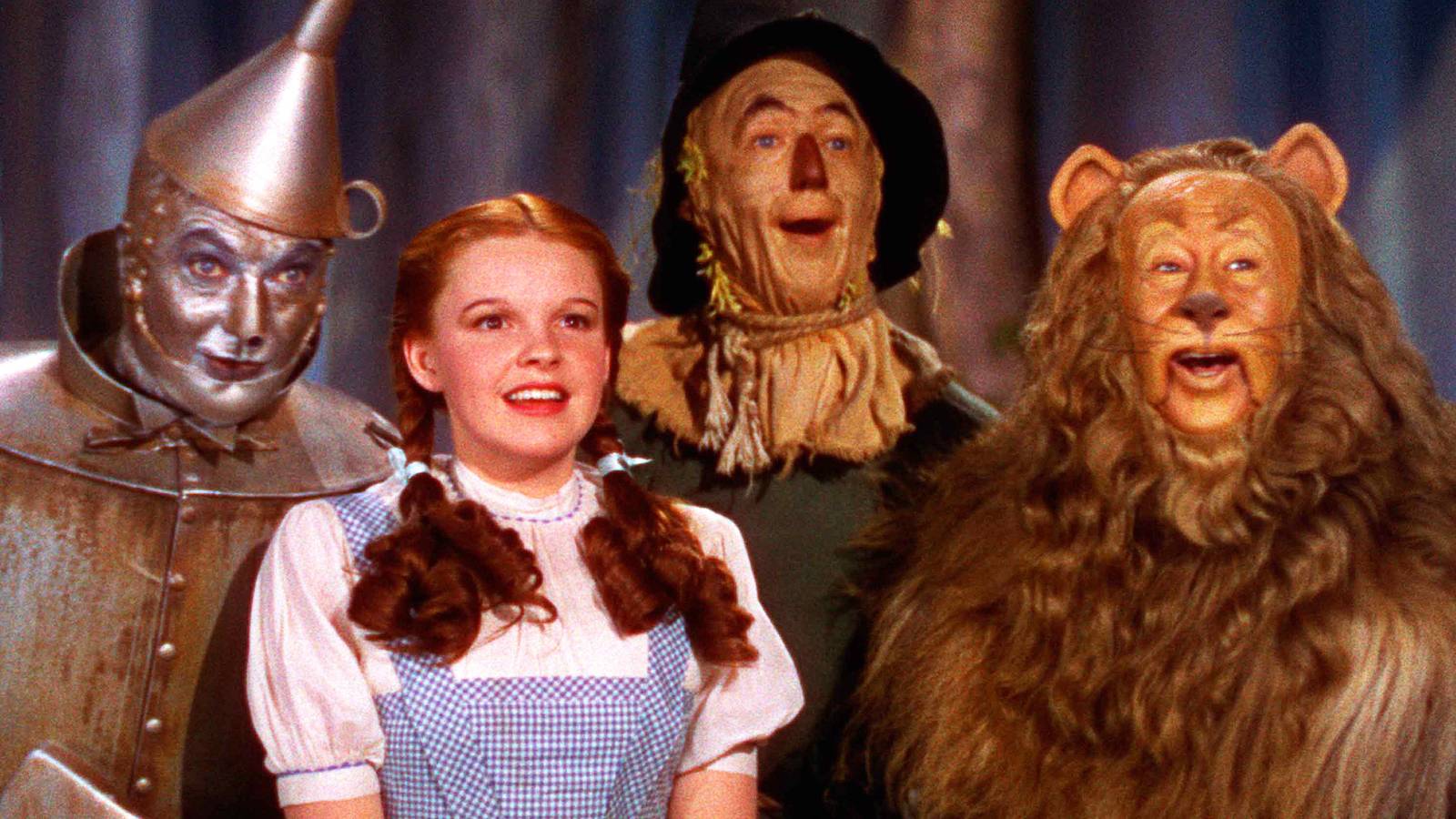
Image via Warner Bros. Published Sep 2, 2026, 5:34 AM EDT Remus is a writer, editor, journalist, and author with an eye for detail and an extremely active imagination. He is an enthusiast of everything to do with the graphic medium, whether it's Western comics and their adaptations or manga and anime. Remus is also the author of the sci-fantasy novel Once Upon a Time in Hyperspace and several works of short fiction in the mystery, comedy, and horror genres. Sign in to your Collider account Being a cinephile doesn’t just mean staying abreast of the latest productions, watching the best-rated films, or only exploring the most obscure works. True love for cinema goes beyond mere entertainment, becoming a passion for films as an art form and a desire to understand them for their visual language, historical achievements, and emotional and cultural impact. And what would be love for cinema without the films that shaped the industry for over a century? Such classics are pieces of time that humanity cannot (or should not) forget. These films are among the greatest in the history of cinema and have the power to entertain, inform, enchant, and change how people see the world, often shaping the world we know today. It would be impossible to narrow down a handful of titles as the best and the greatest of over a century of cinema, but we’ve taken a stab at it anyway. Here’s our selection of some of the absolute must-watch Hollywood classics that every cinephile needs to see. 1 ‘The Godfather’ (1972) Image via Paramount Pictures Francis Ford Coppola’s epic film adaptation of Mario Puzo’s crime bestseller, The Godfather is the definitive blueprint for modern crime and gangster cinema. The first installment of the titular trilogy, The Godfather narrates the generational saga of the Corleone mafia family, with an attack on the patriarch, Vito, forcing his son, Michael, to reluctantly take his place. Marlon Brando and Al Pacino star as the father-son duo, and the ensemble cast also includes James Caan, Diane Keaton, Richard Bright, Talia Shire, Robert Duvall, and more. A landmark film of the New Hollywood era, The Godfather is a true masterpiece of gangster cinema that has since profoundly influenced the genre. The film shifted the narrative of mafia stories from flashy, unhinged mobsters to deep, operatic tragedies about power, corruption, and family values, changing how the audience saw crime and family within the same framework. The film was a critical darling of its time and has since remained an evergreen favorite that still finds new fans with its exceptional writing, direction, acting, cinematography, and background score. 2 ‘Psycho’ (1960) Image via Paramount Pictures Alfred Hitchcock’s most subversive and unconventional film, Psycho, adapted from the Robert Bloch novel, is a movie that changed Hollywood forever. Starring Anthony Perkins as the odd motel owner Norman Bates, the film follows his interaction with Marion Crane, an embezzler on the run who checks into his motel and then disappears. Tensions rise when an investigator hired by Marion’s family comes to the Bates Motel searching for her and encounters Norman. Other key characters in the film are played by Janet Leigh, Vera Miles, John Gavin, and Martin Balsam. Psycho was a unicorn of its time, completely overhauling the genre expectations and laying the foundation of what would one day evolve into modern slasher thrillers. With his inventive cinematography and slick suspense, Hitchcock created motifs and scenes that the audience had never imagined before. A timeless thriller masterpiece, underscored by iconic scenes, music, and stellar performances, Psycho ranks among the darkest serial killer movies ever made and is absolutely unmissable for genre fans. 3 ‘2001: A Space Odyssey’ (1968) Image via Metro-Goldwyn-Mayer Stanley Kubrick’s epic sci-fi film, which he co-wrote with Arthur C. Clarke, 2001: A Space Odyssey revolves around the sudden appearances of strange monoliths across different timelines of human civilization through the 21st century. The film focuses on a deep space mission conducted by a group of scientists and a sentient supercomputer called HAL 9000, which sets out to find the origins of the strange artifacts, but turns into a fateful voyage that will reshape humanity's existence. Keir Dullea, Gary Lockwood, William Sylvester, Daniel Richter, and Douglas Rain star in the main roles. A larger-than-life saga of human evolution, space, extraterrestrial life, and artificial intelligence, 2001: A Space Odyssey is a seminal work of science fiction cinema. Grand and stunning, the film broke new ground in visual effects and storytelling, without relying heavily on dialogue or action. Often considered Kubrick’s magnum opus and a true cinematic masterpiece, 2001: A Space Odyssey is undeniably the most immersive space adventure film ever made, whose impact and influence continue through the 21st century. Collider Exclusive · Oscar Best Picture Quiz Which Oscar Best PictureIs Your Perfect Movie? Parasite · Everything Everywhere · Oppenheimer · Birdman · No Country Five Oscar Best Picture winners. Five completely different visions of what cinema can be — and what it can do to you. One of them is the film that was made for the way your mind works. Ten questions will figure out which one. 🪜Parasite 🌀Everything Everywhere ☢️Oppenheimer 🐦Birdman 🪙No Country for Old Men FIND YOUR FILM → 01 What kind of film experience do you actually want? The best movies don't just entertain — they leave something behind. ASomething that pulls the rug out — that makes me think I'm watching one kind of film and then reveals I'm watching another entirely. BSomething overwhelming — funny, sad, absurd, and genuinely moving, all at once. CSomething grand and weighty — a film that makes me feel the full scale of what I'm watching. DSomething formally daring — a film that pushes what cinema can even do. ESomething lean and relentless — pure tension with no wasted frame. NEXT QUESTION → 02 Which idea grabs you most in a film? Great films are driven by a central obsession. What's yours? AClass, inequality, and what people are willing to do when desperation meets opportunity. BIdentity, family, and the chaos of trying to hold your life together when everything is falling apart. CGenius, moral responsibility, and the catastrophic weight of a decision you can never take back. DEgo, legacy, and the terror of becoming irrelevant while you're still alive to watch it happen. EEvil, chance, and whether moral order actually exists or if we just tell ourselves it does. NEXT QUESTION → 03 How do you like your story told? Form is content. The way a story is shaped changes what it means. AGenre-twisting — I want it to start in one lane and migrate into something completely different. BMaximalist and genre-blending — comedy, action, drama, sci-fi, all in one ride. CEpic and non-linear — cutting between timelines, building a mosaic of cause and consequence. DA single unbroken flow — I want to feel like I'm living it in real time, no cuts to safety. ESpare and precise — every scene doing exactly what it needs to do and nothing more. NEXT QUESTION → 04 What makes a truly great antagonist? The opposition defines the protagonist. What kind of opposition fascinates you? AA system — invisible, structural, and almost impossible to fight because it has no single face. BThe self — the ways we sabotage, abandon, and fail the people we love most. CHistory — the unstoppable momentum of events that no single person can stop or redirect. DThe industry — the machinery of culture that chews up talent and spits out irrelevance. EPure, implacable evil — a force so certain of itself it becomes almost philosophical. NEXT QUESTION → 05 What do you want from a film's ending? The final note is the one that lingers. What do you want it to sound like? AShock and inevitability — a conclusion that recontextualises everything that came before it. BEarned emotion — I want to cry, laugh, and feel genuinely hopeful, even if the world is a mess. CDevastation and grandeur — an ending that makes me sit in silence for a few minutes after. DAmbiguity — something that leaves enough open that I'm still thinking about it days later. EBleakness — an honest refusal to pretend the world is tidier than it actually is. NEXT QUESTION → 06 Which setting pulls you in most? Where a film takes place shapes everything — mood, stakes, what's even possible. AA gleaming modern city with a hidden underside — beauty masking rot, wealth masking desperation. BA collapsing suburban life that opens onto something infinite — the multiverse of a single ordinary person. CThe corridors of power and science at a world-historical turning point — where decisions echo for decades. DThe grimy, alive chaos of New York and Hollywood — fame as both destination and trap. EVast, indifferent landscape — desert and highway where violence arrives without warning or reason. NEXT QUESTION → 07 What cinematic craft impresses you most? Every great film has a signature — a technical or artistic element that makes it unmistakable. AProduction design and mise-en-scène — every frame composed to carry meaning beneath the surface. BEditing and tonal control — the ability to move between registers without losing the audience. CScore and sound design — music that becomes inseparable from the dread and awe of what you're watching. DCinematography as performance — the camera not recording events but participating in them. ESilence and restraint — what's left unsaid and unshown doing more work than any dialogue could. NEXT QUESTION → 08 What kind of main character do you root for? The protagonist is the lens. Who you choose to follow says something about you. ASomeone smart and resourceful who makes increasingly dangerous decisions under pressure. BSomeone overwhelmed and ordinary who turns out to be capable of something extraordinary. CA brilliant, tortured figure whose gifts and flaws are inseparable from each other. DA self-destructive artist whose ego is both their superpower and their undoing. EA quiet, principled person trying to make sense of a world that has stopped making sense. NEXT QUESTION → 09 How do you feel about a film that takes its time? Pace is a choice. Some films sprint; others let tension accumulate slowly, deliberately. AI love a slow build when I know the payoff is going to be seismic — patience for a devastating reveal. BGive me relentless momentum — I want to feel breathless and emotionally spent by the end. CEpic runtime doesn't scare me — if the material demands three hours, give me three hours. DI want it to feel propulsive even when nothing is technically happening — restless energy throughout. EDeliberate and unhurried — I want dread to accumulate in the spaces between the action. NEXT QUESTION → 10 What do you want to feel walking out of the cinema? The best films leave a mark. What kind of mark do you want? AUnsettled — like I've just seen something I can't fully explain but can't stop thinking about. BMoved and energised — like the film reminded me what actually matters and gave me something to hold onto. CHumbled — like I've been in the presence of something genuinely important and overwhelming. DExhilarated — like I've just seen cinema doing something it's never quite done before. EHaunted — like a cold, quiet dread that stays with me for days. REVEAL MY FILM → The Academy Has Decided Your Perfect Film Is…Your answers have pointed to one Oscar Best Picture winner above all others. This is the film that was made for the way your mind works. ParasiteYou are drawn to films that operate on multiple levels simultaneously — that begin in one genre and quietly, brilliantly migrate into another. Bong Joon-ho's Parasite is a film about class, desire, and the architecture of inequality that manages to be darkly funny, deeply suspenseful, and genuinely shocking across a single extraordinary running time. Your instinct is for cinema that hides its true intentions until the moment it's ready to reveal them. Parasite is exactly that — a film that rewards close attention and punishes assumptions, right up to its devastating final image. Everything Everywhere All at OnceYou want it all — and this film gives you all of it. The Daniels' Everything Everywhere All at Once is one of the most maximalist films ever made: action comedy, multiverse sci-fi, family drama, existential crisis, and a genuinely earned emotional core that sneaks up on you amid the chaos. You are someone who responds to ambition, who doesn't want cinema to choose between being entertaining and being meaningful. This film refuses that choice entirely. It is overwhelming by design, and its overwhelming nature is precisely the point — because the feeling of being crushed by infinite possibility is exactly what it's about. OppenheimerYou are drawn to cinema on a grand scale — films that understand history not as a backdrop but as a force, and that place their characters inside that force and watch what happens. Christopher Nolan's Oppenheimer is a film about the terrifying gap between what we can do and what we should do, told with the full weight of one of the most consequential moments in human history behind it. You want your films to feel important without feeling self-important — to earn their ambition through sheer craft and the gravity of their subject. Oppenheimer does exactly that. It is enormous, complicated, and refuses easy comfort. BirdmanYou are drawn to films that foreground their own construction — that make the how of the filmmaking part of the what it's about. Alejandro González Iñárritu's Birdman, shot to appear as a single continuous take, is cinema examining itself through the cracked mirror of a fading actor's ego. You respond to formal daring, to the feeling that a film is doing something that probably shouldn't be possible. Michael Keaton's performance and Emmanuel Lubezki's restless camera create something genuinely unlike anything else — a film that is simultaneously about creativity, relevance, self-destruction, and the impossibility of ever truly knowing if your work means anything at all. No Country for Old MenYou are drawn to cinema that trusts silence, that refuses to explain itself, and that treats dread as a form of meaning. The Coen Brothers' No Country for Old Men is a film about the arrival of a new kind of evil — implacable, arbitrary, and utterly indifferent to the moral frameworks we use to make sense of the world. It is one of the most formally controlled films ever made, and its controlled restraint is what makes it so terrifying. You want your films to haunt you, not comfort you. You are not interested in resolution if resolution would be dishonest. No Country for Old Men is honest in a way that most cinema never dares to be. ↻ RETAKE THE QUIZ Image via Universal Pictures Steven Spielberg’s sci-fi classic about a 10-year-old boy named Elliott and his earnest attempts to help a lost alien creature, E.T. the Extra-Terrestrial, or simply E.T., is a timeless tale of friendship and empathy. After Elliott finds E.T. stranded in the woods, he tries to find a way to send it back to its home planet with the help of his siblings, while evading his parents and the authorities. The film stars Henry Thomas, Dee Wallace, Peter Coyote, Robert MacNaughton, and Drew Barrymore in roles that still remain memorable four decades later. E.T. was not only a smash hit of its time, surpassing the success of Star Wars, but it also became the most heartwarming and charming alien film ever made and holds that record to date. The film radically changed sci-fi cinema of its era, shifting from cold, terrifying alien invasions to cozy, emotional, family-friendly adventures. A film that reinvented the human-alien relationship in cinema, E.T. is an absolute genre classic that proves that heart and childlike wonder can often surpass dystopian dread in understanding the unknown. 5 ‘Gone with the Wind’ (1939) Image via Metro-Goldwyn-Mayer An epic historical romance film by Victor Fleming, based on Margaret Mitchell’s 1936 novel of the same name, Gone with the Wind tells the story of Scarlett O’Hara, a strong-willed young woman and daughter of a Georgia plantation owner. As the country is torn apart by the Civil War, Scarlett navigates wartime hardships, complicated relationships, and turbulent romance, while struggling to protect her family’s plantation as the society around her begins to crumble. The story’s key characters are immortalized by Vivien Leigh, Clark Gable, Leslie Howard, Hattie McDaniel, and Olivia de Havilland. Gone with the Wind, without a doubt, is a controversial cinematic artifact that does not exactly hold up in the contemporary context. But at the same time, the film also represents the peak of Hollywood’s Golden Age craftsmanship with its brilliant cinematography, massive scale, and historical performances. Its problematic legacy aside, Gone with the Wind is a definitive film of its time that set new records at the Academy Awards and made Hattie McDaniel the first Black actress to win an Oscar. 6 ‘The Dollars Trilogy’ (1964–1966) Image via United Artists Sergio Leone's seminal spaghetti Western cycle and Clint Eastwood’s biggest breakthrough, the Dollars Trilogy follows three unconnected stories centering on an anonymous drifter and mercenary, aka The Man with No Name, in 19th-century America. Told in reverse chronology, the films depict the man’s various escapades as he wanders across the Old Wild West during the Civil War era, dealing with violent gangs, teaming up with other bounty hunters, and hunting for hidden gold. Mario Brega, Aldo Sambrell, Benito Stefanelli, and Lorenzo Robledo also star in all three films in various roles. While Westerns did exist before the Dollars Trilogy, Sergio Leone’s trio of films paved the way for the genre to become a global phenomenon. Gritty and grungy, with a morally messy anti-hero-like hero, the films launched a new generation of Hollywood Westerns. With its distinctive staging, costumes, gunfights, and Ennio Morricone’s music, every film in the Dollars Trilogy has since ranked among the greatest Westerns ever made, inspiring generations of filmmakers around the world. 7 ‘The Wizard of Oz’ (1939) Image via Metro-Goldwyn-Mayer L. Frank Baum’s 1900 novel, The Wonderful Wizard of Oz, has been adapted several times throughout the century, but the 1939 film by Victor Fleming remains the greatest. Starring Judy Garland in her most iconic role, The Wizard of Oz reimagines the story of Dorothy, a young farmgirl from Kansas, who gets swept up in a tornado with her dog, Toto, and lands on the mysterious land of Oz, where they embark on a fantastical journey alongside new friends. Frank Morgan, Ray Bolger, Bert Lahr, Jack Haley, Billie Burke, and Margaret Hamilton play other key characters. The Wizard of Oz goes down in history as a cinematic landmark, with its pioneering use of Technicolor and its transition from black-and-white tone to full-spectrum color to depict Dorothy’s life before and after her wondrous journey. With its groundbreaking visual effects and music that still remains memorable nearly a century later, the film is an ultimate masterpiece of adventure storytelling. A story of friendship, courage, and self-discovery, The Wizard of Oz has been widely celebrated for its deep symbolism and perennial charm. 8 ‘Casablanca’ (1942) Image via Warner Bros. Pictures One of the greatest romance films ever made, and a film that reinvented Humphrey Bogart’s on-screen persona, Casablanca follows Rick Blaine, an American expat running a nightclub in the titular city in French Morocco in 1941. When his former lover, Ilsa, and her husband, a resistance leader, seek Rick’s help to escape the Axis-controlled town, Rick is forced to choose between the love of his life and fighting against the Nazis. Ingrid Bergman plays the iconic heroine, with Claude Rains, Conrad Veidt, Sydney Greenstreet, Peter Lorre, and Dooley Wilson in other notable roles. Directed by Michael Curtiz, Casablanca is a quintessential Hollywood romance that is also grounded in reality and proves how subverting the traditional endings can also be immensely fulfilling. At its time, Casablanca broke all expectations and won the Oscar for Best Picture, and since then has ranked among the finest films of cinema’s history. Tying war propaganda, romantic melodrama, and film noir into a single narrative, the film brings a lot of moods and colors to the story, capping off with one of the most beautiful final moments ever seen in Hollywood history. Release Date January 15, 1943 Runtime 102 minutes Director Michael Curtiz Cast Humphrey Bogart Rick Blaine
Don’t Call Yourself a Cinephile Unless You’ve Seen These 8 American Classics
Full Article
Original Source
Read the full article at Collider →KhanList aggregates and links to publicly available news content. We do not host full articles from third-party sources. Always verify important information with original sources.