
This is Dispatches with Patrick Cockburn, a subscriber-only newsletter from The i Paper. If you’d like to get this direct to your inbox, every single week, you can sign up here. The US and Israel attacked Iran on 28 February confident they could achieve regime change. By an extraordinary irony, eight months later the greatest regime-change taking place as a result of the war is in Washington, not Tehran. Donald Trump’s administration is not sinking with all hands, but it is visibly holed below the waterline, its chief member demoralised and fights breaking out over who to blame for its electoral calamity. To a degree, all governments depend for their authority on bluffing and frightening everybody into believing that they are all-powerful and able to ignore puny efforts to resist them. Nothing exposes this masquerade as swiftly and humiliatingly as an unsuccessful war waged against a smaller and weaker opponent. History is full of supposed turning points when the political world turns out not to have turned quite as much as observers had expected. But I suspect that this will not prove true of the US midterm elections just past, when the greatest global power moved decisively in one direction when it might have gone another way. During my career as a foreign correspondent, I have watched democratic and semi-democratic states, such as Russia in 1999 and Turkey in 2016, turn into full-blown dictatorships. I understand how swiftly and irrevocably this can occur – and in the last two years America was fast going the same way. Trump may appear to be a uniquely American phenomenon, yet his actions mirrored all the classic moves by which modern-day populist dictators, like Vladimir Putin in Russia and Recep Tayyip Erdoğan in Turkey, established autocratic rule. They hold nominally free elections but have enough influence over them to ensure they never lose. Republicans now point to the swingeing losses as proof this never happened, but if it did not, it was not for lack of trying right up to election day. In the last 18 months, Trump made multiple efforts to in effect steal the midterms – something he falsely accused Joe Biden of doing in the presidential election in 2020. He put his full authority behind a Republican campaign to gerrymander congressional districts to his party’s advantage, which, without the Iran war generating a Democratic landslide, might well have been an election-winning ploy. His campaign to control the election machinery was ruthlessly fought on many fronts. Walter Olson of the Cato Institute writes that from March 2025, Trump signed multiple executive orders that “asserted sweeping powers over elections that neither the Constitution nor Congress had assigned to presidents”. Dozens of lawsuits were filed to compel election officials, through threat of criminal prosecution, to submit voter rolls to be inspected and purged by Washington. Trump had an ultimately abortive plan to appoint proxies to run the US Postal Service who would decide who could vote by mail. With 24 million voters in the midterms – 20 per cent of the total – using mail-in ballots, this and other measures had the potential to swing an election had they not been blocked by the lower courts. Already the outcome of the midterms begins to feel inevitable, so that people may forget – and the Republicans dearly hope they will forget – that up until a few months ago their strenuous efforts to fix the election might have worked. Yet obituaries of Trumpism are premature, with 53 per cent of white males – rising to 63 per cent for those without a college degree – voting Republican, according to an NBC exit poll. Some 24 per cent of all voters still identify with Maga and 82 per cent of evangelical Christians stayed firmly in the Trump camp. While 62 per cent of voters disapprove of the President, it is still shocking to find that, after two years of brutal, incompetent, corrupt government by Trump, about 38 per cent of voters still approve of him. Much of Trump’s famous “base” stays loyal, but the all-important magic of invincibility is gone. Populist nationalist movements may differ from country to country, but they all have a cult of the supreme leader, from Narendra Modi in India today to Benito Mussolini in Italy a century ago. Most “strongmen” or Latin American caudillos have feet of clay, but nothing exposes this like a failed war. Vice-President JD Vance is certainly correct in saying this is the overriding explanation for Republican defeat, but it is too late to do much about it. Conceivably, Trump might opt for one last throw of the dice and start a third round of his war with Iran, but he and Vance have been ruling this out in recent days. The only time the Republicans recovered briefly in the polls over the summer was during the short-lived peace deal – or memorandum of understanding – with Iran, and when it collapsed so did Republican support. Vance adds that to win back voters, the White House must prioritise distancing itself from Israel, showing how far the geopolitical map has been transformed by the war. America dodged the authoritarian bullet almost accidentally thanks to a failed war – but it came perilously close. Further Thoughts Ability as an orator was once considered to be an essential skill for a politician. Speeches by leaders like Abraham Lincoln were reported verbatim in local newspapers long before he became US president. The same was true of Liberal leader WE Gladstone in Britain. I assume that radio and television played a role in killing this skill off because they reported only soundbites. Our expectations of speakers are now very low. I remember a speech by Sir Keir Starmer to the Labour Party Conference in 2025 bulging with dead phrases and simple-minded slogans. Yet this rhetorical car crash was widely commended, not least by Starmer himself, as showing his real strength as a political leader. Reform leader Nigel Farage’s pedestrian speeches – “You know what?” is his default phrase to underline what a frank and engaging fellow he is – won him an undeserved reputation for silver-tongued eloquence. Internet platforms are to blame for much but have put oratory back in business as an essential political tool. One of the attractive features of the US midterm elections was that listening to what was said at political rallies was often a pleasurable experience. Of course, this was still only true of a minority of candidates such as Senator Jon Ossoff in Georgia, James Talarico in Texas and Abdul El-Sayed in Michigan. But all can hold a live audience for hours and attract hundreds of thousands – and occasionally millions – of viewers online. The same is true of New York Mayor Zohran Mamdani, who is also exceptionally adept in turning the most hostile questions to his advantage without appearing evasive or aggressive. Trump always had the skills of a TV host, the most important of which is never to be boring whatever else you do. Mocked by the media for spewing out fake facts and crude abuse, his obsessive interest is with ratings – audience size – regardless of whether they like or dislike or believe him. Like a journalist, he knows what makes a headline, enabling him to get endless free exposure provided by TV companies that detest him. He and Vance long had an open goal, because nobody would listen to Kamala Harris or Joe Biden for fun. Beneath the Radar I was sorry to see that this week that Russian security forces finally closed down Novaya Gazeta, once the best independent newspaper in Russia. When I was a correspondent in Moscow between 1999 and 2002, they published occasional articles by me. To be a Russian journalist working for the paper was high up among the dangerous trades, with six or seven killed. I knew the most famous of them, Anna Politkovskaya, whom I first met in Chechnya during the war there when she was exposing Russian atrocities. I was unsurprised when she was shot dead on the stairs to her apartment in Moscow in 2006. It was fairly obvious that Russian security or their Chechen proxies were the culprits. The paper, founded in 1993 though online since 2022, was perhaps the last active beneficiary of Soviet leader Mikhail Gorbachev’s glasnost policy still in business. Founded with money from Gorbachev’s Nobel Peace Prize, the Chechen wars made the paper internationally famous. But the Ukraine war, which it also opposed and criticised, finally killed the paper off. “There are different ways to commit murder,” said co-founder and former editor-in-chief Dmitry Muratov. “They chose to strangle us.” Cockburn’s Picks A crucial question in post-general election Israel is whether or not the opposition to Israeli PM Benjamin Netanyahu’s government, led by Gadi Eisenkot, can manoeuvre successfully – and without splitting their 48-seat bloc – to secure the backing of the two Arab Israeli parties in the Knesset. Joint List and Ra’am hold 19 of the 120 seats. The Arab Israeli parties say they are willing to back an anti-Netanyahu coalition, but the Eisenkot bloc is pledged not to form a government dependent on their support. I enjoyed this interview with former Israeli PM and ex-Israel Defence Forces (IDF) chief of staff Ehud Barak in which he argues that if Netanyahu was opposition leader, he would not have the slightest hesitation in doing such a deal. Israeli generals tend to achieve wisdom after they leave politics.
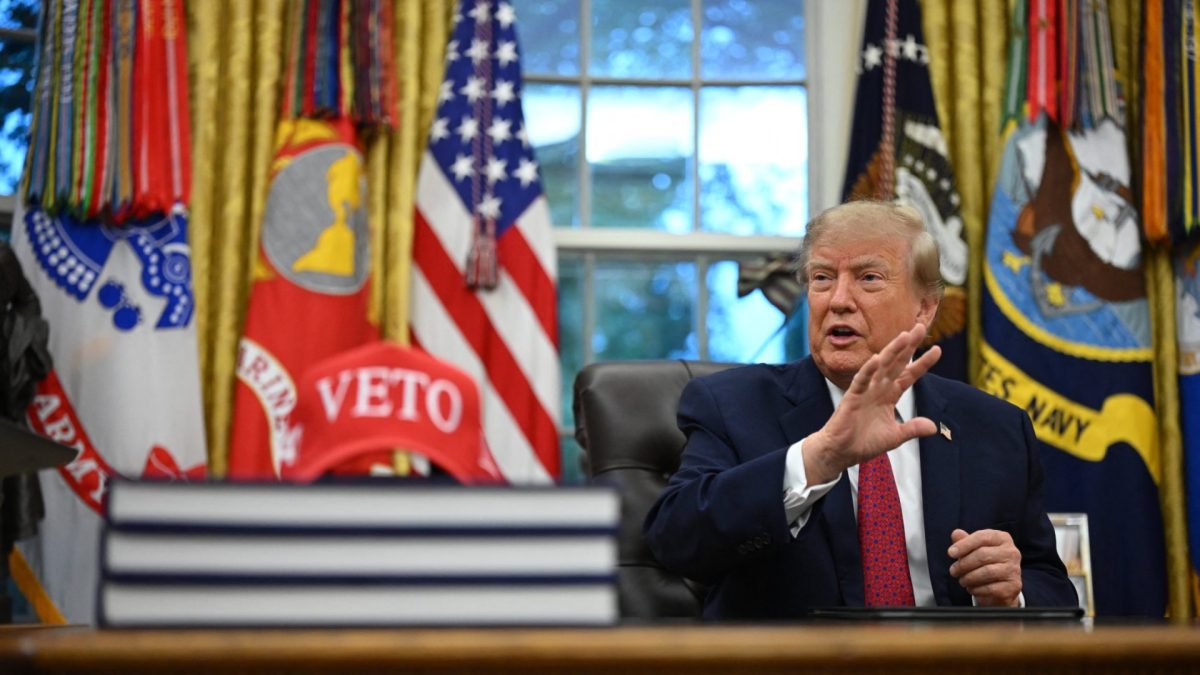
Don’t be fooled, the defeat of Trump doesn’t mean the end of Maga
Full Article
Original Source
Read the full article at Inews →KhanList aggregates and links to publicly available news content. We do not host full articles from third-party sources. Always verify important information with original sources.