
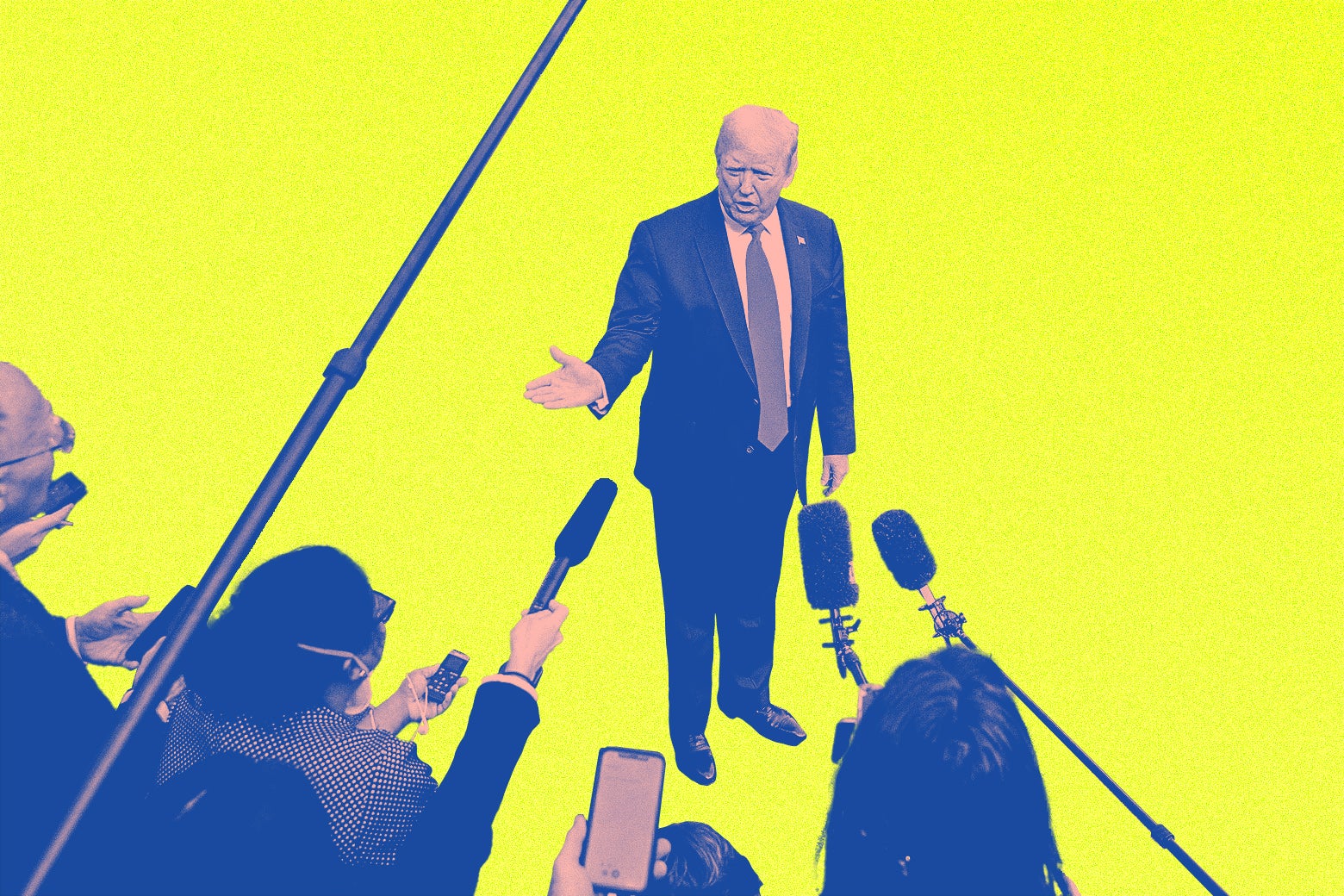
The Slatest This outburst says a lot about how the president’s long history of misogyny is infecting the rest of his party. Photo illustration by Slate. Photo by Chip Somodevilla/Getty Images. Sign up for the Slatest to get the most insightful analysis, criticism, and advice out there, delivered to your inbox daily. It’s perhaps not surprising that Donald Trump, a man who has many criticisms of the press and a long history of demeaning his female critics, reserves special rage for reporters who happen to be women. The latest example happened in the Oval Office yesterday, when Trump called CNN’s Kristen Holmes “a loud, boisterous person” and told her to “be quiet.” The president has attacked female journalists before, but it’s what happened next that really sets this outburst apart—and says a lot about how Trump’s misogyny is infecting the rest of his party. What exactly led to Trump’s outburst? Holmes, who has covered Trump for years, asked the president to respond to comments that Sen. Jon Ossoff, a Georgia Democrat, made over the weekend accusing Trump of neglecting his presidential duties by prioritizing his proposed White House ballroom and traveling with an aide named Natalie Harp (more on that later). Trump responded relatively civilly, calling Ossoff a “Pee-wee Herman look-alike” before going on a tear about the ballroom’s virtues. But later, when Holmes piggybacked on a colleague’s question about Trump wanting to scale back U.S. military drills with South Korea, the president erupted. “Quiet, quiet, quiet,” he said, pointing at Holmes and asking where she worked. “Fake news,” Trump snapped after she said CNN, raising his voice as she tried to repeat her question. “You’re a loud—you’re a loud, boisterous person. You’re fake news. Be quiet. Be quiet. Be quiet!” Not great. But is this really different from how Trump has berated other reporters in the past? Unfortunately, there’s more. After the Oval Office scrum, an X account run by the White House, called Rapid Response 47, twice posted about Holmes’ question about Ossoff. The first post called Holmes “a disgraceful, humiliating embarrassment to her alleged profession.” The second got more personal: “Someday, your children will come across your disgusting and inhumane question,” it read. “They will be sickened and embarrassed to have a parent be so callous and vindictive.” That’s pretty ugly. Has there been pushback? CNN released a statement praising Holmes for asking “a tough, relevant, and newsworthy question on behalf of the American people” and calling personal insults “beneath the office.” Other media figures also spoke up. “Just disgusting behavior by an anonymous account,” Chuck Todd, a former Meet the Press moderator, wrote of the post that mentioned Holmes’ children. “This is so cowardly & pathetic,” posted Stephanie Grisham, a former Trump press secretary turned critic. “Doesn’t an attack against a family undermine the GOP’s family-values messaging?” Holmes’ CNN colleague Brian Stelter wondered. Why was Trump so sensitive about Holmes’ question? We can’t know for sure, but he may have been mad about her earlier reference to Ossoff—and Ossoff’s to Harp. Harp, 35, is a particularly obsequious Trump aide and one of the few White House staffers who secretly boarded a military plane with the president via an airport catering truck after Iran threatened to attack Air Force One last month. Her proximity and devotion to Trump—she wrote him notes professing “You are all that matters to me” and “I want to bring you joy”—have sparked rumors of an affair, which may explain the White House’s heated response. Strange. But this kind of anti-reporter outburst isn’t exactly out of character for Trump, is it? Trump has a contentious relationship with CNN, regularly accusing the network of bias and singling out its reporters for verbal abuse. But the list of female journalists he’s gone after in anger reads like a who’s who of the Washington press corps writ large. It includes NBC’s Yamiche Alcindor (“second-rate”) and Julie Tsirkin (“fake news”), ABC’s Mary Bruce (“a terrible person”) and Rachel Scott (“a horror show”), the New York Times’ Katie Rogers (“ugly, both inside and out”) and Maggie Haberman (“Maggot is a loser!”), Bloomberg’s Catherine Lucey (“quiet, piggy”), and CBS’s Nancy Cordes (“a stupid person”). Not even Fox News is safe; on Sunday, Trump criticized network host Shannon Bream and called her show “beyond redemption.” Trump has also gotten mad at male reporters, of course. But the opprobrium he reserves for women who ask him questions he doesn’t like is a notable pattern. That White House staffers apparently felt comfortable anonymously attacking Holmes in personal terms suggests that the impulse has trickled down too. That kind of trickle-down misogyny isn’t totally new either, though, right? No. Back when I was a lowly Slate intern helping cover the 2016 presidential election, I wrote about a preteen boy at a Trump rally in Virginia who repeatedly screamed “Take the bitch down!” every time the future president mentioned Hillary Clinton. More than a decade later, the GOP is suffused with Trumpian misogyny. The party remains nearly in lockstep behind a man who bragged about grabbing women’s genitals, was found liable for sexually abusing a woman, and denigrated his female political rivals in sexist terms. It confirmed a Supreme Court justice facing sexual misconduct allegations. And it’s currently standing by a Republican congressman accused of abusing his wife and child. Some of the ways our civil fabric has frayed in the Trump era might have happened regardless. But the mainstreaming of sexism into one of America’s two major political parties seems fair to lay at Trump’s feet. Surely there’s something the press corps could do about this? Maybe. But none of the other journalists in the Oval Office with Holmes spoke up as the president berated her. Today I asked the White House Correspondents’ Association whether it has guidance for what reporters should do if the president starts yelling at a colleague. Should they tell Trump off? Should they complain to the White House press secretary? Should they leave the scrum in protest? I got no answer. But speaking to New York magazine yesterday, Correspondents’ Association president Jacqui Heinrich—a Fox reporter whom Trump has called “absolutely terrible”—suggested that insults from the leader of the free world may be just one more workplace hazard. “Any number of us have had him push back or snap at a question that we’ve asked, or made a comment,” she said. In fairness, it’s journalists’ job to record how the president answers questions, no matter how lie-filled or abusive the answers. But where once these kinds of outbursts would have made waves, they now seem to ripple at best. Fewer Americans than ever trust the news media, polls show, a credibility problem that Trump has both worsened and exploited; so far, these incidents have yielded no real consequences for a president who, despite his criticisms of the media, feeds on its attention. The result is a no-win situation for all reporters who find themselves face-to-face with Trump, but particularly female ones. If they object to the president’s behavior, it fuels a narrative that the press is out to get him. If they turn the other cheek, it invites accusations that the media is affording Trump a level of grace it would never give another president. The real solution, of course, would be for voters to not elect presidents who can’t handle tough questions—and who regularly fly off the handle when women ask them. But given how Trump’s other impulses have transformed his party, we shouldn’t assume he’ll be the last. Tolga Akdoğan All right, you’re caught up on one of the most important stories of the day! Here are some ideas from my colleagues about how to unwind as you head into the rest of your evening: Some tricks to relieve stress: From the archives, yoga teacher Sara Pam Neufeld shares a workout that takes seconds—and could actually improve your quality of life. Advice for coping with day-to-day annoyances: Doree Shafrir offers some sound advice to a letter writer who can’t stand the way a co-worker sneezes, and it can apply to coping with all kinds of things that grate on you in life. A delicious word salad: How many words can you create with the letters Y, B, O, F, U, and N? There’s one way to find out. A wide-ranging conversation with a bestselling novelist: Anna Sale spoke to Elizabeth Strout, author of Amy and Isabelle and Olive Kitteridge, about her excitement about turning 70, her later start in publishing, and grappling with the lives we haven’t lived as we get older. That’s it for tonight! Thanks for reading, and we’ll see you tomorrow. Donald Trump Media Republicans Sexism
Donald Trump’s Trickle-Down Misogyny
Full Article
Original Source
Read the full article at Slate →KhanList aggregates and links to publicly available news content. We do not host full articles from third-party sources. Always verify important information with original sources.