
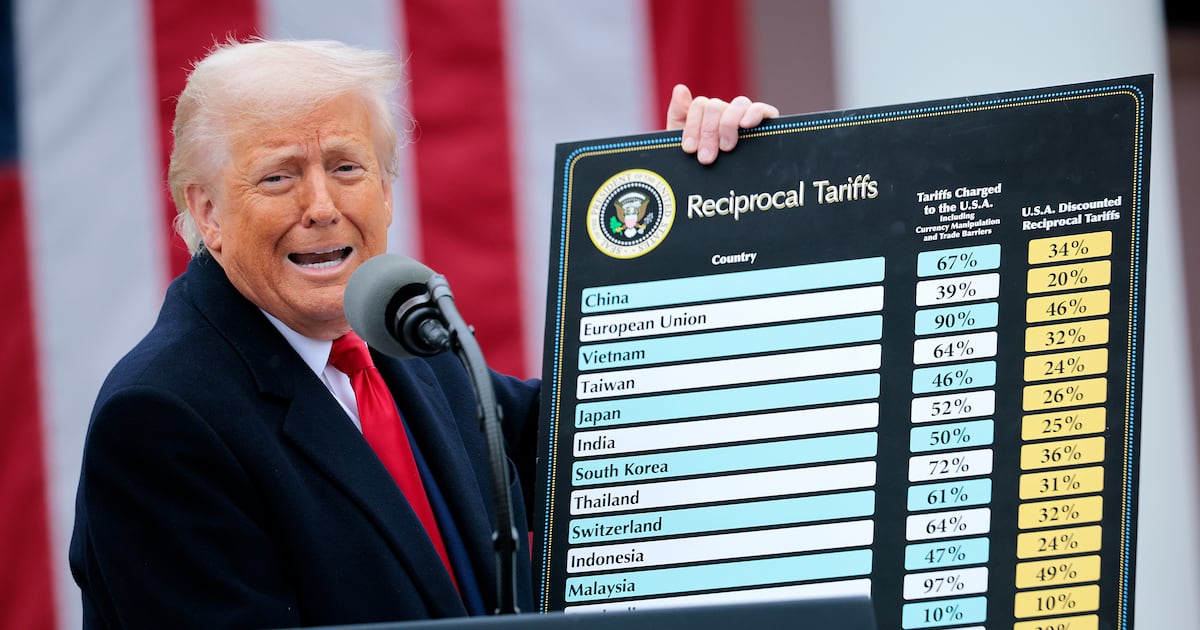
Donald Trump has unveiled plans for new tariffs on the US’s major trading partners, including the European Union, doubling down on his signature economic policy despite steep Republican losses in the midterm elections.US officials are proposing tariffs of up to 20 per cent on specific lists of goods from more than a dozen trading partners, with China and Vietnam facing the highest rate, and the EU being subject to 15 per cent.The European Commission, which leads on trade policy for the EU bloc, said it expected new tariffs from the Trump administration to keep the total levy charged on EU goods capped at the 15 per cent rate agreed last year. The 15 per cent “ceiling” on tariffs applied to trade from EU states into the US was “all-inclusive”, the commission’s trade spokesman Olof Gill said on Wednesday.READ MORE“We expect any measure from this investigation to respect it in full, including when combined with existing duties.” The EU’s powerful executive arm rejected any suggestion Europe was a source of structural overcapacity, a concept in trade policy that describes a scenario where a country produces far more than its domestic market can consume, fuelling a need to export goods and products elsewhere, often at artificially low prices that undercut manufacturers in other markets.“To the contrary, Europe is among those most exposed to overcapacity. The EU and the US share a real concern about global overcapacity, much of it state-driven and concentrated in third countries. We regret the lack of joint action,” Gill said. Most of the new levies, which come after the US president’s “liberation day” tariffs were ruled unlawful earlier this year, will match the rates agreed in trade deals struck since he unleashed his trade war.China had agreed a 10 per cent reciprocal tariff rate with the US earlier this year, on top of a 10 per cent levy that related to fentanyl. The new proposal for a matching 20 per cent rate could be doubled if US officials believe Beijing has stopped abiding by the terms of its previous trade truce with the US.[ ‘No good options’: US army plans huge explosion that could shower lead dust on IowaOpens in new window ]US president Donald Trump and first lady Melania Trump. Photograph: Emily Curiel/EPA The latest wave of tariffs comes as Trump continues to push his trade strategy, even after voters punished Republicans in November’s midterm elections over rising prices, driven by tariffs and the war in Iran.The US president’s top trade negotiator, Jamieson Greer, has been formally investigating a list of economies, including those of China, the EU, Japan and South Korea, over whether they give their own companies unfair subsidies.Greer and other US officials have argued that government subsidies unfairly benefit foreign companies and harm US business, while also leading some countries to send artificially cheap goods to the US.Earlier this summer, US officials applied 10 to 12.5 per cent blanket tariffs to trading partners to retaliate for failures to tackle forced labour practices. The new tariffs will not be added to those levies. A US official said countries would pay the higher of the two tariffs.The proposed new duties will affect 14 US trading partners, including China, Japan, South Korea, the EU, India, Indonesia, Malaysia, Singapore, Switzerland, Taiwan, Thailand, Vietnam, Bangladesh and Cambodia.Cambodia, Indonesia, Malaysia, Thailand and Bangladesh all received proposed tariffs of 18 per cent.Taiwan, Korea and Japan will be hit with 15 per cent, and Singapore with 10 per cent.Mexico and Norway were included in the probe, but reports on the two countries were not released this week.A US official on Tuesday said for most countries investigated, USTR found that a “higher rate is warranted”, but it would be “willing to apply a lower tariff rate”.The move comes a week after Trump met Chinese President Xi Jinping in Shenzhen and less than two months before the ceasefire in the US-China trade war expires on January 10th.The US official said Trump and Xi had a “great meeting” in the southern Chinese city and that he did not expect countries affected by the new proposed tariffs, including China, to retaliate against the measure.US and Chinese negotiators extended their trade war truce by two months until January, rather than the much longer extension that Beijing had requested.The US has been unwilling to agree to a longer extension because it believes China is not fulfilling its previous pledge to stop restricting the export of rare earths. The official on Tuesday said the US had “seen some progress from them on rare earths over the past few days”, without providing details. – Additional reporting by the Financial Times[ Oil extends decline on signs of continuing US-Iran diplomacyOpens in new window ]
Donald Trump proposes raft of new tariffs on major economies
Full Article
Original Source
Read the full article at Irishtimes →KhanList aggregates and links to publicly available news content. We do not host full articles from third-party sources. Always verify important information with original sources.