
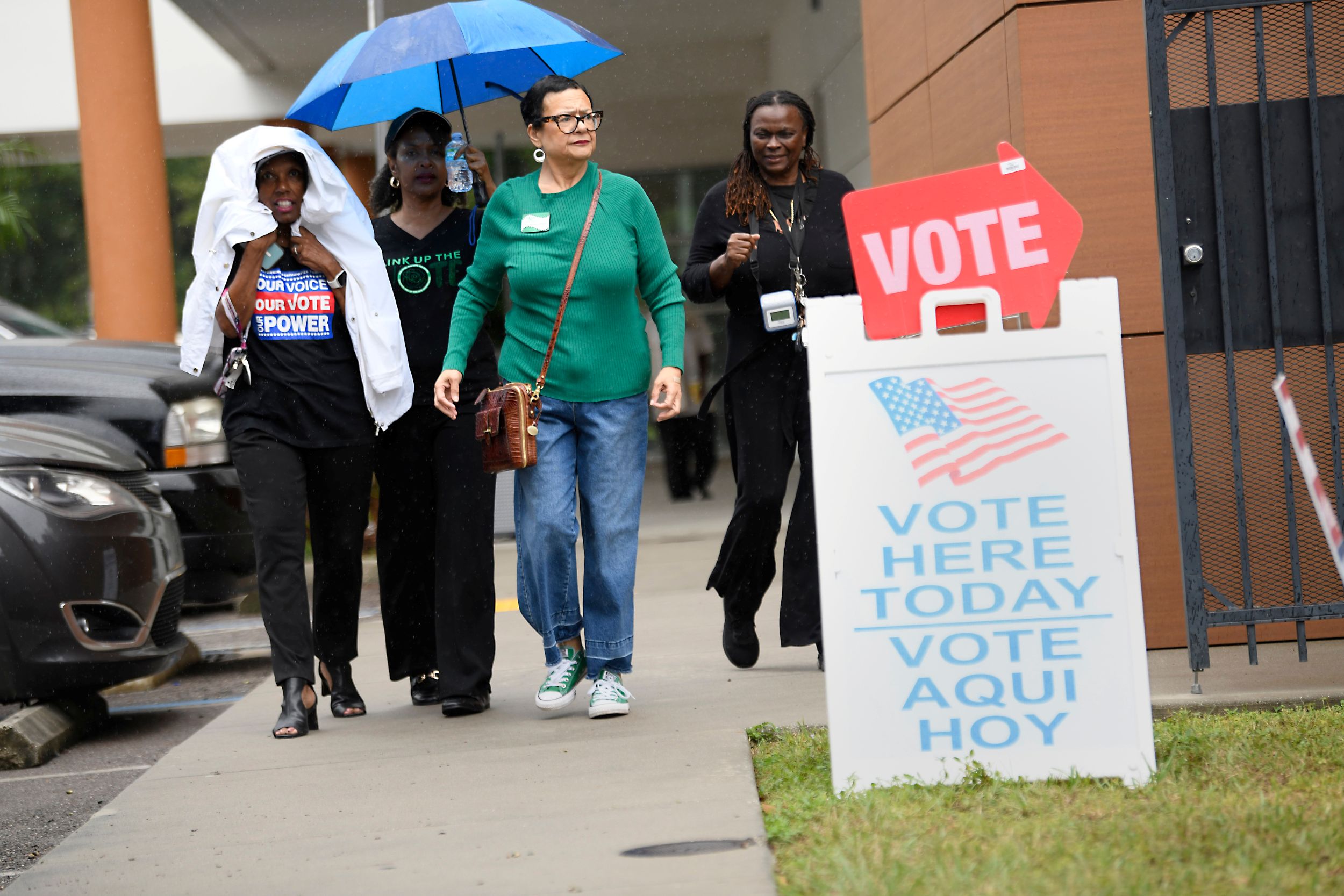
The 1,000 monitors have largely been sent to jurisdictions that voted for Kamala Harris in 2024 and are populated by Black and Latino voters; Michigan and Texas have the most jurisdictions listed.WASHINGTON (CN) — The Justice Department announced Tuesday that it had, for the first time in American history, deployed over 1,000 election monitors to polling stations in all 50 states.The announcement comes after a highly polarized campaign for the November midterms that is likely to shake up the power balance in Washington against President Donald Trump, as he faces historically low approval ratings over his handling of the economy, his extreme anti-immigrant agenda and his unpopular war in Iran.Throughout the 50 states, the monitors have been sent to certain jurisdictions in each state. Of the 126 jurisdictions, former Vice President Kamala Harris defeated President Donald Trump in about two-thirds of the locations in the 2024 presidential election.Michigan and Texas — the two states with the most highlighted Senate races in the country this midterm cycle, between Democrat Abdul El-Sayed and Republican Mike Rogers in Michigan and Democrat James Talarico and Republican Ken Paxton in Texas — have the most listed jurisdictions, with seven and eight, respectively.New York, Illinois and Georgia each had five jurisdictions listed, while Florida, California, Arizona, Pennsylvania and Virginia had four. Black and Latino voters make up a majority in many of the 126 jurisdictions.According to the Justice Department, the Civil Rights Division is leading the effort, with personnel from the division, other Justice Department components, U.S. attorneys’ offices and federal observers from the Office of Personnel Management.Assistant Attorney General Harmeet K. Dhillon, head of the Civil Rights Division, announced the monitors’ deployment as a continuation of the Justice Department’s long-standing practice of sending monitors under the 1965 Voting Rights Act.“Election integrity has been one of the top priorities for this administration and this Division,” Dhillon said in a statement. “I am very proud we are deploying the largest monitoring effort in DOJ history, and pursuing transparency for elections in an assertive and nondiscriminatory manner.”Trump has spent a large part of the last year reviving claims of election fraud, both in his previous electoral losses and in advance of the November midterms, and instructing the Justice Department to pursue an unprecedented litigation campaign against states to purge their voter rolls of supposed noncitizens.In a July national address, Trump rehashed claims of foreign interference in the 2020 presidential election, asserting China carried out “the largest compromise of election data in history” by acquiring 220 million U.S. voter files.This past week, Trump urged the Supreme Court to set aside 20,000 ballots from suspected noncitizens in California, marking a major escalation in the administration’s effort to exert federal control in state-run elections. The Justice Department filed a similar challenge in Washington state, where it advanced further claims of noncitizen voter fraud.The justices swiftly rejected the request on Monday, denying the government’s emergency request before hearing any briefing from California officials in an unsigned order without any noted dissents.In another unprecedented case, the Justice Department sued to block the certification of election results in Alaska’s Senate race over concerns voters will be confused by the inclusion of two Dan Sullivans on the ballot. Incumbent Republican Senator Dan Sullivan faces Democrat Representative Mary Peltola, as well as Daniel Sullivan Jr., who is not affiliated with a political party.On Sunday, U.S. District Judge Sharon Gleason found the Justice Department’s request would violate Alaskan voters’ right to a secret ballot.Throughout the country, the Trump administration has also sought to create a national voter database by demanding states hand over their voter rolls, which it argued would allow it to remove any noncitizens and prevent them from voting Tuesday.Voting rights organizations sued in Washington, citing several examples of U.S. citizens in red states who complied with such demands having their voter registrations canceled erroneously.The rolls include sensitive personal data such as home addresses, Social Security numbers and voting history. As a result, while at least 18 states have fully cooperated with the Justice Department’s demands, 26 states have refused.That’s led the Justice Department to sue in efforts to compel the states to produce their voter rolls. In all 26 of those states, federal judges have dismissed the Justice Department’s lawsuits after ruling the efforts unlawful. Additionally, the Sixth Circuit has also upheld the dismissal of one such lawsuit.U.S. District Judge Sparkle Sooknanan, a Joe Biden appointee, ruled on Oct. 9 that the Justice Department could not use the flawed database to revoke any U.S. citizen’s voter registration, slamming it as a clear effort to “decide who gets to vote.”Subscribe to our free newslettersOur weekly newsletter Closing Arguments offers the latest about ongoing trials, major litigation and rulings in courthouses around the U.S. and the world, while the monthly Under the Lights dishes the legal dirt from Hollywood, sports, Big Tech and the arts.Additional Reads
DOJ sends election monitors to all 50 states amid midterm election voting
Full Article
Original Source
Read the full article at Courthousenews →KhanList aggregates and links to publicly available news content. We do not host full articles from third-party sources. Always verify important information with original sources.