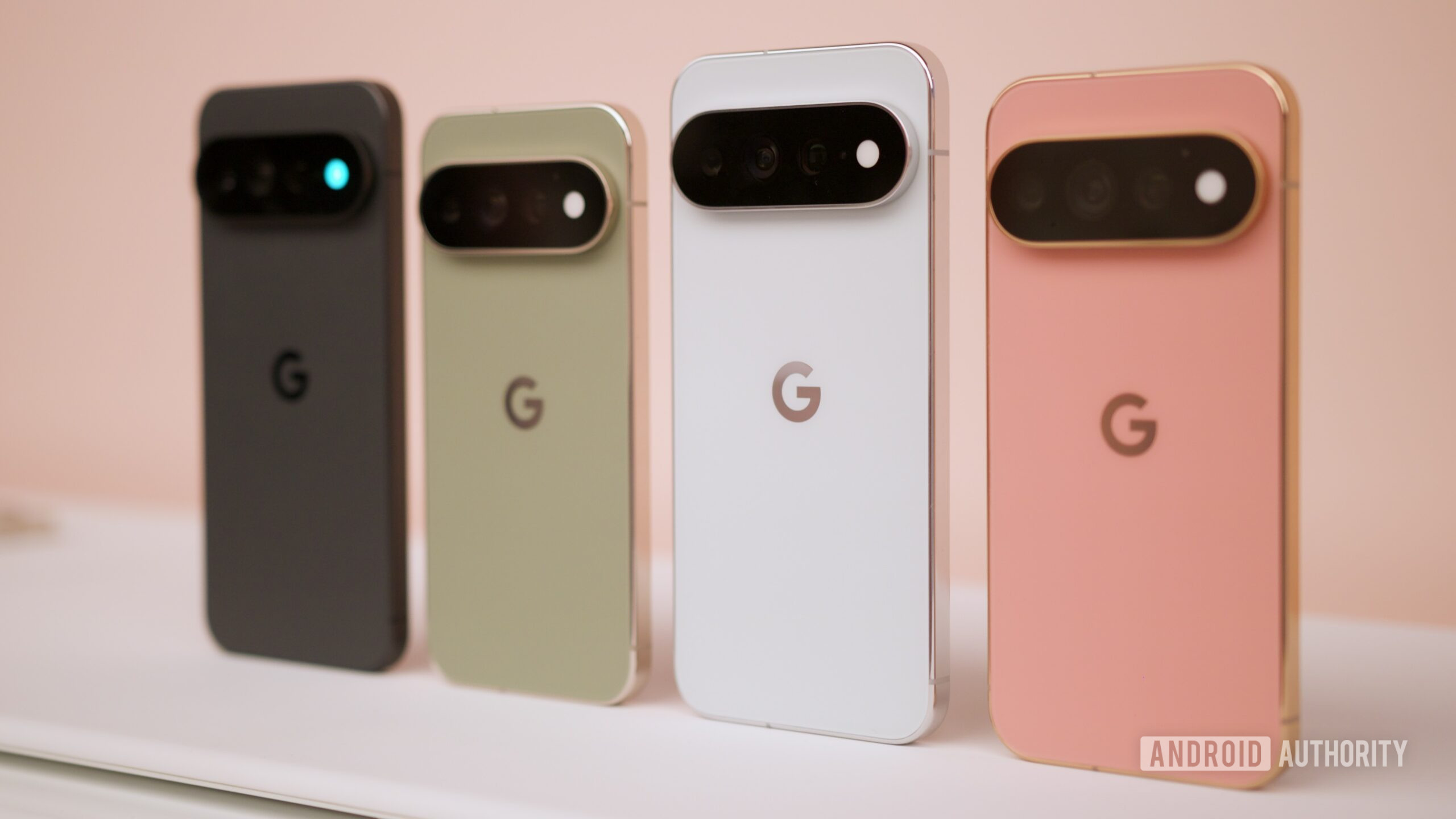
TL;DR The Pixel 11 series has officially abandoned Samsung modems in favor of a new MediaTek platform. While Reddit forums claim the new hardware brings true Dual-SIM Dual-Active (DSDA) support, Google has now confirmed the phones don’t support the feature, validating our hardware tests. The Pixel 11 series operates strictly in Dual-SIM Dual Standby (DSDS) mode, proving Google has restricted simultaneous data and voice paths at the software or hardware level. Following weeks of heavy speculation on tech forums like Reddit, Google has finally stepped in to deliver the official verdict on Dual-Sim Dual-Active (DSDA) support for the Pixel 11 series.In a clarification issued to Android Authority, Google has revealed that the Pixel 11 lineup does not support DSDA.Despite internet rumors claiming the phone could handle high-speed data on one network while simultaneously holding an active voice call on another, Google confirmed the new flagships remain restricted to standard Dual-SIM Dual Standby (DSDS) mode.Before Google’s official confirmation, we put the Pixel 11 Pro XL through a series of low-level software diagnostics and real-world network tests. Our findings not only accurately predicted Google’s statement, but they also unmasked a major under-the-hood hardware shift for the Pixel lineup.The first major clue hid in plain sight right inside Android’s version screen. The device listed a highly specific baseband firmware string: a900a-MP_260716. Historically, Google Pixels equipped with Samsung Exynos modems used a g prefix (such as g5300 or g5400) in their baseband versions. The sudden shift to an a900a tag pointed straight toward MediaTek.Adamya Sharma / Android AuthorityGoogle has already revealed that the Pixel 11 phones house a new modem, without revealing its exact specifications. To confirm this, we connected the Pixel to a Mac via Android Debug Bridge (ADB) and queried the phone’s Radio Interface Layer (RIL).Adamya Sharma / Android AuthorityThe device responded with an explicit, definitive architecture string, “[MTK-t900-Release…-Android_RIL].” The MTK tag stands unequivocally for MediaTek, confirming that Google has officially transitioned away from Samsung modems for its wireless architecture.The phone’s modem software offers several clues pointing to MediaTek’s T900 platform. The RIL identifies itself as MTK-t900, while Google’s own modem-logging service is called “AlcedoT900.” The baseband is listed as “a900a,” an identifier previously linked to the Pixel 11’s MediaTek M90 modem. Taken together, this strongly suggests the Pixel 11 Pro XL may be using the M90, although our ADB testing couldn’t directly identify the modem’s underlying silicon.What’s particularly interesting is that the modem platform itself can support Dual-SIM Dual-Active (DSDA). Google has confirmed, however, that DSDA isn’t supported on the Pixel 11 Pro XL. This suggests the limitation isn’t necessarily down to the modem’s capabilities, but could instead be the result of how Google has configured the phone’s hardware or software.This is why, despite having two eSIMs on our Pixel 11 Pro XL review unit, we can only use one active line at a time.If you use two numbers on your Pixel 11 Pro XL and need to prevent your data from cutting out during important calls, your best option is to go into your network settings and enable “Switch mobile data automatically.”This workaround will temporarily bridge your data to your active voice line, offering a much-needed patch for a limitation Google has now set in stone.Thank you for being part of our community. Read our Comment Policy before posting.
Does the Pixel 11 series support DSDA? Here’s what we found
Full Article
Original Source
Read the full article at Androidauthority →KhanList aggregates and links to publicly available news content. We do not host full articles from third-party sources. Always verify important information with original sources.