
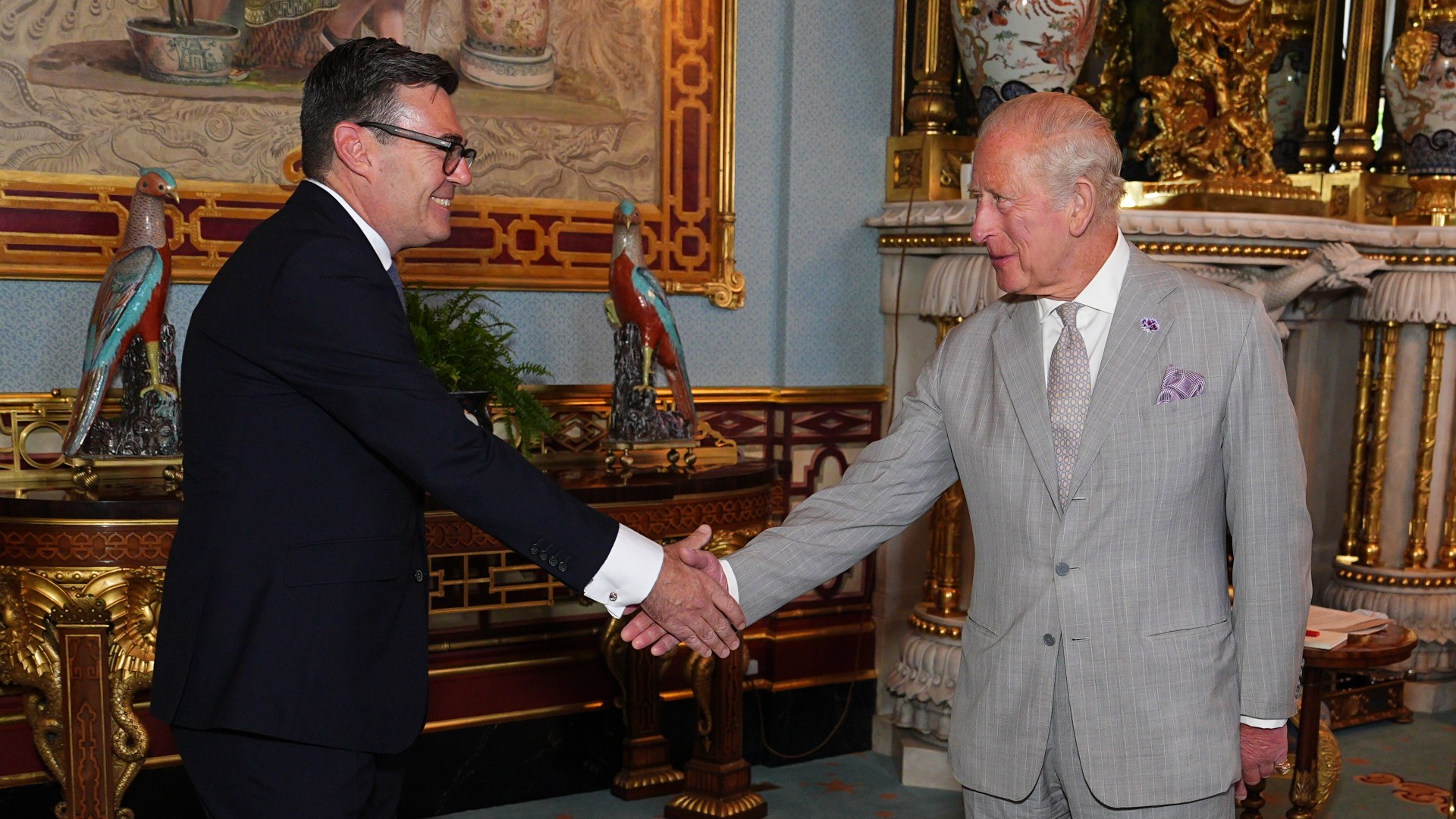
As Sir Keir Starmer makes his Downing Street exit and Andy Burnham heads to Buckingham Palace, Britain witnesses its seventh Prime Minister in a decade take charge. While political handovers at No10 move fast, centuries of constitutional tradition lie behind the palace doors. King Charles III welcomes Andy Burnham during an audience at Buckingham Palace, where he invited the leader of the Labour Party to become Prime Minister and form a new government Credit: PA From private audiences with King Charles III to official royal proclamations, the Monarch plays a crucial constitutional role in today’s transition. Does the King ‘swear in’ a new Prime Minister? Despite popular belief, King Charles III will not technically “swear in” Andy Burnham today. Sign up for the Politics newsletter Thank you! In the UK political system, there is no public oath of office taken by the incoming PM outside No10 or in Parliament. Instead, the official transfer of power occurs during a private audience at Buckingham Palace in an age-old process known as the “Kissing of Hands.” Here’s how today’s transition at the Palace unfolds: The resignation: Outgoing PM Keir Starmer travels to Buckingham Palace to formally tender his resignation to King Charles III. The audience: Minutes later, incoming Labour leader Andy Burnham arrives. The King invites him to form a government as he commands the majority in the House of Commons. The handshake: Despite the traditional term “Kissing of Hands,” no hands are actually kissed today. Burnham will bow, shake the King’s hand, and accept the royal commission. The formal legal oaths – such as the Oath of Allegiance and Oath of Office – happen separately when cabinet ministers are appointed through the Privy Council, not during the King’s audience. Could King Charles force a new General Election? With another change at the top of government today, many wonder if the King could simply call a fresh General Election. Most read in The Sun The short answer is no. Under the Dissolution and Calling of Parliament Act 2022, the authority to trigger an early election rests with the PM, who requests that the Monarch dissolve Parliament. While King Charles holds formal power under the Royal Prerogative to sign the official dissolution proclamation, constitutional convention dictates he acts strictly on the advice of his PM. The Sovereign remains strictly politically neutral and cannot trigger a General Election on his own initiative. In theory, under historic principles known as the Lascelles Principles, the King could say no to an election request. He could only do this if Parliament was still working, and another politician had enough support from MPs to step up and run the country. But in modern practice, if a PM requests a dissolution, the King grants it. Could King Charles not accept Andy Burnham as PM? The Monarch does not pick or choose who governs Britain based on personal preference. The core rule of the UK constitution says the King must appoint whichever individual commands the confidence of the House of Commons. For Andy Burnham to take office today, key constitutional criteria had to be fulfilled. He returned to Parliament as an MP following his Makerfield by-election victory, before securing the leadership of the governing Labour Party. Burnham also retains the backing of the majority of MPs in the House of Commons. With those requirements met, King Charles has a constitutional duty to ask Burnham to form a government. Refusing to appoint a democratically backed leader would spark a constitutional crisis and break the political neutrality of the Crown. Comment now
Does the King have to swear in the new Prime Minister, and can Charles III call a General Election?
Full Article
Original Source
Read the full article at Thesun →KhanList aggregates and links to publicly available news content. We do not host full articles from third-party sources. Always verify important information with original sources.