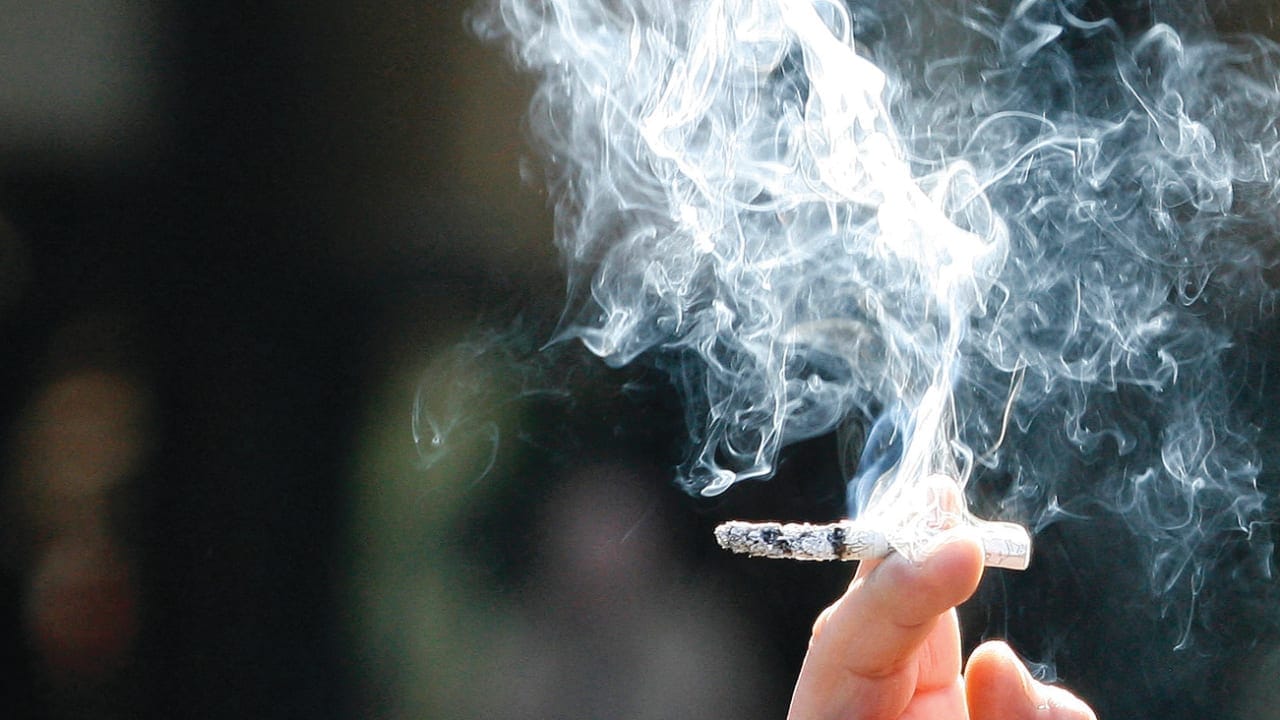
ByJUDY SIEGEL-ITZKOVICHAUGUST 1, 2026 08:35Parents who think they are protecting their family from their own tobacco smoke when they light up on balconies or near open windows are dead wrong. The smokers themselves won’t sleep soundly after learning how much they are harming their children.Those who light up in or near the “fresh air” can still expose them to harmful tobacco residues that disrupt sleep, according to a new study at Clalit-Soroka University Medical Center and Ben-Gurion University of the Negev in Beersheba. The study has just been published in the prestigious journal Scientific Reports under the title “Environmental tobacco smoke and sleep fragmentation in children with suspected sleep apnea.” “Many parents believe that smoking outdoors protects their children,” said Prof. Ariel Tarasiuk, director of the hospital’s sleep disorders unit, who is recognized internationally for his research on sleep apnea (frequent halting of breathing while asleep) in children and adults, and their physiological consequences on the body.PROF. ARIEL TARASIUK (credit: Courtesy)“Our findings suggest that this is not always the case. Tobacco smoke residues can travel indoors on clothing and hair, meaning children may continue to be exposed even when smoking occurs outside,” he told The Jerusalem Post in an interview. “Continuous sleep is critical for childhood brain development; repeated fragmentation may impair cognitive and behavioral functioning. Smoking in a car where children are present or even when they’re not there is also so harmful to youngsters,” he explained.Tarasiuk asserted that smoking in another room, on a balcony, or near an open window cannot fully prevent exposure: “The only effective way to eliminate children’s exposure to tobacco smoke is to maintain completely smoke-free homes and vehicles.”Even parents who reported smoking “outdoors only” had children with measurable urinary cotinine. They tested for this metabolite of nicotine instead of relying only on parental reports because it serves as an objective, reliable biomarker of exposure.Residues also cling to hair and skin, not just clothing, so hand washing and changing clothes alone cannot fully eliminate exposure.Researchers found that children exposed to cigarette smoke had poorer sleep quality, shorter sleep duration, and significantly more nighttime awakenings. Surprisingly, measurable nicotine exposure was also detected in children whose parents reported smoking only outside the home.The findings point to the growing concern over third-hand smoke – toxic tobacco residues that remain on clothes, hair, skin, and household surfaces long after a cigarette has been extinguished. These residues can persist for weeks to months on surfaces.Nicotine exposure impacts sleeping and breathingUnlike many previous studies that relied primarily on parental reports, the Clalit-Soroka and BGU team combined overnight sleep lab studies with cotinine testing. The study included children aged one to 12 who were evaluated during sleep for snoring, obstructive sleep apnea, or other sleep-related breathing disorders. Nearly half lived in households where at least one parent smoked.The team found a clear relationship between nicotine exposure and sleep quality. Children with higher cotinine levels slept less efficiently, spent less time asleep, and experienced 67% more nighttime arousals than children with lower or no exposure.One of the study’s most remarkable findings was the disconnect between parental perception and biological evidence. Although urine tests confirmed nicotine exposure, around 60% of parents reported that their children had not been exposed to cigarette smoke.The researchers emphasize that the consequences extend beyond poor sleep. Fragmented sleep during childhood has been associated with impaired learning, attention difficulties, behavioral problems, and obesity, making tobacco smoke exposure an important and preventable public health issue.Sleep-disordered breathing (SDB), which affects 1-5% of children, is characterized by upper-airway obstruction, intermittent halts in breathing, an imbalance in the body’s natural system that tracks how long you have been awake and drives your need for deep rest, and the growth of the tonsils and adenoids.This leads to loud snoring, mouth breathing, and blocked airways. Reducing indoor pollution has improved SDB outcomes in affected children.The team recommends that healthcare providers routinely ask about household smoking when evaluating children with sleep disorders and encourages parents to recognize that tobacco smoke exposure does not necessarily end when the cigarette is extinguished.Tarasiuk stressed the importance of routinely screening for exposure to environmental tobacco smoke (ETS) in evaluating children with suspected sleep disorders. This, he said, can facilitate targeted guidance and counseling for families.“Passive smoking is known to harm children’s airways, but few studies had combined objective in-lab polysomnography – an overnight sleep study test that records body functions like brain waves, breathing, and heart rate to diagnose sleep disorders, with a biological exposure marker rather than relying solely on parental questionnaires,” he added.He noted that parental reports are prone to bias and underreporting: “Fully 60% of smoking parents reported their child had no exposure, yet urinary cotinine confirmed actual exposure in these children.”What about vaping?Tarasiuk recommended that pediatricians should routinely ask parents whether anyone smokes, even if they say they smoke only outside, and if children with unexplained sleep problems are brought in, exposure screening and potentially cotinine testing should be carried out by doctors.Improving a child’s sleep could be another persuasive argument for helping parents quit smoking. It could provide additional, family-centered incentive beyond the already-recognized health consequences of secondhand smoke, he said. “Public health campaigns should emphasize thirdhand smoke more, instead of focusing almost only on secondhand smoke.”Since the children were referred for sleep evaluations, generalizing to the broader population requires further research.Healthier children could be even more sensitive to sleep disruption from tobacco smoke, though this hasn’t been directly tested.He and his team hope their future research will include larger sample sizes, the inclusion of obese children, and comprehensive documentation of underlying medical conditions and medications to clarify tobacco smoke’s independent impact.Asked about parental smoking of electronic cigarettes (vaping), Tarasiuk said that their study measured only conventional tobacco smoke exposure, “so we cannot directly answer whether e-cigarettes leave comparable third-hand residues.”“But e-cigarette aerosol contains nicotine along with toxic aldehydes like acetaldehyde, acrolein, and formaldehyde, and current evidence links e-cigarette use to disrupted sleep quality and shorter duration through nicotine’s stimulant effects on the central nervous system, alongside documented respiratory harms including airway inflammation and worsened asthma.“This raises legitimate concern that vaping could plausibly harm both children’s sleep and respiratory health, through direct thirdhand-residue data in children remain unavailable.”Asthma, ear infections, and sudden infant death syndrome have been found to result, among other things, from smoking in their environment.“Our findings show tobacco exposure independently disrupts sleep quality, increasing arousals and reducing sleep efficiency even without worsening the severity of apnea.“This complements decades of well-established evidence linking smoking to small-airway disease and chronic obstructive pulmonary disease, thus reinforcing the broad and long-documented respiratory burden of tobacco exposure across the airways – from the smallest bronchioles to overall lung function,” he concluded.Follow us on Google
Does smoking outside protect your children from cigarette smoke? Israeli study says no
Full Article
Original Source
Read the full article at Jpost →KhanList aggregates and links to publicly available news content. We do not host full articles from third-party sources. Always verify important information with original sources.