
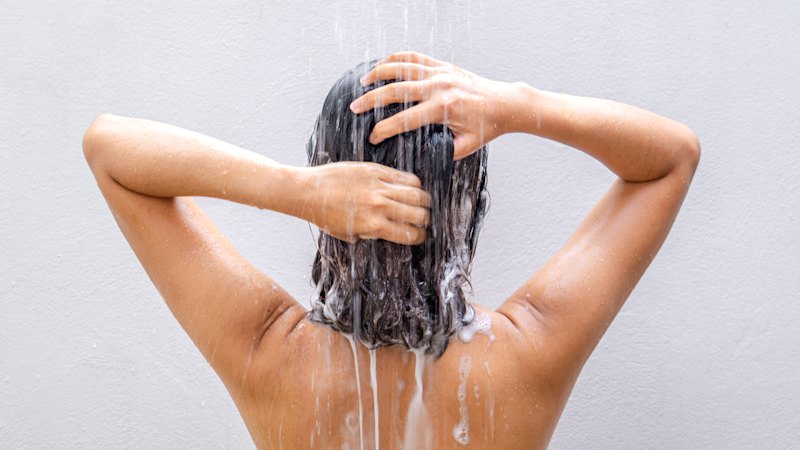
Erica SweeneyNovember 27, 2026 — 5:00amYou’ve probably heard about this hair hack: douse your head with cold water right after conditioning and you’ll end up with shinier locks.The cold water tip has been around for decades, most recently on social media, where some claim it will smooth the hair’s outer layer, known as the cuticle, so that it reflects more light and appears more glossy.Hair can look shiny in different ways, depending on its shape and texture, says Dr Hope Mitchell, a dermatologist in Perrysburg, Ohio. Shinier hair is not necessarily healthier, she says. It also may not be everyone’s goal.But if it is yours, does rinsing with cold water really work? We asked a few dermatologists to fact-check the claim.Is a cold shower worth the shiver?Getty ImagesHow water temperature affects hairThe outer layer of your hair is composed of overlapping scales with jagged edges that point toward the tip of the hair shaft. This cuticle structure, which looks like shingles on a roof, protects the more fragile insides of the hair strand from potentially damaging elements like friction, heat, ultraviolet rays and pollutants. The cuticle also reflects light, giving hair its shine.Fine, straight hair often has a smoother cuticle, which reflects light “more uniformly in one direction,” Mitchell said. The “bends, twists and curves” of thick, curly or coily hair scatter light in different directions, giving it a “softer-looking sheen,” with smaller shiny highlights throughout the hair, she explains.No solid research has shown that rinsing with cold (or hot) water, however, will make it shinier, says Dr Paradi Mirmirani, a dermatologist at Kaiser Permanente in Northern California.In fact, says Dr Teresa Song, a dermatologist in New York City, rinsing with cold water probably “won’t make much of a difference” in the shininess of your hair at all.But if your goal is to maintain the health of your scalp, using cold water is still a good bet, says Dr Jacob Beer, a dermatologist in West Palm Beach, Florida. Hot water can dry out and irritate your scalp, he says. It can also strip some of the hair’s natural oils, making your hair dry, Mitchell adds.Beer acknowledged that rinsing with cold water can be uncomfortable, especially if you have sensitive skin or get chills easily. Cold water may also be less effective at actually washing your hair, potentially resulting in oil, dirt and hair product buildup that can cause an itchy, irritated scalp, says Dr Lilia Correa Selm, an associate professor of dermatology at the University of South Florida.Correa Selm says washing with lukewarm water (which is close to body temperature) is ideal. It’s warm enough to remove debris on the scalp, she says, but not so warm that it causes irritation.Lukewarm water also helps maintain your skin barrier, the skin’s outer layer that locks in moisture and guards against germs and irritants, Song says. To make sure it’s lukewarm, she says, add a few drops to your wrist – “it should feel warm, not hot”.Choosing a silicone-based conditioner can help your hair stay healthy.Getty ImagesWhat actually boosts shineIf you’re after the glossier look, wash your hair frequently to prevent oil and debris from building on your scalp, which can give your hair a duller appearance, Correa Selm says.People with straight hair and an oily scalp may benefit from washing daily, according to the American Academy of Dermatology; whereas those with dry, thick, curly or textured hair can go longer between washes, or at least once every two to three weeks.Beer recommends using a silicone-based conditioner, which enhances shine by smoothing the hair’s cuticle. Lightweight conditioners are best for fine or straight hair, Mitchell says, and richer conditioners are better for thick, curly or coily hair.Leave-in hair oils and moisturising products can also manage dryness and improve shine, she adds.When possible, minimise regimens or habits that might damage the cuticle, Mirmirani says – such as harsh chemical treatments or frequent heat styling with blow-dryers, flat irons or curling irons. When heat styling, Correa Selm recommends using a heat protectant with silicone to boost the shine.What’s most important is maintaining the “integrity of the hair fibre” and embracing a look that works with your hair type and preferences, Mitchell says.Avoid friction to the hair, such as brushing it too aggressively or vigorously rubbing it with a towel, Song says. Instead, gently wrap wet hair with a towel to let it absorb moisture, and brush without tugging.The more “wear and tear” on the hair, the more likely the cuticle and underlying hair fibres are to be damaged, reducing shine, Mirmirani adds.It’s your hair-care habits, especially using conditioner, that can increase shine, Song says, not rinsing hair in cold water – a myth she says is “absolutely not true”.The New York TimesMake the most of your health, relationships, fitness and nutrition with our Live Well newsletter. Get it in your inbox every Monday.From our partners
Does rinsing your hair with cold water really make it shiny?
Full Article
Original Source
Read the full article at Smh →KhanList aggregates and links to publicly available news content. We do not host full articles from third-party sources. Always verify important information with original sources.