
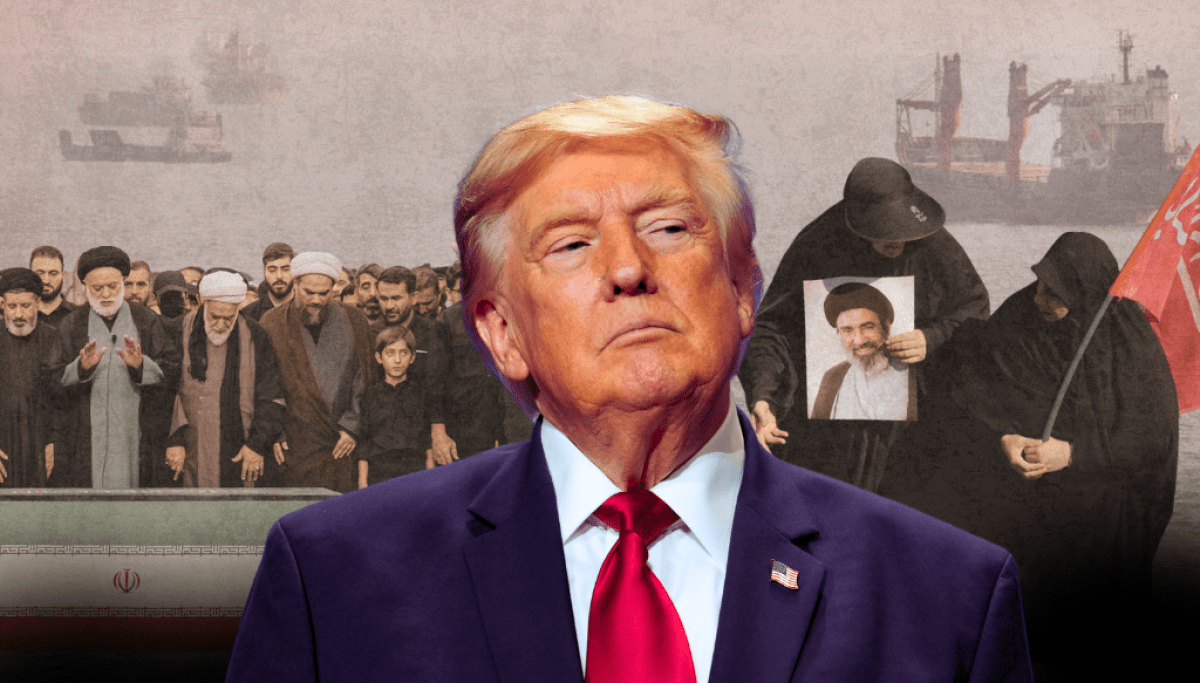
DOES PROGRESS IN IRAN HELP TRUMP? We are now in the seventh month of the war in Iran. Midterm elections are 60 days away. The war remains unpopular, with about 55% of Americans opposing it. A larger number, about 60%, disapprove of President Donald Trump‘s handling of the war.The good news is that U.S. forces appear to be solving the main problem of the war, which is Iran’s closing of the Strait of Hormuz. Before the United States and Israel attacked Iran, tanker ships transported about 20 million barrels of oil through the strait each day. After the attack, that fell virtually to zero.Weeks, and then months, passed with U.S. officials unable to come up with a way to reopen the strait, either by negotiations or by force. Now, though, there are reports that the flow has been greatly restored. CNN reported that on Tuesday, “The U.S. military escorted 40 commercial vessels containing 18 million barrels of oil through the Strait of Hormuz.” At the White House briefing Thursday, Vice President JD Vance announced, “Last night, 15 million barrels came out of the Strait of Hormuz … it’s almost back to where it was before the conflict started.” Other estimates suggest the day-to-day number is lower than some recent reports, perhaps around 8 or 9 million barrels a day. Still, despite Iran’s best efforts, the amount of oil traveling through the strait is going up. U.S. forces have also been hitting a number of targets, mostly to degrade Iran’s ability to block the strait. Although the United States is using significant force, it’s not a return to the early days of the war. “Major combat operations are currently not ongoing,” Vance said.Meanwhile, the U.S. has imposed “Operation Economic Outcast,” a set of new sanctions, penalties, and secondary sanctions designed to cripple Iran’s economy even more than “Operation Economic Fury,” which was imposed at the start of the war. When asked this week when the Iranian economy will collapse, Treasury Secretary Scott Bessent said, “I think it could be within weeks or months — and the economy doesn’t have to collapse, we just have to have the regime come to their senses.”So all of that is good news. It’s belated, of course, coming in the seventh month of a war originally predicted to last a few weeks. It is also coming after months of American miscalculations. And there might be all sorts of surprises still to come from the Iranians. But it’s better. And that is good news for the U.S.The problem for Republicans, from a midterms perspective, is that this progress is being made toward undoing the damage done by the decision to attack Iran. The war’s main goal — ensuring that Iran does not acquire a nuclear weapon — was accomplished months ago. The time after that was spent trying to fix the problem created by the decision to go to war.But even with all the problems, will that still be a good thing for Trump and the Republicans in the midterm elections? Will the president get credit for ending the war?Most likely not. A majority of the public opposes the war, and a larger majority disapproves of Trump’s handling of it. He’s not going to get much credit for ending something they did not want started to begin with.Plus, before giving the order to start the war, Trump was amply warned about the likelihood Iran would block the strait. In the book Regime Change, authors Jonathan Swan and Maggie Haberman note that in prewar discussions with the president, Joint Chiefs of Staff Chairman Dan Caine “flagged the enormous difficulty of securing the Strait of Hurmuz and the risks of Iran shutting the Strait — a scenario Trump dismissed on the assumption that the regime would capitulate before it came to that.” That assumption was, of course, wildly wrong.In addition, the question of whether Trump will get credit for ending the war is based on the idea that the war will indeed end. There’s nothing sure about that. At the White House briefing, Vance was asked, “Will this war be over by the time of the midterm elections?” First, Vance objected to calling it a war because there’s not a lot of shooting going on. And then Vance said, “When you ask when will this end, you’re asking when will the Iranians stop shooting at ships? I think the reality is, I don’t know the answer to that question. You’ll have to ask the Iranians.” Vance also said the administration would not set an “artificial timeline” to declare the war over. One point to take from his remarks is that there might not be an emphatic end to the war at all. It might just limp to a conclusion at some point in the future; there will be no formal surrender ceremony on the decks of the USS Missouri.And one more point. The war is self-evidently important, for the U.S. and for the world. But for the nth time — it is nowhere near the top concern of midterm voters. By a very long shot, those voters see the cost of living and, to a lesser extent, the economy overall, as the most important issues of this election. And to the degree that the war makes their list of top concerns, it is because the war has caused the price of gas, and some other prices as well, to go up.By the way, the president’s approval rating on handling the cost of living and the economy is 35.3% in the RealClearPolitics average of polls. The only issue on which his rating is lower is his handling of Iran, which is at 34%.So yes, the situation in Iran appears to be improving, and that is a good thing, both for the country and for the president and his party. But there seems little reason to think an end to the war, whatever that looks like, would be a political boost for Republicans in a very, very difficult midterm contest.
Does progress in Iran help Trump?
Full Article
Original Source
Read the full article at Washingtonexaminer →KhanList aggregates and links to publicly available news content. We do not host full articles from third-party sources. Always verify important information with original sources.