
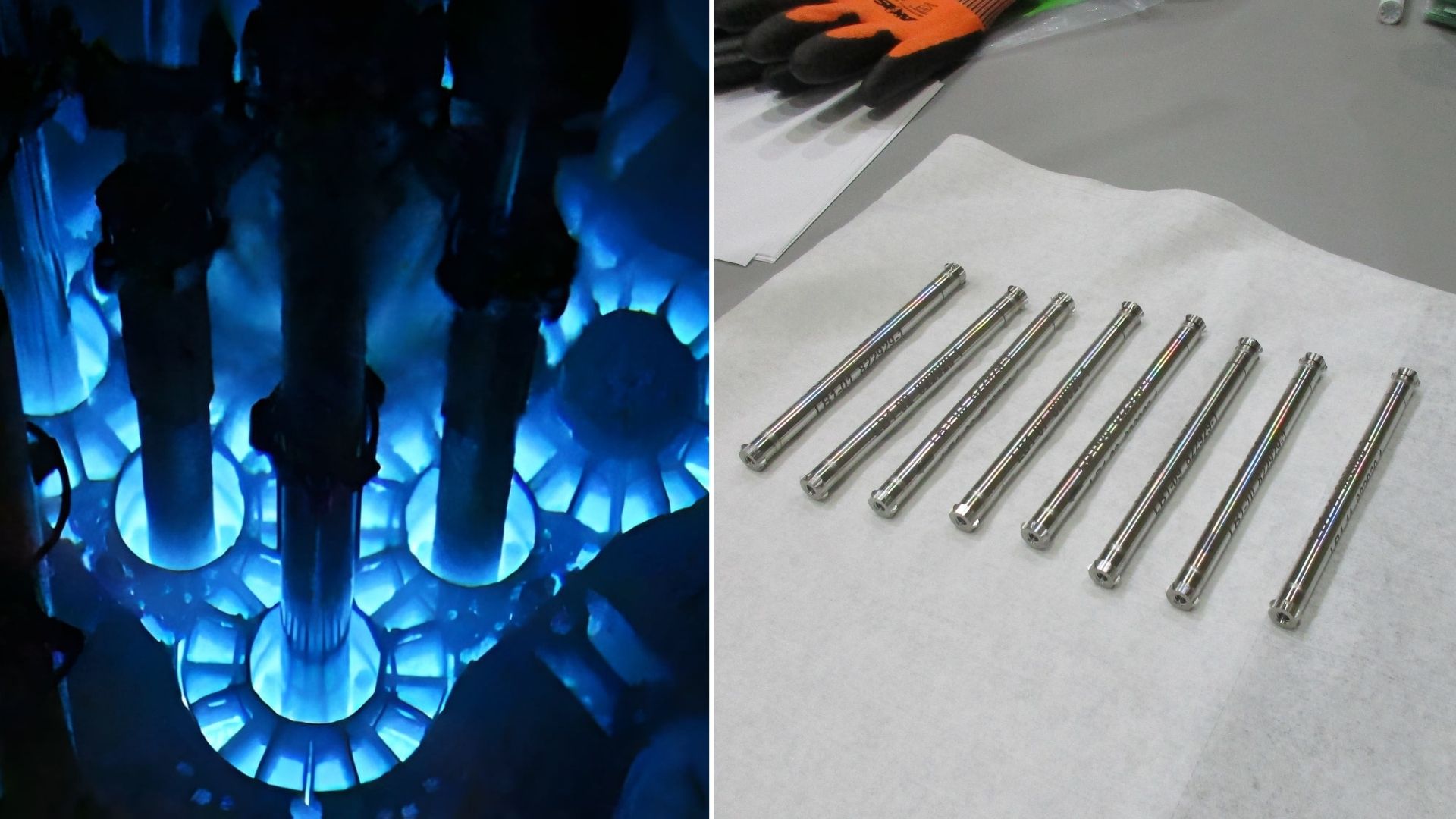
Lightbridge Corporation has been selected for the U.S. Department of Energy’s Nuclear Energy Launch Pad INL program, giving the advanced nuclear fuel developer an accelerated pathway to establish a manufacturing facility at Idaho National Laboratory (INL). The move could be an important step for Lightbridge’s proprietary metallic nuclear fuel, which is being developed to eventually operate inside commercial nuclear reactors. The company says the facility would manufacture Lead Test Assemblies (LTAs), full-scale fuel assemblies that can be placed into operating commercial reactors for testing. In nuclear fuel development, LTAs represent a critical bridge between laboratory experiments and eventual commercial deployment. From laboratory samples to a commercial reactor Lightbridge is developing a metallic fuel intended to improve the performance of existing and future nuclear reactors. According to the company’s announcement, its selection by the DOE’s National Reactor Innovation Center provides a pathway toward DOE authorization to design, build, and operate a dedicated manufacturing facility at INL. The company calls the planned facility the Special High-assay low-enriched uranium Extrusion Demonstration (SHED) facility. Lightbridge says SHED would allow it to manufacture its first LTAs at production scale and test them in commercial reactors. The facility would also allow the company to validate its manufacturing equipment, processes and quality-control systems before moving toward a much larger commercial manufacturing operation. Developing a new nuclear fuel isn’t simply a matter of proving that the material works in a laboratory. The fuel must also be manufactured consistently, meet stringent quality requirements and demonstrate its performance under the demanding conditions inside a reactor. Lightbridge Fuel is a proprietary metallic nuclear fuel designed around the company’s goal of increasing the power reactors can generate. The company says the fuel could increase the power output of an existing reactor by up to 10% without modifying its steam generators. Plants equipped with higher-capacity steam generators could potentially see increases of up to 20%, while new reactors designed around the technology could achieve roughly a one-third increase, according to Lightbridge. Those figures are company projections, however, and the technology still needs to progress through testing and qualification before such benefits could be demonstrated commercially. The attraction is straightforward: increasing the output of existing nuclear plants could add electricity without requiring an entirely new reactor. That could become increasingly relevant as electricity demand rises from data centers, artificial intelligence and broader electrification. SHED is a stepping stone, not the final factory Lightbridge is already testing fuel material at INL’s Advanced Test Reactor. The company said an initial batch of irradiated samples was discharged in May 2026, with post-irradiation examination expected to begin later this year. SHED would represent the next stage, producing full-scale LTAs for commercial-reactor testing. In parallel, Lightbridge is working with an engineering, procurement and construction firm on its proposed Lightbridge Expandable Fuel Facility (LEFF). That facility is envisioned as a commercial-scale manufacturing plant capable of initially producing a few reactor reload batches per year and expanding over time. The sequence is therefore deliberate: test the material, demonstrate production at a larger scale, put the fuel into commercial reactors, and then develop the infrastructure needed for broader manufacturing. Lightbridge expects SHED construction to potentially begin as early as next year, although detailed costs and timelines are still being developed. A faster route toward nuclear fuel commercialization The DOE’s Launch Pad program is intended to give nuclear technology developers a more streamlined route for demonstrating technologies at INL. For Lightbridge, the significance is less about having a new nuclear fuel design on paper and more about gaining a pathway to actually manufacture and test it at reactor scale. The company still faces substantial technical and regulatory milestones before its fuel could become a commercial product. Its upcoming irradiation results, SHED development, and eventual LTA testing will provide some of the most important evidence of whether the technology can move beyond the laboratory.Get the latest in engineering, tech, space & science - delivered daily to your inbox.Kaif Shaikh is a journalist and writer passionate about turning complex information into clear, impactful stories. His writing covers technology, sustainability, geopolitics, and occasionally fiction. A graduate in Journalism and Mass Communication, his work has appeared in the Times of India and beyond. After a near-fatal experience, Kaif began seeing both stories and silences differently. Outside work, he juggles far too many projects and passions, but always makes time to read, reflect, and hold onto the thread of wonder.
DOE selects Lightbridge for program aimed at accelerating advanced nuclear fuel
Full Article
Original Source
Read the full article at Interestingengineering →KhanList aggregates and links to publicly available news content. We do not host full articles from third-party sources. Always verify important information with original sources.