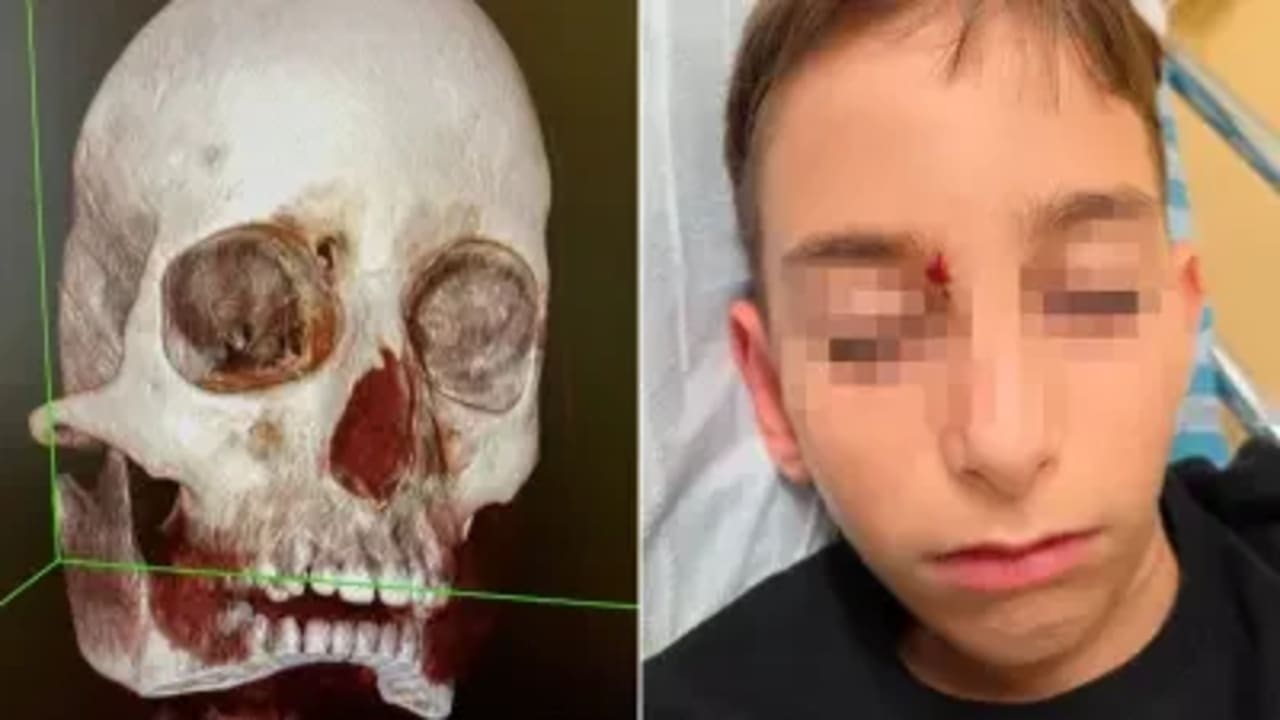
ByAVIHAI CHIIMAUGUST 3, 2026 12:29What first appeared to be a small wound near the nose concealed a rare and dangerous injury after an 11-and-a-half-year-old boy was struck by an arrow during an archery activity at a summer camp on Sunday.The boy was admitted to the pediatric emergency department at Kaplan Medical Center after the accident and was diagnosed with pneumocephalus, the presence of air inside the cranial cavity, a rare complication that could have had far more serious consequences had physicians not carried out an extensive diagnostic evaluation. Following consultations between specialists at Kaplan and Schneider Children's Medical Center, the boy was transferred to Schneider for continued treatment and observation. His condition has since improved.Arrow strikes boy's nose during camp activityThe incident occurred during an archery activity held as part of the camp's summer vacation program. One of the children fired an arrow that struck the upper part of the boy's nose.Despite the wound’s superficial appearance, the medical team decided not to rely solely on an external examination.(ILLUSTRATIVE) A girl does archery at a summer camp in Canada. (credit: Wikimedia Commons)The boy was examined by the pediatric emergency team as well as ear, nose, and throat specialists and ophthalmologists. At the same time, he underwent a series of imaging tests to rule out vascular injury, bleeding, or deeper trauma.Upon examination, doctors discovered pneumocephalusThe scans revealed an unusual finding. The arrow had penetrated through the bridge of the nose and the eye socket, passed through the sinuses, and reached the cranial cavity, where it caused air to enter the skull, a rare medical condition known as pneumocephalus.One of the unusual signs of the injury emerged when physicians asked the boy to blow his nose. As he did so, air bubbles emerged from the wound, raising suspicion of a connection between the nasal cavities and the cranial cavity."This case illustrates how an injury that appears small and superficial on the outside can conceal a significant underlying injury. Because of the location of the wound and the mechanism of injury, we decided not to rely solely on the external examination and instead carried out a thorough evaluation,” Dr. Tzafnat Yair Prokoczimer, director of the pediatric emergency department at Kaplan Medical Center, said.“The imaging studies revealed that the arrow had penetrated through the sinus region and caused air to enter the cranial cavity. This is a rare complication that requires evaluation and monitoring by specialist teams. The vigilance of our staff and the rapid completion of the diagnostic work-up enabled us to identify the injury and transfer the boy for the appropriate treatment."Following the findings, Kaplan's medical teams held a multidisciplinary consultation with ear, nose, and throat specialists and neuroradiologists, together with pediatric trauma and pediatric neurosurgery experts from Schneider Children's Medical Center. At the conclusion of the discussion, it was decided to transfer the boy to Schneider's pediatric intensive care unit."In injuries of this kind, even when the external wound appears small, there may be a complex injury involving multiple body systems. The joint work of the teams at Kaplan and Schneider enabled us to quickly reach the correct treatment decision and provide the boy with the best possible care,” Dr. Nir Samuel, a senior physician in the emergency department and head of the trauma service at Schneider Children's Medical Center, noted.“Equipment such as bows and arrows, even when intended for recreational use, can cause severe and even life-threatening injuries. It is essential to use appropriate safety equipment, ensure close supervision, and match activities to the children's ages in order to prevent incidents that could end with much more serious consequences."Upon arrival at Schneider, the boy underwent an additional evaluation by a multidisciplinary team that included specialists in pediatric trauma, pediatric neurosurgery, otolaryngology, ophthalmology, and pediatric intensive care. After the assessment was completed, doctors determined that surgery was not required. He was admitted to the pediatric intensive care unit for observation and was later transferred to the surgical ward after his condition improved. His condition continues to improve.Follow us on Google
Doctors discover rare brain complication in boy after arrow strikes skull at summer camp
Full Article
Original Source
Read the full article at Jpost →KhanList aggregates and links to publicly available news content. We do not host full articles from third-party sources. Always verify important information with original sources.