
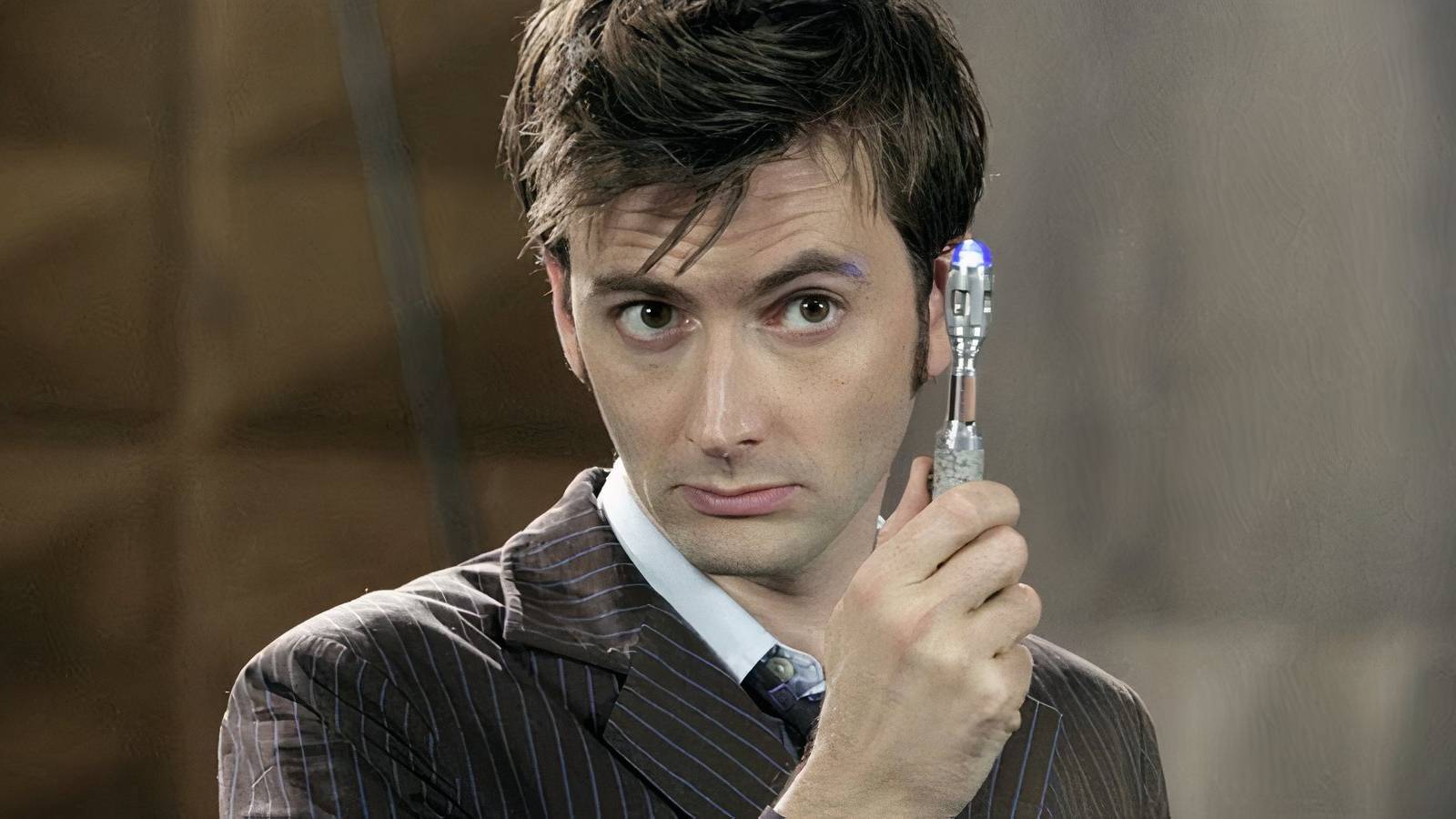
Image via BBC Published Sep 27, 2026, 8:20 PM EDT Currently a features writer at Collider, Elisa Guimarães is an arts and entertainment journalist and a critic with over a decade of experience. Passionate about movies and TV shows as a whole, she started her career when she was still in college, writing for a local newspaper after a brief stint in film school. However, her love for all things media-related can be dated back to her childhood, as she was raised in a family of librarians and cinephiles. She adores coming of age stories, true crime, teen dramas, science fiction, horror, and some other things as well. Elisa is also a published author of short stories in Portuguese, as well as a translator and a master in linguistics. As of 2023, she's in the process of working towards her PhD. Sign in to your Collider account An outlandish beat, a disquieting whistle, the sound of the TARDIS popping in and out of existence lingering in the back… The Doctor Who theme is by far one of the most unique tunes in the history of television. Originally composed by Australian musician Ron Grainer (and Delia Derbyshire, but we’ll get to that), the theme remains pretty much the same since the classic BBC sci-fi series aired its first episode in 1963, with some alterations made by later composers working on the show. This unique theme song has its own wild history behind it. In an era in which now run-of-the-mill synthesizers were still far from becoming a thing, the song was put together through the use of hands-on techniques, from recording jugs of water being poured to simply pressing play on multiple tapes at the same time in order to turn them into a cohesive piece. The result was a distinctive tune that basically introduced the world to the possibilities of electronic music. Add to that a whole in-house debate about who the actual composers of the theme are, and you have yourself a story that deserves to be told. How Was the Original ‘Doctor Who’ Theme Created? Back in 1963, the BBC had just created a new science fiction series that few could imagine would become the cultural juggernaut it is today, still making waves more than 60 years after its inception. Doctor Who follows an Earth-obsessed alien who travels through space and time, always with at least one lucky companion tagging along. Things were all set in motion for the show to kick off its very first season, which starred William Hartnell as the first incarnation of the titular Doctor, but among many matters that still needed solving there was the issue of what tune would introduce Britain — and, eventually, the world — to the adventures of the TARDIS crew. Collider Exclusive · Sci-Fi Personality Quiz Which Sci-Fi Hero Are You Most Like? Paul Atreides · Captain Kirk · Princess Leia · Ellen Ripley · Max Rockatansky Five iconic heroes. Five completely different ways of facing an impossible universe. One of them shares your instincts, your values, and your particular way of refusing to back down. Eight questions will tell you which one. 🏜️Paul Atreides 🖖Capt. Kirk ✊Princess Leia 🔦Ellen Ripley 🔥Max Rockatansky FIND YOUR HERO → 01 How do you lead when the stakes couldn't be higher? The way you lead under pressure is the most honest thing about you. AI absorb everything — every variable, every pattern — and move only when I know the path forward. BI read the room, make the call, and own the consequences. Hesitation costs more than mistakes. CI rally people. A cause needs a voice, and I refuse to let fear be louder than conviction. DI assess the threat, establish what needs doing, and get it done without waiting for permission. EI don't lead. I act. Others can follow or not — I'm already moving. NEXT QUESTION → 02 What is your greatest strength in a crisis? The quality that keeps you alive when everything else fails. APrescience — the ability to see further ahead than anyone else and plan accordingly. BImprovisation — I'm at my best when the plan falls apart and I have to invent a new one. CConviction — I know what I'm fighting for, and that certainty doesn't waver under fire. DComposure — I stay functional when everyone around me is falling apart. Panic is a luxury. EEndurance — I outlast things. I take the hit and keep moving long after others have stopped. NEXT QUESTION → 03 What is the thing you'd sacrifice everything else for? Your deepest motivation is your truest compass. AThe survival and dignity of my people — even if I have to become something frightening to ensure it. BThe safety of my crew — every single one of them. No one gets left behind. CFreedom — for my people, for every world still crushed under the weight of an empire. DThe truth — what actually happened, what's actually out there, whether anyone believes me or not. EThe one person — or the one memory — that still makes any of this worth surviving for. NEXT QUESTION → 04 How do you relate to the people around you? Who you are to others under pressure is who you really are. AWith intensity and distance — I care deeply, but the weight I carry makes closeness complicated. BWith warmth and irreverence — I take the mission seriously, not myself. CWith directness and trust — I say what I mean, and I expect the people I work with to rise to it. DWith professional care but clear limits — I'll protect you, but I won't pretend we're family. EWith wariness that slowly becomes loyalty — I don't trust easily, but when I do, it holds. NEXT QUESTION → 05 You're facing a threat that no one else believes is real. What do you do? How you respond when you're the only one who sees it defines everything. APrepare in silence. If they won't listen, I'll be ready when they finally have to. BKeep pushing until someone listens — and if no one does, handle it myself. CBuild the case, find the allies, and make the threat impossible to ignore. DDocument everything. The truth matters even if no one believes it yet. EStop trying to convince anyone. Survive it. That's the only argument that counts. NEXT QUESTION → 06 What has your heroism cost you personally? Every hero pays. The question is what — and whether they'd pay it again. AMy innocence — I've seen what I'm capable of, and I can't unsee it. BPeople I loved — the command chair has a view, but it's a lonely one. CA normal life — I gave up everything ordinary the moment I chose the cause. DMy sense of safety — I know exactly what's out there now, and I can't pretend otherwise. EAlmost everything — and I'm still not sure what I'm carrying it all for. But I keep going. NEXT QUESTION → 07 How do you feel about the rules of the world you're in? Every hero has a relationship with the system. What's yours? AI understand them deeply — and I know exactly which ones must be broken, and why. BI respect the spirit of them and bend the letter when the situation demands it. CThe system is the problem. I'm not here to work within it — I'm here to dismantle it. DI follow protocol until protocol stops being useful. Then I make the call myself. EThe rules collapsed a long time ago. What's left is instinct, and mine are reliable. NEXT QUESTION → 08 When everything is on the line, what keeps you going? The answer is the most honest thing about you. ADestiny — or something that feels so much like it that the difference no longer matters. BThe people on my ship — their faces, their trust, the fact that they're counting on me. CThe belief that what we're fighting for is worth every sacrifice, including this one. DSheer refusal to let it win — whatever it is. I don't stop. That's just who I am. EI'm not sure anymore. But the road is still there, and I'm still on it. REVEAL MY HERO → Your Hero Has Been Identified Your Sci-Fi Hero Is…Your answers point to the iconic sci-fi hero who shares your instincts, your values, and your particular way of facing the impossible. Paul AtreidesYou carry a weight most people would crumble under — the knowledge of what you're capable of, and the burden of what you might have to become. You see further ahead than others and you plan accordingly, even when the vision frightens you. You are driven by loyalty to your people and a sense of destiny you didn't ask for but can't escape. Paul Atreides is not simply a hero — he is someone who understands the cost of power and chooses to bear it anyway. That gravity, that willingness to carry what others won't, is exactly you. Captain KirkYou lead with instinct, warmth, and an absolute refusal to accept a no-win scenario — because you've always believed there's a third option nobody else has thought of yet. You take the mission seriously without ever taking yourself too seriously. Your crew would follow you anywhere, not because you demand it, but because you've earned it. Kirk's genius isn't tactical — it's human. He reads people, bends rules with purpose, and wills outcomes into existence through sheer conviction. That combination of warmth, audacity, and relentless optimism is unmistakably yours. Princess LeiaYou are the kind of person who holds the line when everyone else is losing faith — not because you're fearless, but because giving up simply isn't something you're capable of. You lead through conviction. Your voice carries because your belief is unshakeable. You gave up everything ordinary the moment you chose the cause, and you've never looked back. Leia is not a supporting character in her own story — she is the moral centre of the entire rebellion. That same fierce, principled, unbreakable core is what defines you. Ellen RipleyYou are not reckless, not grandiose, and not particularly interested in being anyone's hero — you just refuse to stop when it matters. You see threats clearly, you document the truth even when no one listens, and when the time comes you handle it yourself. Ripley's heroism is earned, not performed. She doesn't have a speech — she has a flamethrower and a plan. You share her composure under the worst possible pressure, and her refusal to pretend the monster isn't there. When it counts, you don't flinch. That's everything. Max RockatanskyYou have been through fire that would break most people — and what came out the other side is something the world underestimates at its peril. You don't ask for help, don't need validation, and don't wait for anyone to tell you the rules no longer apply. Your loyalty, when it finally arrives, is absolute — but it's earned in silence and tested in action, not in words. Max is not a nihilist. He is someone who lost everything and found, against his will, that he still has something worth protecting. That bruised, stubborn, ultimately human core is exactly yours. ↻ RETAKE THE QUIZ The BBC commissioned Ron Grainer to write the opening theme to its newest show. The piece would then receive a new treatment by the BBC Radiophonic Workshop, a sound effects project created in 1958 to produce new sounds for the British broadcasting company’s radio and TV stations. More specifically, the theme was to be reworked by the musician Delia Derbyshire, who would go on to become one of the greatest in the history of electronic music, influencing modern acts such as Aphex Twin, Portishead, and The Chemical Brothers. The final result would be something so different and so unique that Grainer himself would have trouble recognizing it as his original composition. Delia Derbyshire Is Who We Have To Thank for 'Doctor Who's Iconic Theme Grainer was very much aware that the crew at the BBC Radiophonic Workshop employed some very complicated techniques in their projects. Thus, he delivered them a very simple piece of sheet music, with just a handful of instructions such as “wind bubble” and “clouds.” In order to bring Grainer’s vision to life, Derbyshire employed techniques such as filtered white noise, plucking a single string, and hooking up a keyboard to equipment generally used to calibrate recorders. In the absence of synthesizers and stereo equipment, Derbyshire and her team recorded the sounds in mono, putting them to tape “inch by inch by inch”, in her own words. An entire orchestra was built up from individual notes, as explained by Dick Mills, one of the sound engineers involved in the project. The notes were then cut out and merged together manually, as there was no digital editing software available at the time. Mills goes on to explain, in an interview with the BBC, that most tunes are divided into three parts: the rhythm, the melody, and the “twiddly bits on top”. Thus, Derbyshire’s team recorded their sound onto three separate tapes that were then loaded into three different machines. In order to put these sounds together, the crew had to press play on the three devices at the same time. In case you’re a music buff and want to go into the specifics of how it all works, there’s a whole website devoted to breaking down the tune. It might sound simple enough, but only in theory: can you even begin to imagine how in sync they had to be for it all to work out in the end? Besides, this early form of multitracking was pretty much unheard of at the time, and Derbyshire and her team employed it for the first time. The ‘Doctor Who’ Theme Became a Classic, But Derbyshire Was Never Properly Credited for Her Work Image via BBC The final result of this excruciating work went on to become the iconic theme of Doctor Who for the next seventeen years. Though some changes were made over the course of the series to match the new title sequences, it wasn’t until 1980 that the intro theme received whole new arrangements by Peter Howell, who used analog synthesizers to give the theme a new feel. From then on, composers like Murray Gold and Segun Akinola have also tried their hand at reworking Grainer and Derbyshire’s original composition. However, after all these changes, it is still hard to match the haunting melody of the original score. But despite having been instrumental to the creation of the theme as we eventually came to know it, Delia Derbyshire was never properly credited for her work. Grainer tried to reason with the BBC to get her name recognized on the piece, but to this day, he remains the only musician credited for the tune. The story goes that this decision was made due to matters of anonymity: the BBC didn’t want the public getting acquainted with the members of the Radiophonic Workshop, wishing to keep it known simply as an ensemble. Nowadays, however, most dedicated fans of the show recognize Derbyshire’s essential role in the making of the series’ theme. Delia Derbyshire Never Got To See the Revival of 'Doctor Who' Image via BBC Still, it is sad to realize the BBC doesn’t extend the same kindness to Derbyshire as Whovians, especially considering how hard of a time she had before getting into the Workshop. Derbyshire once said that her love for abstract music came from the sounds of the air raid sirens during World War II, and she graduated from Cambridge with a BA in both Math and Music. In one of her first attempts to get a job in the recording industry, she was turned down by Decca because the company did not hire women. In 1960, however, she got a job as a trainee at the BBC, and, in 1962, one year before her work on the Doctor Who theme, she was transferred to the Radiophonic Workshop. Throughout her career, she collaborated with names such as Yoko Ono and The Royal Shakespeare Company. She eventually began getting credit for her BBC work, but only after the Doctor Who theme hit television sets. Derbyshire left the BBC in 1973, feeling out of place in an environment that she perceived as more and more corporate and unfriendly towards creative work. Though she continued to work as a musician in private, she all but disappeared from the public eye. She died in 2001, at the relatively young age of 64, four years before her most famous creation made its way back to public introducing Christopher Eccleston as the Ninth Doctor. Release Date 1963 - 1989-00-00 Network BBC One, BBC Television Directors Douglas Camfield, David Maloney, Christopher Barry, Michael E. Briant, Barry Letts, Michael Ferguson, Peter Moffatt, Richard Martin, Chris Clough, Lennie Mayne, Pennant Roberts, Ron Jones, Paddy Russell, Paul Bernard, Michael Hayes, Timothy Combe, Morris Barry, Graeme Harper, Gerald Blake, Hugh David, Mervyn Pinfield, Rodney Bennett, Waris Hussein, John Gorrie Cast Barry Jackson Gordon Lowery Writers Robert Holmes, Bob Baker, Malcolm Hulke, Dave Martin, David Whitaker, Brian Hayles, Robert Sloman, David Fisher, Dennis Spooner, Terrance Dicks, Eric Saward, John Lucarotti, Don Houghton, Chris Boucher, Ian Stuart Black, Louis Marks, Peter Grimwade, Henry Lincoln, Johnny Byrne, Mervyn Haisman, Jane Baker, Pip Baker, Robert Banks Stewart, Anthony Read Creator(s) Donald Wilson, Sydney Newman
'Doctor Who's Legendary Theme Is Part of a 63-Year Old Controversy
Full Article
Original Source
Read the full article at Collider →KhanList aggregates and links to publicly available news content. We do not host full articles from third-party sources. Always verify important information with original sources.