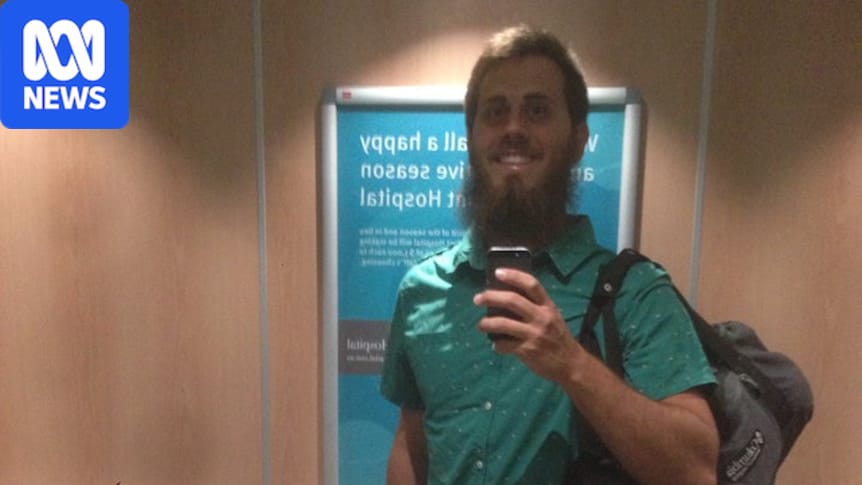
An Australian man dubbed "Dr Jihad" has claimed he never intended to join Islamic State and never pledged allegiance to the extremist organisation, in a recently resurfaced interview.Last week's revelation that Tareq Kamleh was alive in an Iraqi prison, years after it was suspected he was killed in Syria, has reignited a fierce debate in Australia about the fate of foreigners who joined the failed caliphate.Kamleh is a Perth-born, Adelaide-trained paediatrician who travelled to Syria in 2015, and is now among more than a dozen Australians accused of involvement with the deadly extremist group, who are in an Iraqi jail.The group were transferred to Iraq from Syria earlier this year, as part of a deal brokered by the US to relocate IS fighters from the infamous Syrian jails they had been held in.As with the recently returned groups of Australian women and children linked to IS fighters, the Australian government insists it is not going to help the men return.It has now been revealed Kamleh was interviewed as part of a series published by German media outlet 'funk,' which is funded by the country's public broadcasters, while inside a Syrian jail.It was first uploaded in early July 2025, and during the interview, Kamleh claimed not to know why he had been arrested and detained."No-one speaks to you, you don't sit with anyone, you don't know why you're here, you don't know how long you're going to be here," he said.Kamleh's comments are clearly designed to distance himself from the criminal allegations that hang over him and others in jail in Iraq, but even travelling to Syria at the time he did, aside from anything else he did while in the region, is considered an offence under Australian law.The Australian Federal Police have charged him with terrorism offences, including joining and recruiting for IS.Is it actually Kamleh in the video?Kamleh's face is blurred in the interview, and he is not named in the video — something the journalists said were conditions of him agreeing to speak to them.But images and videos the documentary used of him, albeit blurred, are the same as those widely published and broadcast in Australia.He is directly questioned about one of those videos, where he is seen armed with a rifle in what appears to be a tunnel, extolling the virtues of IS.Kamleh claimed he was forced to record the video in 2017."They wanted me to send a message to the Muslim world outside and the Western world outside, that they were going to sit tight in Raqqa," he told the Crisis — Behind the Front Lines series."I got a piece of paper, I had to try and memorise it."I played a bit with the words because some of those things were very dangerous in what they wanted me say."How did he come to join Islamic State?Kamleh claimed he never formally joined the extremist group, which had failed in its attempts to establish a caliphate across a large swathe of Syria and Iraq."It's a big misconception that everyone who came to Syria joined [Islamic State]," he said."I didn't do training. I didn't give what's called 'bay'ah,' which is, if you translate it, pledge of allegiance."But the journalists picked up on his use of the Arabic word "dawla", which translates to "state", and said that it was a word used by people who believed in IS having the authority of its own state.In the interview, Kamleh said he wanted to work as a doctor in Syria after seeing the "catastrophic" scenes emerging from the country.He said he applied to the humanitarian organisation Médecins Sans Frontières (MSF), or Doctors Without Borders, and said he was a Sunni Muslim doctor prepared to go to Syria."When it came my directive to be sent, I was assigned to go to Africa," Kamleh said in the interview."So I contacted them, I said 'Look, I told you I want to come to Syria' and they said 'No, look we've stopped for the next 12 or so months, we've stopped sending to Syria — it's either Africa or not.'"I said then leave it, close the subject."How did he get to Syria?After not getting where he wanted with MSF, he travelled to Türkiye and then into Syria.Again, the journalists questioned the path he took — saying that route would lead him directly into IS territory, and that he would have known that was the case."I didn't actually know how to come into Syria, I didn't have a plan, because I was concerned about being involved with any group, I really didn't have an idea of what group to come from," Kamleh said in the interview."By chance, [Islamic State] controlled that region that I came to, and there were only two cities to come through that I heard about from other people."So the only way to come to Syria at that point, when I came, was to end up in the [Islamic State] territory — for me, it didn't make an issue if it was [Islamic State] or the other groups at the time."What did he do while in Syria?Kamleh told the German team he was working as a doctor in the area."I was running emergency and the ward and the nursery."[The] majority is normal reasons children would come to hospital — sickness or what it might be, premature birth, whatever it might [be]."And the other side is, yes, children coming in injured with amputations or burns. Every injury you can imagine, I've seen it."He said IS provided him and his family with a house to live in."I go to the hospital every day."If they need me to come after hours, they call me, there's a phone."It's a normal life, it's just a war zone."The status of Islamic State-linked Australians stuck in Syria has become a major issue for the federal government. (ABC News: Baderkhan Ahmad)He argued being a specialist paediatrician kept him separate from the IS fighters."If I was a doctor for big people or a surgeon, it would be a problem because — then I'm dealing with soldiers or officials, that's an issue, I will always argue that," Kamleh claimed."I came to do my job, and I did my job, and I was known to be a doctor for children, but I was not a soldier."But he conceded he may have been killed if he refused IS orders. That was an issue which was referenced, in part, to his appearance in the group's propaganda videos.Kamleh was arrested in Baghuz, the scene of a major battle by coalition forces against IS in 2019.Did he support Islamic State ideology?In one part of the interview, the journalist asked Kamleh about the enforcement of hard-line Islamic law by IS.And it is clear he tried to distance himself from it, but was wary of condemning it."If people were caught committing adultery, they would be stoned to death, or people who were caught stealing, which is in line with the religious side," he said."If people were caught stealing, they would have their hands cut off — so I was aware that was occurring. I'll be honest, I didn't see it."I saw a few people come in before getting their hands cut off because the surgeons prepare them to get their hand amputated."He was pressed on whether he believed that was appropriate."Right or wrong is not for me to argue; that's on the religious side, and if God says someone who steals that amount of something should have his hand cut off, who are you or me to argue that?" he said."I'm Muslim, so I can not argue against my own religion — as if I'm arguing against God, it's blasphemy, I can't do that."Kamleh insisted it was just following the Quran."Go into any shop and buy the Quran, there's no other version to it, that's what it says," he said."If you want to open the book on human rights, we could argue both sides — what the West were bombing in Raqqa was definitely not alongside human rights."Getting a hand cut off is a small problem compared to … how many hundreds of children I would see injured from bombings who were innocent civilians from Western planes."Does he have any contact with his family?Kamleh said he wanted to see his wife and children again, but he didn't know where they were.He also said he had no contact with his family back in Australia."They didn't know I was coming," Kamleh said."I remember discussing with my mum … I wanted to test the water; I asked her if I could come to Türkiye, to the border, to help the Syrians, civilians."She said impossible. It's even close to a war zone. She said you'll not go, and she threatened me; she said if you go, I'll tell the authorities, and I will have your passport cancelled."Family are not willing always to know you're coming to a dangerous situation even though your intention is good."What is Kamleh being investigated for?A June statement by the Iraqi Supreme Court revealed there was an ongoing investigation into the man, including allegations his "activities were not limited to providing medical services.""He adopted the extremist group's propaganda, advocating for terrorist activity not to be confined to conflict zones — a message reflecting the extremist ideology promoted by the terrorist groups during that period," it said.Last week, the federal government said it would not provide assistance to "any Australian who made the horrific choice to join a dangerous terrorist organisation"."We've been very clear that for some individuals in this cohort, returning to Australia would mean facing the full force of the law," a spokesperson said in a statement.
'Doctor Jihad' claimed he never meant to join ISIS in resurfaced interview
Full Article
Original Source
Read the full article at Abc →KhanList aggregates and links to publicly available news content. We do not host full articles from third-party sources. Always verify important information with original sources.