
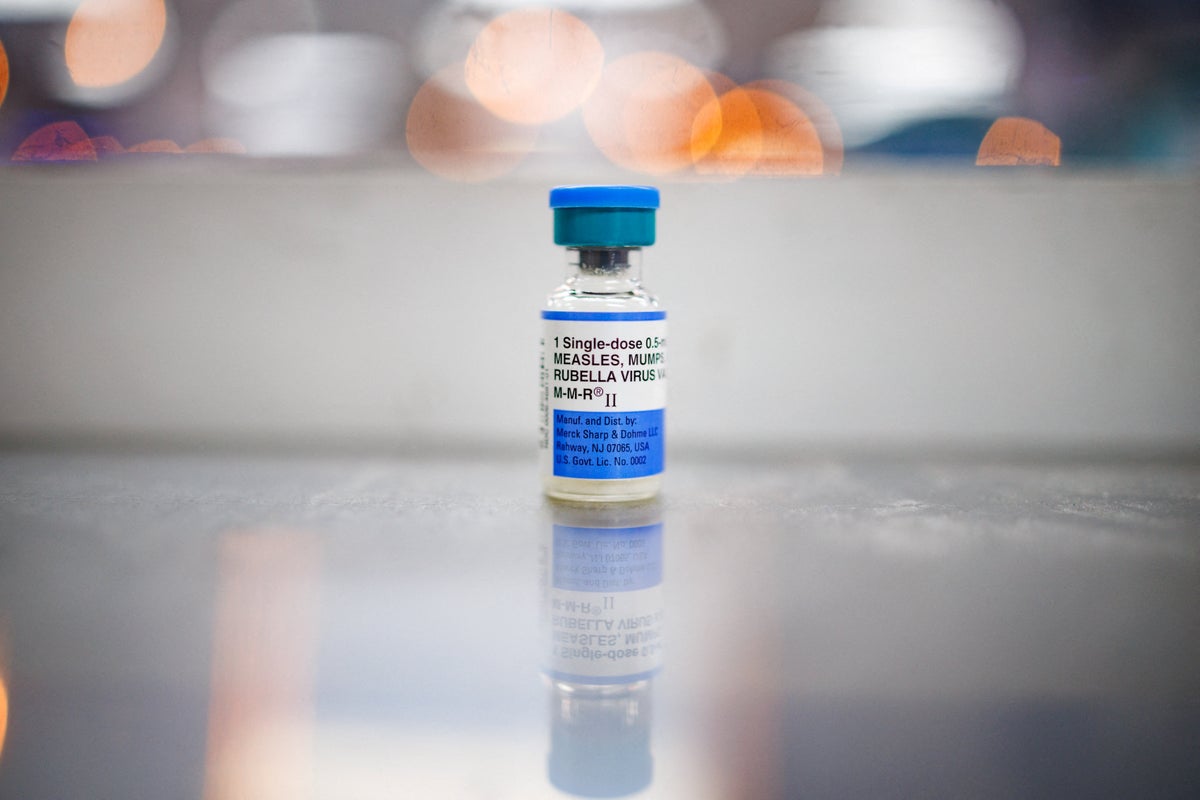
After the U.S. lost its measles-elimination status, a growing number of Americans are questioning whether adults need an additional vaccine dose.For the vast majority, medical experts indicate that extra shots are unnecessary."Most people are protected without getting a booster shot" because of prior immunization or childhood infection, Dr. Richard Martinello at Yale School of Medicine said.The concern comes after persistent outbreaks prompted the U.S., Mexico, and Bolivia to lose their measles-free status this week, reversing decades of progress. Canada similarly lost its measles-elimination designation last year.Medical professionals stress that receiving two doses of the measles, mumps, and rubella (MMR) vaccine offers the strongest defense against the highly transmissible pathogen. A complete vaccination series or a past infection typically confers lifelong immunity. Furthermore, individuals born prior to 1957 are presumed to possess "presumptive evidence" of protection, as childhood exposure was nearly universal during that era.A measles alert sign hangs outside the entrance to the Cohen Children's Medical Center in New York (Reuters)However, clinicians note that certain populations ought to evaluate whether a booster is appropriate.Boosters may be a good idea for some peopleOne such category includes healthcare personnel born before 1957 who lack documented proof of immunity. Given their elevated risk of exposure to infected individuals, they face a higher likelihood of contracting the disease or transmitting it to vulnerable patients.People who received vaccinations between 1963 and 1967 might also require a booster. In that timeframe, some children were administered an inactivated vaccine utilizing a killed version of the virus, which proved less protective than the modern live-attenuated version. Physicians advise that anyone who received the killed virus vaccine or remains unsure should obtain at least one dose of the live MMR vaccine. A single dose delivers 93% effectiveness against measles, whereas two doses increase protection to 97%.A single dose served as the standard regimen until 1989. Current guidelines advise that adults possess documented proof of at least one MMR dose, with two doses recommended for specific high-risk individuals who lack alternative evidence of immunity."People who have had no shots should go get vaccinated, if they weren't born before 1957," said Dr. Joshua Sharfstein at Johns Hopkins Bloomberg School of Public Health. "If they have had only one shot, they may want to consider whether they’re in a risk group for a second shot."He specified that this elevated-risk category encompasses students, healthcare professionals, international travelers, and individuals residing with immunocompromised family members. Sharfstein noted that in regions experiencing active outbreaks, public health authorities may advise two doses for the broader population.For those who have received only a single dose—particularly in areas where the virus is actively circulating—"it’s always a good idea to talk with your physician about whether another shot is needed," Martinello said.Tracking down your vaccination statusFor anyone who is uncertain of their vaccination history, verifying status requires some research.The Centers for Disease Control and Prevention recommends consulting parents or primary care doctors, reaching out to high school or university health departments, or requesting records from former employers that mandated immunizations. State health departments can also be contacted, as several maintain databases tracking adult immunizations.If vaccination history remains unconfirmed, patients can discuss an MMR blood test with their physician to detect measles antibodies. However, Martinello cautioned that blood testing is not a perfect gauge of viral defense. While the lab test is accurate, researchers cannot precisely correlate antibody levels with an individual's actual level of protection.Nevertheless, medical experts stress that receiving an extra booster out of caution will not cause harm, provided the person is not in a group advised against vaccination, such as pregnant women.As measles continues to circulate within the U.S., physicians stress the importance of proactive protection."This is a moment to not just check for yourself, but also encourage others to make sure that they are adequately vaccinated," Sharfstein said. "Too many people took measles for granted … or just didn’t think about measles. But now it’s something to think about."
Do you need a measles booster shot? Latest advice after US loses elimination status
Full Article
Original Source
Read the full article at Independent →KhanList aggregates and links to publicly available news content. We do not host full articles from third-party sources. Always verify important information with original sources.