
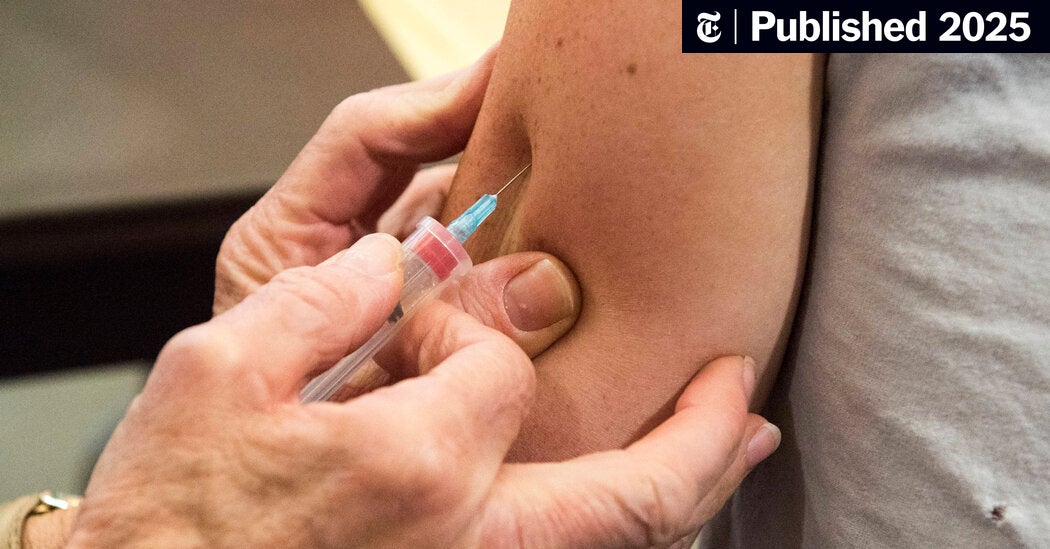
AdvertisementSKIP ADVERTISEMENTAs cases spread across North America, now is a good time to check your vaccination status.Credit...Getty ImagesPublished Feb. 27, 2025Updated Nov. 17, 2026, 11:14 a.m. ETWith measles spreading across the country, doctors are urging people to make sure they are protected.Vaccines are the most effective tools to combat measles. Breakthrough cases — infections among the vaccinated — are extremely rare. But now that measles is once again endemic in the United States, it’s important to review your own vaccination status.How to check if you have immunityMore than 90 percent of children in the United States have received at least one dose of the shot that protects against measles, mumps and rubella, which is part of the routine child vaccination schedule.If you are fully vaccinated — meaning you have received two doses at some point in your life — you should be set. Even though immunity from any vaccine wanes over time, the measles vaccine offers strong lifetime protection against infection for almost everyone, said Dr. William Schaffner, an infectious disease specialist at Vanderbilt University Medical Center.The Centers for Disease Control and Prevention says that anyone born before 1957 is most likely protected from the virus, because measles circulated so widely then.But if you were born after 1957 and are not entirely sure whether you were vaccinated, try to track down your medical records. You can also ask a doctor for a blood test to measure the amount of antibodies against measles in your blood.Who needs another shot?If you’ve received two shotsEven for people who live in an area where an outbreak is occurring, health officials generally do not recommend a booster or an extra dose of the M.M.R. vaccine.“If someone has had two doses of the vaccine, there’s no reason for them to worry about it, or even think about getting a booster,” said Dr. Amesh Adalja, an infectious disease physician and senior scholar at the Johns Hopkins Center for Health Security.An exception is some people who have become immunosupressed since they were vaccinated, such as bone marrow transplant patients, he said; they may need to be revaccinated.If you’ve only received one shotIf you were vaccinated with one shot before 1968, you may need at least one more dose, because the shot offered previously was less effective.If you were vaccinated between 1968 and 1989, there may be some gap in immunity: During that time, the C.D.C. recommended only one shot. A single dose is around 93 percent effective against measles. Now, the agency says full protection is two shots, roughly 97 percent effective.If you have had only one shot, you should talk with a health care provider about next steps, said Robert Bednarczyk, an associate professor of global health at Emory University.Most people who have had one dose do not need to seek out another, Dr. Adalja said. “One dose is pretty effective,” though he added that there’s no harm in getting another dose.That said, there are specific situations in which you might consider getting a second dose if you’ve only had one, such as if you’re traveling outside of the country. The C.D.C. recommends that school-age children, health care workers, college students and some people with H.I.V. seek a second shot. The agency also advises family members and close contacts of people with compromised immune systems to receive two doses. During an outbreak, public health officials may recommend certain groups who are at increased risk for contracting the virus get a second shot.Some people most at risk from the virus are not routinely vaccinated, like children under one year, pregnant women who have not received the shots and some people who are immunocompromised. That’s why vaccination rates in a community are so critical.“Measles is one of the most contagious diseases that we know of,” Dr. Bednarczyk said. “So even when those coverage levels drop or the population level immunity drops a little bit, that’s where we can start to see larger outbreaks.”Dani Blum is a health reporter for The Times.A version of this article appears in print on , Section D, Page 6 of the New York edition with the headline: Ways to Protect Against Measles. Order Reprints | Today’s Paper | SubscribeRelated ContentAdvertisementSKIP ADVERTISEMENT
Do You Need a Measles Booster?
Full Article
Original Source
Read the full article at Nytimes →KhanList aggregates and links to publicly available news content. We do not host full articles from third-party sources. Always verify important information with original sources.