
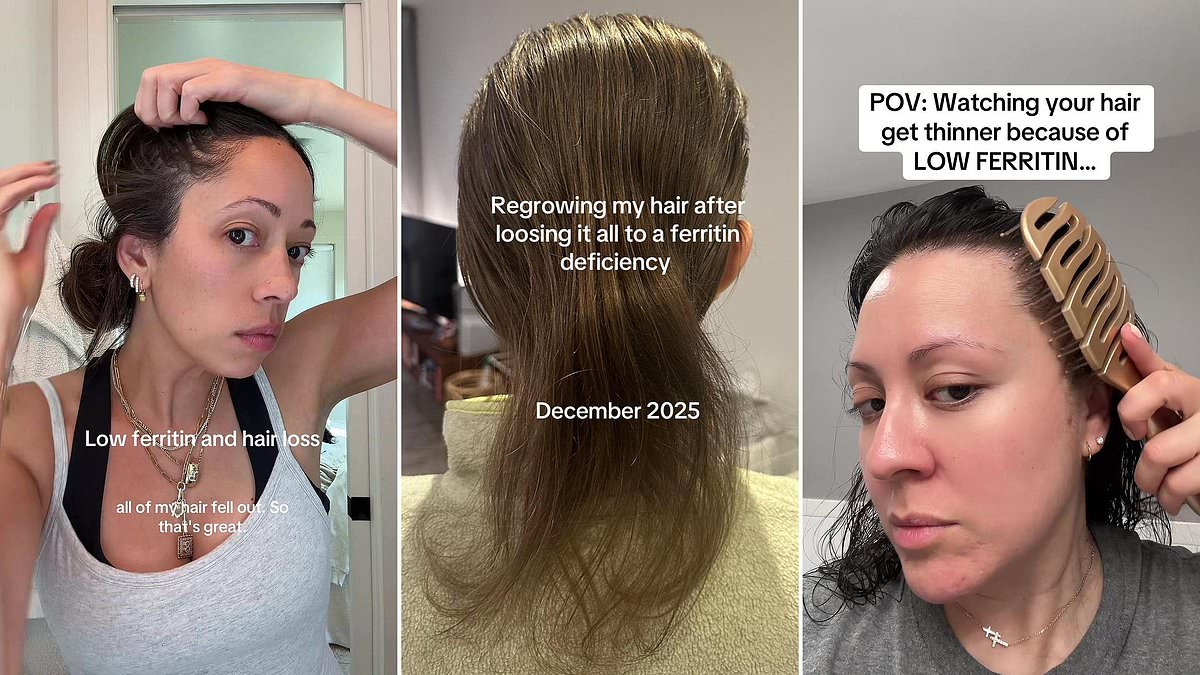
If your hair seems thinner than usual, your skin has lost its glow and you’re feeling more exhausted than normal, it’s tempting to blame everything from a change in skincare to a particularly stressful few weeks. But there’s another possible explanation making the rounds on TikTok: low ferritin.First came ‘ferritin face’, the viral term used to describe dull-looking skin, dark circles and a generally tired appearance supposedly linked to low iron stores. Now, the conversation has moved on to ‘ferritin hair’, with social media users suggesting that depleted iron reserves could be behind increased shedding, thinning and a lack of volume.It’s easy to see why the idea has caught people’s attention. Hair loss can be upsetting, particularly when it feels as though you’re doing everything right: investing in good products, eating well and sticking to a carefully considered routine, only to find more strands than usual in the shower.But is there any truth to the trend? And could your iron levels really be affecting the way your hair looks and feels? We asked the experts to separate the science from the social-media speculation.First things first: what is ferritin?Ferritin is a protein that stores iron in the body. A blood test measuring ferritin gives an indication of how much iron you have in reserve – think of it as your body’s iron savings account, rather than a measure of the iron currently circulating in your blood.‘Ferritin is the protein that stores iron in your body, so a blood ferritin level is essentially a snapshot of your iron reserves, your “tank”, rather than just the iron circulating in your blood at that moment,’ explains Dr Lamia Zafrani, consultant gynaecologist.Iron plays an important role in several essential bodily functions, including transporting oxygen around the body and supporting energy production. It also contributes to concentration, exercise capacity and healthy hair and nails.Women can be particularly vulnerable to depleted iron stores because of menstruation. ‘For women specifically, menstruation means a steady monthly loss of iron that men simply don’t have, so reserves are more easily run down,’ says Dr Zafrani. Heavy or prolonged periods can make this more pronounced, while pregnancy and the postpartum period can also increase the body’s iron requirements.Dietary restrictions may play a part, too. People who eat little or no meat need to pay particular attention to their iron intake, as iron from plant-based sources is less easily absorbed by the body. In some cases, digestive conditions can also affect how well iron is absorbed.What is ‘ferritin face’ – and can low iron affect your appearance?The term ‘ferritin face’ has gained traction online, with users attributing dark circles, dullness and a tired-looking complexion to low iron levels. But it’s important to distinguish a social-media label from a recognised medical condition.Gail Madalena, senior nutritional therapist at Wild Nutrition, warns against self-diagnosing based on appearance alone. Dark circles, dullness and diffuse hair shedding can have a number of causes, including chronic stress, poor sleep, seasonal changes, nutritional deficiencies and hormonal fluctuations.Rather than assuming that iron is the answer, she advises looking at the bigger picture. In other words, a tired-looking complexion doesn’t automatically mean your ferritin is low – and taking iron supplements without establishing whether you need them is not the solution. The term ‘ferritin face’ has gained traction online, with users attributing dark circles, dullness and a tired-looking complexion to low iron levels. That said, iron deficiency can have visible effects. Dr Aamna Adel, consultant dermatologist and founder of haircare brand Rhute, explains that when iron levels are low, the complexion can appear pale, dull and less lustrous, while the skin may feel drier or look more lacklustre.‘A telltale sign is paleness in the lips and the delicate skin just inside the lower eyelid,’ she explains. The nails can also be affected, becoming weak, ridged and prone to breaking. In more established deficiency, they may flatten or develop a spoon-like shape.So, what exactly is ‘ferritin hair’?Unlike the catchy TikTok terminology, the relationship between iron stores and hair shedding is something dermatologists do take seriously. Ferritin is particularly relevant because hair growth is one of the processes the body may deprioritise when its iron reserves are running low.‘Ferritin is the protein that reflects your iron stores,’ explains Dr Adel. She notes that increased shedding is strongly associated with ferritin levels below 30 ng/mL. However, this isn’t a definitive cut-off that diagnoses the cause of hair loss in every individual. The conversation has moved on to ‘ferritin hair’, with social media users suggesting that depleted iron reserves could be behind increased shedding, thinning and a lack of volume.One reason the issue can be confusing is that standard blood-test results may not tell the whole story. Dr Adel explains that laboratory reference ranges can flag iron as low only when ferritin falls below around 12 to 15 ng/mL – a threshold associated with anaemia. This means someone’s haemoglobin and wider blood count may appear normal while their iron stores are depleted.‘Absolutely, you can have perfectly normal haemoglobin and a normal full blood count, so you’re not anaemic, while your ferritin, your iron stores, is low,’ she explains.Dr Adel notes that some dermatologists and trichologists who focus on hair health aim for ferritin levels above 70 ng/mL to support regrowth. This is a suggested target in the context of hair concerns, rather than a universal threshold that everyone needs to reach. Your results should always be interpreted alongside your symptoms and medical history by a healthcare professional.How can you tell if your hair loss is linked to low ferritin?One of the most common patterns of ferritin-related shedding is telogen effluvium. This is a type of hair loss in which more hairs than usual enter the shedding phase of the hair-growth cycle.According to Dr Adel, it tends to cause diffuse shedding across the scalp, rather than thinning in one specific area. You might notice more hair coming out when washing or brushing it, or find that your ponytail feels less full than it used to. According to consultant dermatologist Dr Aamna Adel, low ferritin levels tend to cause diffuse shedding across the scalp, rather than thinning in one specific area.Female-pattern hair loss, by comparison, usually involves gradual thinning concentrated around the top of the scalp and the parting. The hair may become progressively finer, rather than simply shedding more heavily. The two conditions can also occur at the same time, which is why it’s important not to try to diagnose the cause yourself.Other symptoms can offer clues that your iron stores need attention. These may include fatigue, reduced exercise capacity, difficulty concentrating and changes to the skin, hair and nails. However, these symptoms are not exclusive to iron deficiency, and hair shedding in particular can have several contributing factors.What should you do if you suspect low ferritin?If you’ve noticed unexplained shedding or a change in the condition of your hair, the best first step is to speak to your GP rather than ordering supplements or following a TikTok routine.Dr Adel recommends asking whether a ferritin test is appropriate, alongside a full blood count. Depending on your symptoms and medical history, other checks may also be useful, including thyroid function, folate, vitamin D, vitamin B12 and sometimes zinc. Hair shedding is often multifactorial, so looking at the wider picture can help identify whether more than one factor is involved.It’s also important to investigate why your ferritin might be low in the first place. Heavy periods are a common cause in women, while pregnancy, dietary restrictions and problems with absorption can also contribute. Dr Zafrani stresses that iron deficiency should not simply be brushed off, particularly if it persists or develops after menopause, when monthly menstrual losses have stopped.And please don’t start taking iron supplements just because you’re worried about your hair. Too much iron can accumulate in the body and cause harm, so supplementation should be based on blood-test results and taken with appropriate medical guidance. As Dr Adel points out, low ferritin is a symptom, not a diagnosis in itself: the underlying reason needs to be understood, too.Can you support healthier hair through your diet?Once a deficiency has been identified, your healthcare professional can advise on the best way to address it. Diet can form part of the wider picture, particularly when it comes to maintaining adequate iron intake.Madalena recommends pairing plant-based sources of iron, such as lentils, oats and spinach, with vitamin C-rich foods to help support absorption. Tannins and polyphenols in tea, coffee and matcha can bind to non-haem iron, potentially reducing how much the body absorbs. She suggests leaving a 60–90-minute gap between these drinks and iron-rich meals.She also points to a traditional kitchen trick: simmering acidic foods, such as tomato-based sauces, in cast-iron cookware can transfer small amounts of dietary iron into food. It’s a useful extra to know, but it shouldn’t be considered a replacement for treating a confirmed deficiency.For hair health more broadly, Dr Adel emphasises the importance of adequate protein intake, a balanced diet and gentle, consistent scalp care. Hair is made largely of protein, so getting enough through your diet matters. Looking after the scalp is also important, as healthy hair grows from a healthy scalp.How long does it take for hair to grow back?This is where patience is essential. Even once ferritin levels have been restored, you shouldn’t expect to see a dramatic difference overnight. Hair grows slowly – around a centimetre a month – so visible regrowth after correcting a deficiency can take several months.The key takeaway? ‘Ferritin hair’ might be the latest beauty phrase doing the rounds online, but the relationship between iron stores and hair shedding is worth taking seriously. Just don’t let a viral trend convince you that every bad hair day is a sign of deficiency. If you’re concerned about increased shedding, get the right tests, find out what’s behind it and seek advice before reaching for the supplements.
Do you have ferritin hair? How to tell if low iron levels are causing shedding - and how to restore your locks
Full Article
Original Source
Read the full article at Dailymail →KhanList aggregates and links to publicly available news content. We do not host full articles from third-party sources. Always verify important information with original sources.