
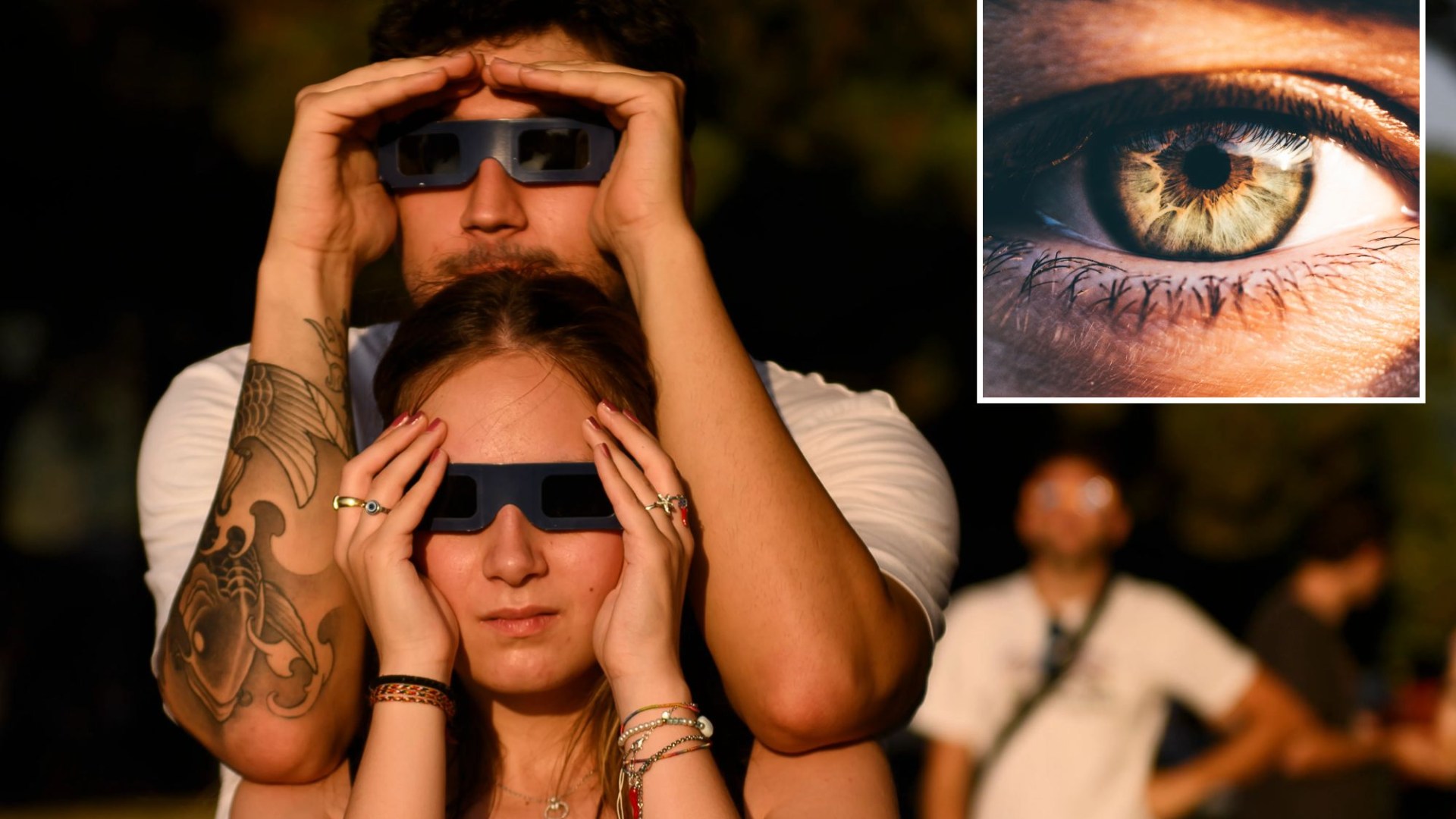
THE eclipse had us all in awe last night, but while we were warned not to look directly at the sun without special glasses, some may have taken their chances. An expert has explained the symptoms that suggest you might have damaged your eyes and how these differ from typical ailments, like dry eye. The Solar Eclipse approx 1900 seen from Sheerness, Kent Credit: Alamy Without proper, certified solar eclipse glasses, you can do the retina in your eye a lot of damage Credit: Jordan Pettitt/PA Wire Conditions of the eye affect many of us, especially this time of year when there are triggers like dry, hot air or air conditioning. But after scientists told us to avoid looking at the sun, you may be worried that these are out of the ordinary. Sign up for the Health newsletter Thank you! Especially given the worst possible scenario is blindness – which eye doctors say is possible with just a few seconds of exposure. One woman described how she has partial blindness after watching the partial eclipse of the sun in New York, in the US, in 2017. Nia Payne borrowed a pair of “eclipse glasses” from a stranger on the street and just hours later she noticed vision problems, including a dark spot in the centre of her vision. Nia told CBS: “I looked into the sun for 30 seconds – that was it.” Dr Panos Maghsoudlou, NIHR Academic Clinical Lecturer in Ophthamology at the University of Bristol, says: “Most symptoms from dry eye, lack of sleep or hay fever affect the front surface of the eye. “These can cause symptoms that tend to fluctuate.” Most read in Health These include: Irritation Burning Gritty or tired eyes Redness Watering Itching Blurred vision What’s more, Dr Panos says: “If you have spent a long time staring at the Sun, this can also temporarily worsen dry-eye symptoms. “These symptoms should generally improve with rest and lubricating eye drops.” You might also be used to such symptoms, if you experience them day-to-day. Dry eyes is a condition that is more likely in people over the age of 50, who wear contact lenses, look at computer screens a lot of the time, smoke or take some medications. A pharmacist can help with advising treatment, such as eyedrops or ointments, but a GP should be seen if symptoms persist after a few weeks. Meanwhile, hay fever season is in full swing and the hot weather can make symptoms worse. The Met Office says pollen count is High across the whole of England and Northern Ireland today, and Medium in Scotland. Hay fever affects roughly one in five Brits. So what makes eye damage from the eclipse different to these minor ailments? When to get medical help Ask for an urgent GP appointment or get help from NHS 111 if: You’ve injured your eye and it is not getting better after 24 hours You’re worried about an eye injury – particularly if it’s a child that’s injured It’s very painful Dr Panos warns: “If you have persistent visual symptoms, particularly a new central blurred or dark spot, visual distortion (ie straight lines appearing wavy) or reduced vision after looking at the eclipse, you should seek assessment at an eye casualty department, as you normally would for any new or concerning change in vision.” You can call 111 or get help from 111 online. Always call 111 if you need help for a child under 5 years old. You could also visit an optician for advice. People gather to watch the partial solar eclipse in Greenwich Park on August 12, 2026 in London, United Kingdom Credit: Getty Dr Panos says: “Possible eye damage from looking directly at the eclipse is different because it affects the back of the eye, the retina.” Symptoms, he says, can include: Persistent blurred or reduced central vision A grey or dark spot in the centre of your vision (a scotoma) Distortion of straight lines Changes in colour Change in image size Dr Panos said even “the tiniest fraction of sun is far brighter than anything the eye tolerates and the damage is irreversible”. You may have watched the eclipse with glasses. But authentic eclipse viewing equipment must be explicitly stamped with the code ISO 12312-2 (sometimes written as ISO 12312-2:2015) to certify the highest level of eye protection. Multi-stacked sunglasses, smoked glass, or colanders are not safe to use to view the sun directly. Comment now
Do you have eclipse eye damage? How to tell the difference between lack of sleep, dry eyes or hay fever
Full Article
Original Source
Read the full article at Thesun →KhanList aggregates and links to publicly available news content. We do not host full articles from third-party sources. Always verify important information with original sources.