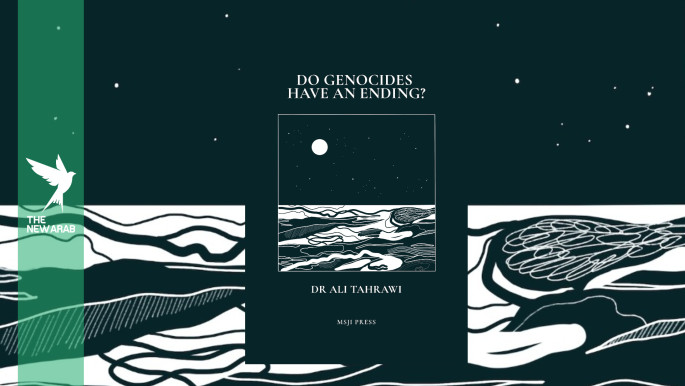
Since 2023, much of what the world has seen on screens has been images of airstrikes and destruction. However, what has remained largely unseen is how Palestinians have endured these difficult conditions inside Gaza's hospitals. Do Genocides Have An Ending? (MSJI Press) is the testimony of Palestinian doctor Ali Tahrawi, who works in the emergency department at Al-Aqsa Martyrs Hospital in Deir al-Balah. The book unfolds his deep thoughts and emotional reactions to the Israeli war on Gaza from 2023 to 2026. Through his thought-provoking words, Ali Tahrawi takes readers behind the scenes of a hospital in Gaza. He writes vividly about death, anxiety, fear, pain, and desperation, offering a rare glimpse into the realities of life inside a healthcare system on the edge of collapse. It is the story of a young doctor who was fortunate enough to survive a genocide in Gaza, yet endured the agony of watching his people being killed while the world remained silent. "I am Gaza. I am one of the most wounded places on earth. I am carrying within me thousands of massacred bodies and millions of tons of rubble. I am life forced into a narrow grave," he writes. More than a personal account of Tahrawi's experience, the book serves as a record of the collapse of Gaza's healthcare system and the displacement of an entire population. Yet, despite the devastation surrounding him, Tahrawi continues to hold on to hope and kindness. The source of that hope lies in his lifelong commitment to medicine and to the people of Gaza. A doctor on duty Ali Tahrawi's dream was always to become a doctor. After completing his studies abroad, he returned to Gaza to serve its people. He hoped to work in his country and live a normal life. However, what he did not know was that war and genocide would transform both his life and his profession. "It is the hardest life anyone could live in this world, and the worst place a doctor could possibly work. Yet it is the place where I most want to be, until the end of this," he writes. As an emergency room doctor at Al-Aqsa Martyrs Hospital, Tahrawi witnesses the war from the front lines. He finds himself treating the wounded, meeting grieving families, and working under extremely difficult conditions. Gaza's emergency room becomes a battlefield, where victims of bombings arrive seeking urgent care, families searching for their loved ones, and medical workers do everything they can to save lives. Unable to find another way to release his deep pain and agony, Tahrawi turned to writing. His diary becomes a testimony to a hopeful people living in a desperate land. He writes about fear, death, orphaned children, and entire families wiped out by violence. In doing so, he preserves the stories of people whose voices are too often unheard. Many of these stories emerge from the horrific scenes he witnesses firsthand in the emergency room, where each day brings more casualties, more losses, and more reminders of the human cost of war. Scenes from the massacre In his day-to-day account, Tahrawi recounts some of the war's most horrific moments. Describing the bombings of 10 June 2024, which left 274 people dead and more than 700 wounded, he writes: "It was a complete failure of humanity." "I want this war to die, for death to take a long rest, and for peace and relief to occupy my people's hearts forever." He also states that on 4 August 2024, the hospital where he works was attacked for the third time. The world remained in deep silence. Desperate and heartbroken, Tahrawi turns to Allah, the Most Merciful, asking for mercy for the people of Gaza. Tahrawi continues sharing the stories and horrible scenes of the people living through the genocide: patients suffering from illness, families fleeing missile strikes, and wounded pregnant women. He recounts the arrival of hundreds of casualties at the emergency room and his efforts to help them despite the hospital's very limited capacity, damaged facilities, and severe shortages of basic necessities. "I could not find a bed for a patient having a heart attack, nor any bandages or gauze to dress the wounds and burns of the casualties. I could not even find ointment to treat my mother's allergies," he writes. These daily struggles reveal the scale of the humanitarian crisis in Gaza. Faced with scenes of massacre, death, and destruction, Tahrawi pauses to ask himself: "Do genocides have an ending?" "I can feel the genocide metastasising in our bodies. My friends, I am just a dead man walking, angry and sick of this temporary existence, amid the blown-off brains and scattered body parts of my people: us, the genocided people, who deserved a decent life and a decent death." This period leaves Tahrawi overwhelmed by despair and exhaustion, sometimes wishing for death as the only escape from this misery. Yet, his role as a doctor forces him to keep going. His willingness and determination to stay and remain hopeful is stronger than anything else. After all, he has a duty to serve his people until the very end. A silenced world The devastation of Gaza has become unbearable, yet no one has come to put an end to the war. Throughout the book, Ali Tahrawi's words give voice to the cruelty and injustice he witnesses, speaking a painful truth about a world that has remained silent for years. Tahrawi repeatedly calls on the international community to stop the genocide immediately and take action to save the people of Gaza. He criticises the countries that have chosen not to stand with Gaza, writing: "It is not their cause, because it is not the cowards' cause." He also criticises political leaders and governments that failed to act. Tahrawi refers to those who remain silent as "the silenced world," including leaders of the Arab world who, in his view, have abandoned Gaza and allowed its people to be killed. He further condemns America's vetoes against efforts to stop the war and its continued support for Israel amid ongoing attacks. "It's a bloody shame on the whole world, which could not stop these endless massacres from happening every day and every night, and could not stop the Zionist war criminals from occupying our lands and skies, and slaughtering my people. SHAME," he writes. Do Genocides Have An Ending? is an authentic account that questions a world that has failed to prevent the genocide and destruction of an entire population, not only today but throughout decades of ongoing violence. The book's authenticity lies in its intense expressions of pain and fear. Tahrawi writes with honesty, conveying his anger, grief, and profound sense of injustice. Despite everything he has witnessed, he remains committed to serving his people, resisting despair in the face of death and destruction. What Tahrawi endured over the past three years in Gaza reveals the devastating reality of life there and how people have been left to face unimaginable loss and death. By documenting these painful experiences, he offers readers a firsthand account of a reality that the world has largely failed to acknowledge. Joyce Bou Charaa is a Lebanese freelance writer and book editor, with a keen interest in writing about literature, culture, and history Follow her on Instagram: @joyboucharaa
Do Genocides Have An Ending?: A doctor's diary from Gaza
Full Article
Original Source
Read the full article at Newarab →KhanList aggregates and links to publicly available news content. We do not host full articles from third-party sources. Always verify important information with original sources.