
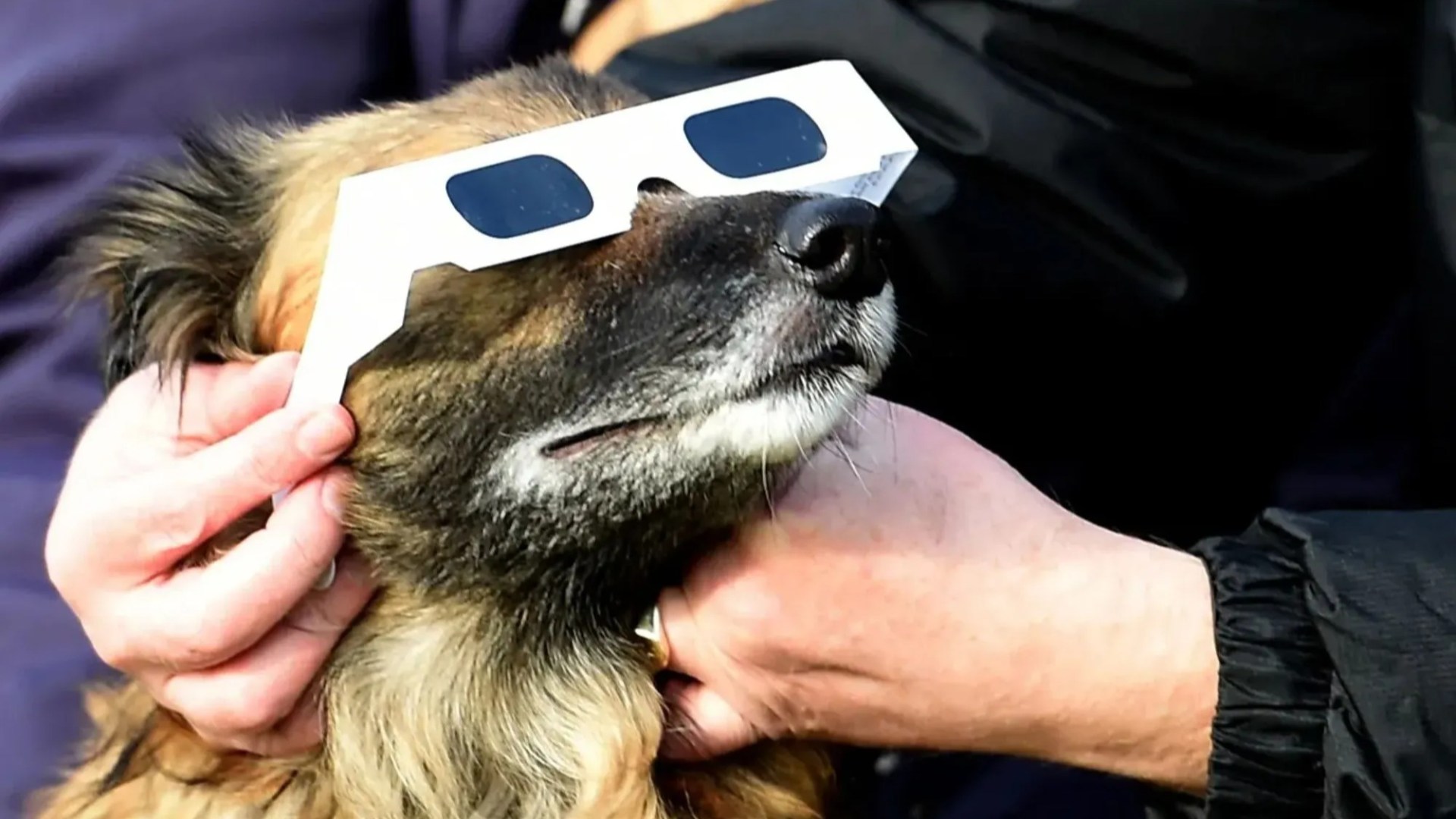
TODAY’S solar eclipse will be the fullest that the UK has seen since 1999, and there won’t be another one this good until 2081. But while many of us will be squinting skywards through certified glasses or projecting the spectacle, our four-legged friends will almost certainly ignore the whole thing. Vets advise against making your pets wear eclipse glasses Credit: AFP The whole of the UK will experience at least 90% of the Sun covered by the Moon Do dogs need eclipse glasses? No, dogs don’t need eclipse glasses – save your money and spare your dog the indignity. Dr Jerry Klein, chief veterinary officer at the American Kennel Club, says dogs simply do not look up at the Sun the way people do. Sign up for The Sun newsletter Thank you! “They know enough not to,” he said, joking that it’s one of the things that makes them smarter than humans. Angela Gonzalez, associate professor at the Faculty of Veterinary Medicine at the University of Santiago de Compostela and a vet at the Rof Codina University Veterinary Hospital in Lugo, said instinct does the work. read more on the solar eclipse She said: “There would be risks if they were to stare at it, but they wouldn’t normally do that. “Normally, a dog would just be sniffing around and wouldn’t be staring up at the sky.” She also urged owners not to buy protective eyewear as most animals aren’t used to wearing anything on their faces, and said no pet should ever be encouraged to look at the eclipse. The American Animal Hospital Association agrees, adding that putting glasses on a pet causes more stress than the eclipse itself, and that it has found no documented reports of eclipse-related eye damage in pets. Most read in The Sun This Met Office Map shows what time maximum eclipse occurs around the UK, and the percentage of the Sun covered by the Moon Will the eclipse frighten my dog? Britain sits outside the path of totality, so the sky will dim rather than darken fully. The Royal Observatory Greenwich says it will feel more like a cloudy day, or close to dusk, than night. Observations from the 2017 American eclipse recorded birds falling quiet and returning to nests, crickets and cicadas starting their evening chorus, cats seeking shelter and livestock heading back to barns. Dogs mostly looked to their owners or lay down. Prof Gonzalez said a sudden change in light can startle sensitive animals, but normally nothing happens. The real variable is you – vets warn the genuine risk is owners taking pets into crowded viewing spots, or trying to involve them in the event. The People’s Dispensary for Sick Animals’ says staying calm yourself and keeping your tone, mood and behaviour as normal as possible reassures your pet. Whereas getting anxious or acting differently strengthens the idea that there is something to be afraid of. This advice isn’t new – it is backed up by study done on the effects of a total eclipse on the behaviour of animals in 1932, which was published in the American Academy of Arts & Sciences. It stated: “Doubtless in some instances, the intelligent animals sensed something unusual in the behaviour of their masters, while probably others … reacted as if a thunderstorm were imminent and became frightened, whimpered or tried to hide away.” How to keep your pet calm during the eclipse Treat it as an ordinary evening and don’t encourage them to look up. Nervous animals are happiest indoors with the curtains drawn. However, amber heat health alerts are in force across large parts of England today, so the weather is a far bigger threat to your dog this evening than the solar eclipse is. Keep water available, avoid hot pavements, and think twice about timing a long walk for maximum eclipse. The general rule of thumb from UK vets is that anything above 25C is too hot to walk a dog — temperatures in London are forecast to still be around 28C at 8pm. Depending on where you are, the Moon will start to pass the Sun at around 6.15pm, with maximum eclipse between 7.05pm and 7.15pm, and the event finishing just after 8pm. Comment now
Do dogs need eclipse glasses? How to keep your pet safe and calm during the solar eclipse today
Full Article
Original Source
Read the full article at Thesun →KhanList aggregates and links to publicly available news content. We do not host full articles from third-party sources. Always verify important information with original sources.