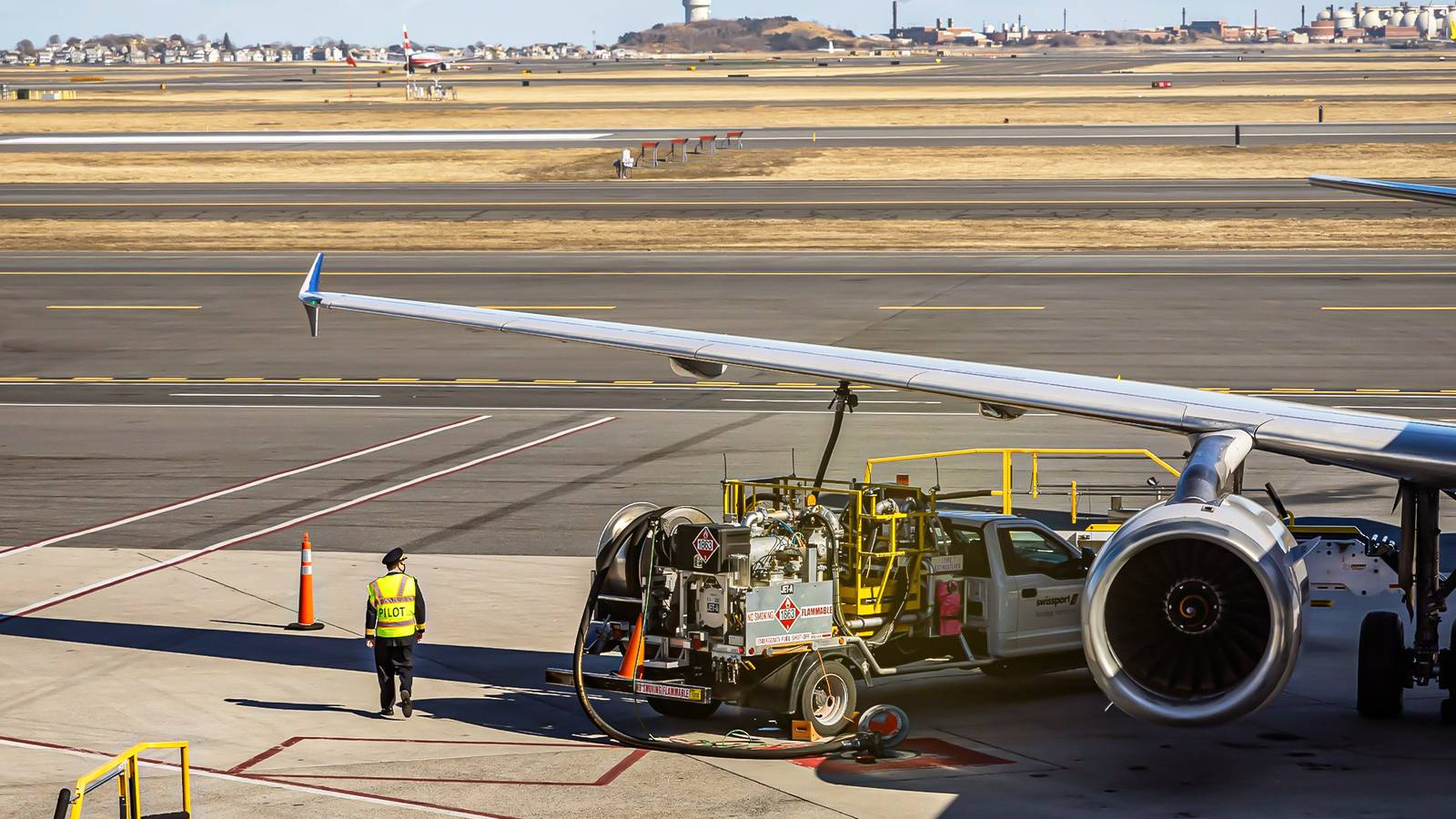
Published Aug 6, 2026, 6:00 PM EDT Daniel comes to Simple Flying with a business focused approach to the aviation world. Daniel enjoys analyzing strategy and how companies move against each other to gain a step ahead in the skies. Besides strategy, Daniel also has a passion for aircraft design and the history of aviation. Based in New York Flight planning is a precise practice that takes into account a wide range of factors to determine elements like routing, altitude, and fuel, among others. Fuel is especially critical, since loading too little or too close to the minimum necessary for the flight can lead to a costly diversion, while loading too much wastes money and also increases fuel burn, as the aircraft burns more fuel to carry the added weight of the fuel. There are also additional factors that go into calculating how much fuel is needed, including what is needed for the whole day. Typically, it's an airline's dispatch office that takes the primary responsibility of determining how much fuel is needed for a given flight, taking into account factors such as cruising altitude, aircraft weight, the actual planned route, and federal regulations. Meanwhile, the flight's captain holds the final responsibility for the flight and has to agree with the dispatch office on how much fuel is necessary for a safe flight. If the two disagree, then a new figure has to be calculated that the two parties can sign off on. The Basic Components Of Planning Fuel Credit: Shutterstock Trip fuel is the amount required between takeoff and landing. This has to be calculated according to the actual route that will be flown, as well as the forecasted winds, the temperature, and the aircraft's actual fuel burn. Each plane has a slightly different fuel burn than what the manufacturer states for the model (with the actual fuel burn programmed into the flight management computer), and fuel burn also varies dramatically depending on the plane's weight. These figures are calculated by the airline's dispatch office, but other components need to be calculated as well. Airliners burn significant fuel on the ground, and so dispatch offices have to calculate taxi fuel. This includes the amount consumed by the APU, fuel for the engine start, as well as fuel consumption during taxi at the departure and arrival airports. Historically, airlines used a fixed baseline amount based on the aircraft type for taxi fuel, but more recently, carriers have begun to calculate taxi fuel precisely using advanced software that examines historical fuel burn at specific airports at certain times of day. In addition to the taxi and trip fuel, aircraft also need to be loaded with enough fuel to fly to the filed alternate airport, in case the aircraft cannot land at the destination. Finally, the aircraft needs to be filled with contingency fuel to allow for possible delays due to congestion or adverse weather, as well as with final reserve fuel for emergency situations. Together, this is the block fuel that's planned for a flight, which is calculated by the dispatch office and then provided to the pilots. Credit: Shutterstock While exact regulations vary by jurisdiction, all aviation administrators require airlines to include an alternative airport in flight plans. This is helpful in case the intended destination is impacted by hazardous weather, such as thunderstorms or extreme fog. Airliners will usually hold near the airport until conditions improve, but in case this doesn't occur in time, flights will divert instead and are therefore required to carry enough fuel to fly to the alternative airfield. The requirements for contingency fuel also vary, and typically range from 3% to 5% of the planned fuel, and may also be paired with a time guideline. The FAA typically requires 10% of the planned fuel, but allows flag carriers to deviate from this by using Performance-Based Fuel Contingency (PBCF) to calculate fuel burn deviations based on statistical data. With PBCF, flag carriers may schedule flights with 5% or five minutes of contingency fuel at 1,500 feet (457 meters), whichever is higher. EASA, meanwhile, requires 5% or five minutes, but allows operators to carry 3% in some cases. Block Fuel Make-Up Taxi fuel Trip fuel Contingency fuel Filed alternate fuel Reserve fuel Meanwhile, regulators also require extra reserve fuel, which is not meant to be used during normal operations. The FAA requires 45 minutes of reserve fuel for all IFR flights, while EASA requires 30 minutes of reserve for turbine-powered aircraft. This time-based requirement is added to all commercial flights. As a whole, while airlines plan precisely how much fuel is needed for the flight, regulators require that they add additional fuel to ensure that planes don't run out of fuel in an emergency. The Pilot's Discretion With Fuel Credit: Shutterstock The dispatch office is typically the department tasked with calculating fuel, but it's ultimately the captain who bears the final responsibility for the safety of the flight. As such, the captain typically has the authority to load extra fuel (although they're usually required to provide a justification for the added fuel). Unlike the dispatcher, the captain is in the air, and they can therefore express their judgment on the planned operation of the flight, which may result in a request for more fuel. Pilots may have a different idea of how much time an en-route thunderstorm or congestion at the destination may add to the route than the dispatcher, based on their own experience and judgment. The exact procedure varies, with some airlines providing it no questions asked, while others may always require an explanation. Meanwhile, other airlines may allow the pilot to add a specific amount of fuel with no explanation and require a justification past that point. However, aviation today is all about procedures and precision. Airlines have become extremely proficient at calculating how much fuel is needed, and it's the pilot's job to collaborate with dispatchers to ensure safety. It's uncommon for pilots to request additional fuel over what was planned, and even when this happens, the captain typically only needs to request a small amount. Overall, flight planning is extremely meticulous, and the pilot's role is primarily to verify the plan rather than correct it. The Practice Of Tankering Fuel Credit: Shutterstock Airlines are highly adept at mapping out exactly how much fuel is needed for a given flight, lowering costs to the greatest extent possible without compromising safety. However, in many situations, the carrier will schedule far more fuel to be loaded than what the data may show is necessary for that particular flight, because the plane is also carrying fuel for the next flight. This is a practice known as tankering, and it's essentially never done on long-haul flights, but is quite common in short-haul operations. Jet fuel prices can vary widely between airports, significantly impacting operating costs depending on whether an airline chooses to refuel earlier at a cheaper airfield or fill the aircraft up later at another airport. In addition, skipping the refueling process can shorten turnaround times, allowing the aircraft to leave earlier and for the airline to further optimize its schedule. While fuel burn may be much higher due to the added weight of the fuel, it's often worth it when jet fuel at the destination airport is much higher than at the origin. Sadly, this practice once played a factor in an aviation disaster. In the 1977 Tenerife Airport disaster, KLM flight 4805 captain Jacob van Zanten chose to load the 747 with enough fuel not just to hop over to Gran Canaria, but all the way back to Amsterdam due to concerns about airport congestion. This proved to be one of many holes in the Swiss cheese, as when he began his unauthorized takeoff, the plane was so heavy that it couldn't rotate in time to clear the 747 operating as Pan Am flight 1736. This resulted in a devastating collision that claimed 583 lives. What Happens When Flights Begin To Run Out Of Fuel Credit: Shutterstock Sometimes, despite the planning, pilots find themselves with less fuel than anticipated. This can occur due to longer-than-expected hold times, numerous go-arounds, significant route deviations, or other factors. Oftentimes, the crew will elect to divert to the filed alternate airfield in such instances, coordinating with air traffic control in the process. The reserve fuel included in the block total is intended not to be used, and if a flight will land with less than its reserve total, then the pilots will declare minimum fuel. This serves as an advisory to the air traffic control, warning that the flight cannot accept any further delays. However, this doesn't necessarily grant priority handling and instead guides controllers not to assign any further holds. Meanwhile, if an aircraft has burned through a significant portion of its reserve fuel, then the pilots will declare an emergency. This grants the flight full priority handling. Event Meaning Minimum fuel Aircraft may burn through reserve fuel and cannot accept further delays Fuel emergency Aircraft must land as soon as possible One of the most striking examples where fuel became a major issue occurred in 2018 with Air India flight 101. AI101 was approaching New York JFK Airport in low visibility conditions when the Boeing 777 experienced several system failures. The crew decided to enter a holding pattern while diagnosing the problems, burning through their reserve fuel as they worked through the failures. With multiple technical issues and poor conditions, the crew performed a visual landing at Newark instead, landing with just over seven tons of fuel onboard.
Do Airlines Really Decide Exactly How Much Fuel To Load On Every Flight?
Full Article
Original Source
Read the full article at Simpleflying →KhanList aggregates and links to publicly available news content. We do not host full articles from third-party sources. Always verify important information with original sources.