
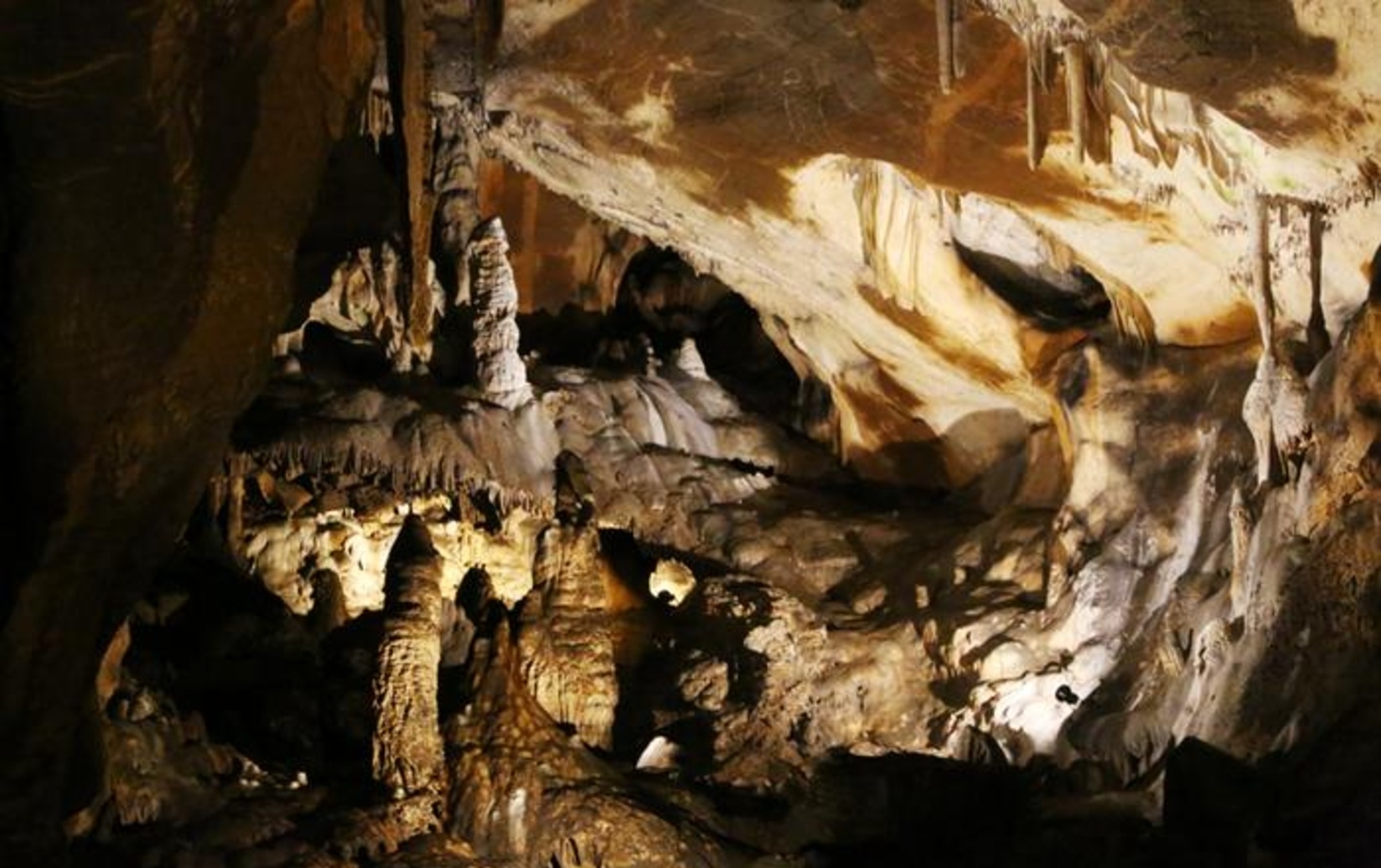
A 30,000-year-old genome and DNA recovered from cave dirt suggest hunter-gatherers were more connected across Europe than scientists thought.(CN) — Some 30,000 years ago, a woman in southwestern France carried a genetic surprise: ancestry related to populations in central and eastern Europe, scientists say in a new study.An international team led by the University of Vienna reported Friday in Science Advances that eastern and western Gravettian populations exchanged genes more often than previously thought.The Gravettian was a prehistoric hunter-gatherer culture that spread across Europe between about 34,000 and 25,000 years ago. It is known for its distinctive tools and artwork.Archaeologists have found evidence that people across Europe stayed in contact during the Gravettian period. But earlier studies suggested people in eastern and western Europe had largely separate ancestry.The woman’s remains, found in Isturitz Cave, provided the oldest known genome-wide genetic data from a modern human in southwestern Europe.Most of her ancestry was related to the western European lineage. But she also carried ancestry related to populations from central and eastern Europe.“Our results show that eastern and western European populations were not as genetically isolated as previously assumed,” said Pere Gelabert, the study’s first author and a researcher in the university’s Department of Evolutionary Anthropology. “Gene flow across such large distances adds a new dimension to our understanding of how Gravettian populations were connected.”Scientists found similar genetic evidence in the previously studied remains of a person from Ormesson, France. Along with archaeological findings, the evidence suggests Isturitz Cave may have been a meeting place for different groups.They also found signs that some regional ancestry held steady over time. DNA from Chufín Cave in northern Spain suggests people in the region maintained western European ancestry for thousands of years.At El Mirón Cave, also in northern Spain, researchers extracted human DNA from sediment dating back 22,000 years. Even though no human bones or teeth were found there, the DNA revealed clues about the ancestry of the people who lived at the site.“Sedimentary DNA allows us to recover genetic information from periods where human remains are missing,” said Ron Pinhasi, the study’s senior author, also of the university’s Department of Evolutionary Anthropology. “This gives us a way to connect archaeological layers with the genetic ancestry of the people who occupied a site.”The El Mirón DNA suggests this western European ancestry survived through the Last Glacial Maximum, the peak of the last Ice Age. The findings support the idea that the Iberian Peninsula served as a refuge where people could survive the harsh conditions.In southern Italy, scientists studied Ostuni1b, a male fetus believed to be the son of Ostuni1, a woman whose remains were analyzed in an earlier study.His father likely came from the same genetic group as his mother, but his parents were not close relatives. This suggests people in these populations had children with partners who were not closely related to them.Overall, the findings imply people could maintain ties to their local communities while also connecting with groups across long distances.The team is now studying ancient DNA from cave sediments and proteins to learn how modern humans first spread across Europe. They aim to understand how people interacted with carnivores at sites where few remains have survived.Subscribe to our free newslettersOur weekly newsletter Closing Arguments offers the latest about ongoing trials, major litigation and rulings in courthouses around the U.S. and the world, while the monthly Under the Lights dishes the legal dirt from Hollywood, sports, Big Tech and the arts.Additional Reads
DNA from French cave suggests Ice Age Europeans were well traveled
Full Article
Original Source
Read the full article at Courthousenews →KhanList aggregates and links to publicly available news content. We do not host full articles from third-party sources. Always verify important information with original sources.