
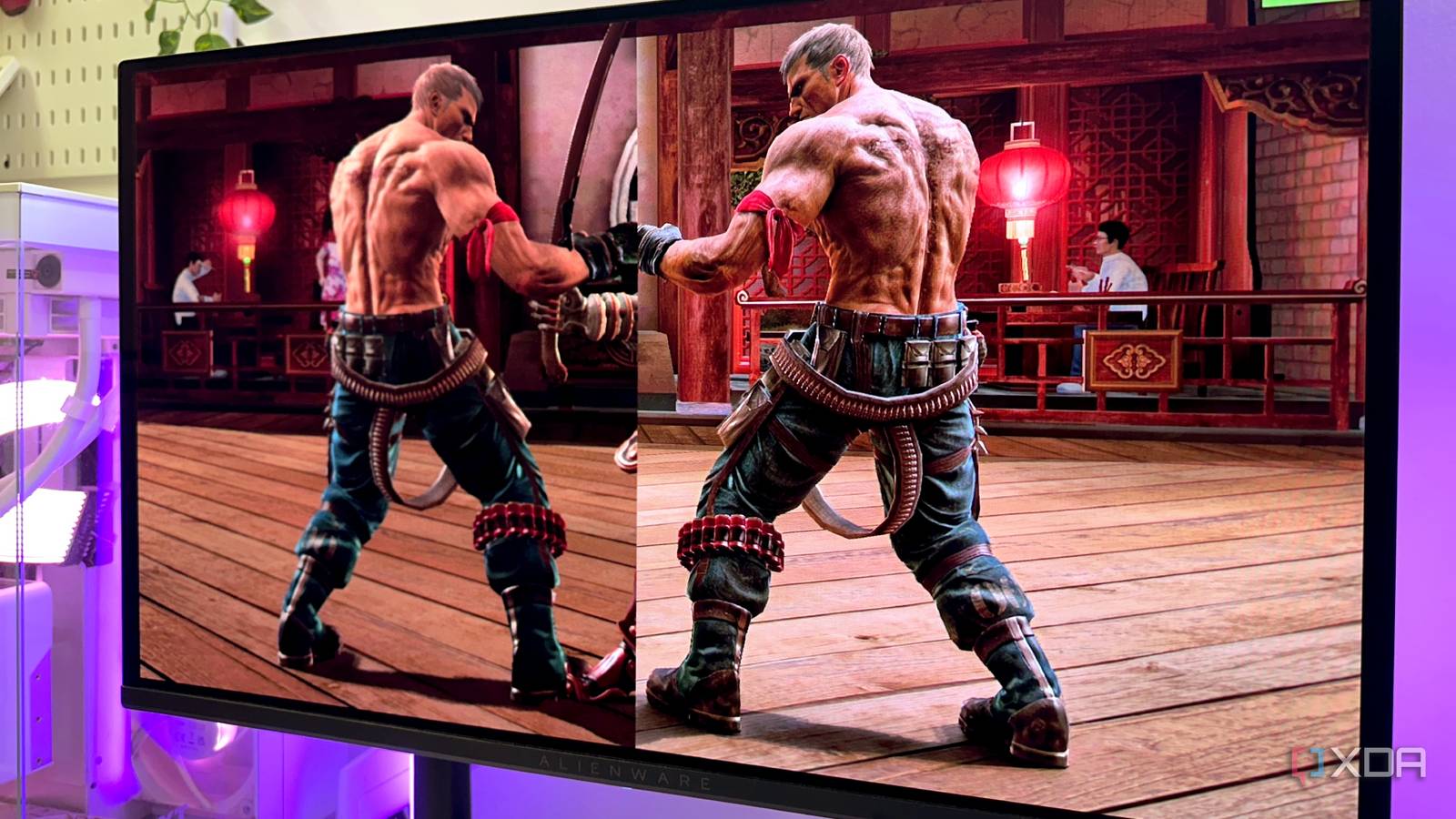
Published Sep 29, 2026, 4:30 PM EDT His love of PCs and their components was born out of trying to squeeze every ounce of performance out of the family computer. Tinkering with his own build at age 10 turned into building PCs for friends and family, fostering a passion that would ultimately take shape as a career path. Besides being the first call for tech support for those close to him, Ty is a computer science student, with his focus being cloud computing and networking. He also competed in semi-pro Counter-Strike for 8 years, making him intimately familiar with everything to do with peripherals. When Nvidia unveiled DLSS 5 to the world at GTC in March 2026, it pitched it as its most significant graphics breakthrough since real-time ray tracing. Much of the headlines were dominated by the uncanny image previews and "DLSS 5 ON" memes, but that opening line said more about Nvidia's plans for the technology than anything it has talked about since. Ray tracing launched as a premium feature that came with a steep performance cost, had sparse adoption at launch, and if you had a GTX 1080 Ti, you couldn't run it properly because it didn't have the RT cores to do so. Just a few short years later, ray tracing became a hard requirement, and most enthusiasts on a Pascal card have long since upgraded. While the neural rendering tech that it's based on doesn't have a new hardware requirement and the adoption is even thinner when compared to ray tracing's introduction, it does have a very steep performance cost, and I wouldn't be shocked if its inescapable in a matter of a couple of years. Nvidia has run this playbook before Their "significant graphics breakthroughs" usually come with an upgrade tax Turing introduced ray tracing to every gamer's vernacular, but it came with so many other meaningful changes that, in retrospect, were pretty monumental for Nvidia. It renamed the product line, and ray tracing became the face of Nvidia's gaming brand. While the hard cutoff for GTX hardware was real, every feature since followed a similar playbook. Nvidia would release a DLSS generation, make the headline feature an exclusive to the newest generation of cards, and then follow up with support for the other features for the older generations a bit later. Frame Generation launched as an RTX 40 exclusive, and DLSS 4 made Multi Frame Generation exclusive to RTX 50 while RTX 40 kept the older Frame Generation. DLSS 5 is no different. It launched on September 3 in NBA 2K27, limited to RTX 50 GPUs GeForce Now. Nvidia has since said it will expand support to RTX 40 once RTX 50 performance is more fully tuned, but hasn't given a date, and perhaps most importantly, it has made no commitment for RTX 30 or older cards. The basis for a baked-in requirement is there Neural rendering doesn't have any new hardware requirements yet, but it can if Nvidia wants it to DLSS 5 is currently just an Nvidia model applied on top of an already rendered frame, and as of right now, it's a toggle that players can choose to turn on and off. People have even managed to get it running on Radeon GPUs, so there's no current secret sauce that locks it to Nvidia-only, at least in any serious capacity. Ray tracing didn't become mandatory because of the RTX brand, either. It became mandatory because DXR and Vulkan gave developers a vendor-neutral way to target it, and the current consoles shipped with hardware to run it. That's why Indiana Jones and the Great Circle requires hardware ray tracing at every preset, and why Doom: The Dark Ages locks out anything older than the RTX 20 and RX 6000 series. The good news is that neural rendering has already had its DXR moment with AMD, Nvidia, Intel and Qualcomm committing to officially supporting DirectX Shader Model 6.9, which introduces Cooperative Vectors, letting shaders run small neural networks inline. This is the layer that could be baked into games, like the neural texturing, materials, and lighting caches. With that said, there's nothing stopping Nvidia from drawing lines within its own lineup as they've done previously. DLSS 5 uses the FP8 format, which is why Ada's tensor cores can run it and why RTX 40 support is coming at all. A future version built around a newer number format, or a heavier model that leans on shader-level tensor access, would leave older cards technically capable but officially unsupported. Older GeForce cards already allegedly go through slower CUDA or compute shader paths to reach their tensor cores from inside shaders, and that's sort of a hard requirement in and of itself. RTX 50 owners are getting DLSS 5 as it exists today, with no guarantee they'll get the version that matters once it stops being optional. Why DLSS 5 could stay optional RT was way less polarizing While the consensus on ray tracing was that it enhanced the fidelity of most rendered scenes at a heavy performance cost, DLSS 5 has a much more polarizing reputation already, and it's not even widely available yet. It completely changes the way a scene looks, with the most jarring differences coming from the facial features of characters. Whether you think it actually enhances the image is completely subjective at the moment, and the performance cost of turning it on might not be worth sacrificing other settings—ray tracing would be one of the first things you'd turn off to save performance headroom for DLSS, ironically enough. What this means if you're buying a new GPU Ray tracing showed how this goes. A premium feature launches on one generation, the industry builds a standard around it, consoles adopt the hardware, and then the requirement is set. It definitely doesn't mean you should run out and buy an RTX 5090 tomorrow, but it does mean you might be in for an upgrade sooner rather than later. There's a catch for early adopters, too. RTX 20 owners bought first-generation ray tracing hardware, and by the time ray tracing was common, the entry-level RTX 2060 couldn't handle it in modern games even at 1080p. RTX 50 is first-generation DLSS 5 hardware. When neural rendering stops being optional, today's early adopters could find themselves in the same position.
DLSS 5 is the new ray tracing, and it's going to be inescapable soon
Full Article
Original Source
Read the full article at Xda-developers →KhanList aggregates and links to publicly available news content. We do not host full articles from third-party sources. Always verify important information with original sources.