
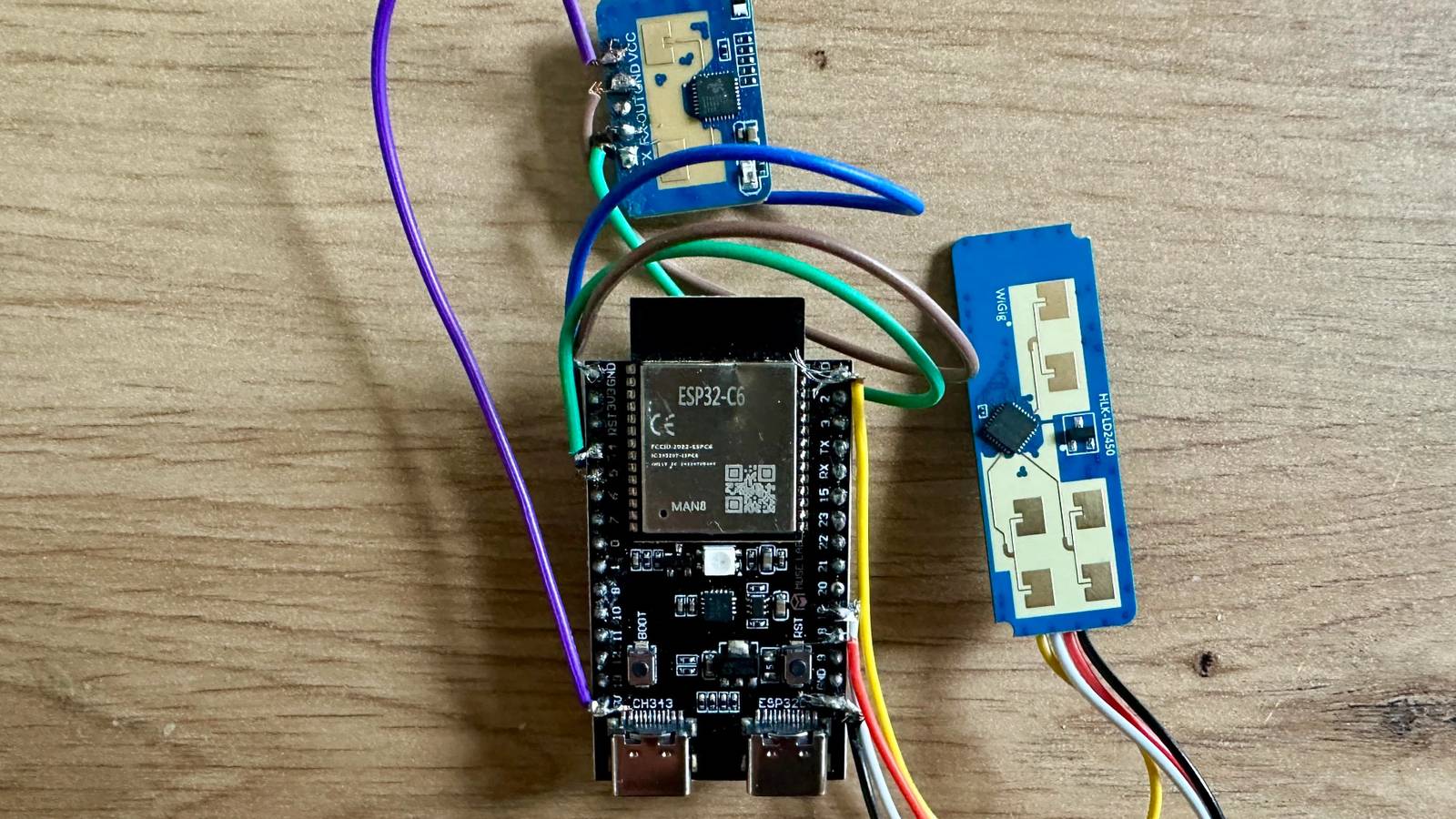
Published Oct 21, 2026, 6:00 AM EDT Tim has been covering technology for almost 20 years, in that time spanning a broad range of topics from security to product reviews. He is especially focused on the Apple ecosystem, productivity, and consumer advice. Over the years Tim has written thousands of articles, reviews, and round-ups in addition to producing video content and original photography. A graduate of journalism, he found his footing as a freelancer with a laptop and loves how he is able to work from practically anywhere. Now a Senior Editor for iPhone, Mac, and Smart Home at How-To Geek, Tim still loves to write. He can also be found crafting round-ups and productivity posts for the Zapier blog. Earlier in his career Tim spent nearly a decade as a writer and eventually Apple section editor for MakeUseOf. Tim currently lives in Brisbane, Australia. Outside of work he loves to hike and work out, play video games, and spend quality time with his wonderful partner and two cats Inka and Roger. Zigbee is still the only mesh network protocol I use in my smart home. Though I know a switch to Matter over Thread is inevitable when I run out of IKEA’s color-changing bulbs, I’m still very much of the opinion that “if it ain’t broke, don’t fix it.” That’s why if I were to buy or build a sensor tomorrow, I’d look at using Zigbee before I considered anything else. Thread has been plagued by teething troubles Zigbee “just works” If there’s one thing I’ve noticed from keeping an eye on the IKEA transition from Zigbee to Matter over Thread, it’s that the newest generation of devices seem to have more issues than those they replaced. In short, IKEA has a smart home problem and Matter (and by extension, Thread) is the reason. If I could come up with one word to sum up these problems, it would be “inconsistent.” IKEA’s new range seems to work well enough with its in-house Dirigera hub, but as The Verge discovered, getting them to pair with Apple Home yielded wildly different results depending on which device was used as the hub. The promise of Matter is universal compatibility between devices, which is a wonderful goal that remains sadly unrealized. The idea that you can buy a motion sensor from IKEA, pair it with Apple Home, then switch over to Google Home if you want (not that I’d recommend it), is something that we should all be excited about. Looking at these inconsistencies from a DIY angle raises another question: if IKEA’s talented smart home architects can’t get these devices to work consistently with their massive budgets, what hope do the rest of us have? Much of this comes down to the smart home system you’re using, which version of the Matter protocol it has adopted, and sometimes the exact hub hardware or coordinator you’re trying to connect to. When it comes to DIY sensors and Zigbee, there’s overwhelmingly one smart home platform that springs to mind: Home Assistant. There are plenty of cheap Zigbee hubs available For your Home Assistant setup If you’re making your own smart home sensors, you’re either working on a tight budget, hungry for a challenge, or simply looking to design something bespoke that doesn’t yet exist on the market. All of these are valid reasons to pick up a breadboard and a soldering iron, but you’re also going to need to consider the other side of your smart home setup. Home Assistant is an open-source smart home platform that works on just about anything, is free to use, and refreshingly open-source. It’s what you’re going to want to use if you’re designing DIY sensors because it gives you benefits like native support for frameworks like ESPHome to accelerate your sensor design and the freedom to author complex automations using your hardware. As part of setting up a Thread or Zigbee network, you’re going to need a coordinator (sometimes referred to as a dongle or a router). This is the central pillar of your mesh network, and ironically both Thread and Zigbee can usually make use of the same hardware for their respective protocols. Unfortunately, you can’t use both of these at once (the Open Home Foundation tried this with the Home Assistant ZBT-1, and it never got off the ground). In addition to first-party hardware that supports the Home Assistant project, like the ZBT-2 which works with both Thread or Zigbee, there are much cheaper Zigbee hubs out there from manufacturers like Sonoff for as little as $25. Where to begin Home Assistant gives you two Zigbee protocols to choose from Credit: Apollo Automation Further adding to the flexibility of a Zigbee network in Home Assistant is the choice to go with the built-in Zigbee Home Automation (ZHA) integration that comes with Home Assistant, or the Zigbee2MQTT (Z2M) alternative that requires a bit more setup but ultimately provides greater device support and flexibility. It helps to understand why people choose Z2M over ZHA, and much of that comes down to retail device compatibility. There’s quite simply a larger library of devices that have more entities exposed. It’s also easier to manage over-the-air updates with Z2M, plus you can run your Z2M server independently of Home Assistant so that everything doesn’t go down if your Home Assistant instance fails. Which you choose likely depends on what your smart home looks like prior to introducing any DIY devices, but it’s nice to know that you can pick another if you have problems with one. There are plenty of guides out there for creating Zigbee sensors, starting with the mmWave presence sensor by Home Assistant Community member notownblues. Beyond this there are multisensors that detect temperature, humidity, and contact, and simple passive infrared motion sensors that cost less than $5. Thread and Matter are undoubtedly the future The main caveat to picking Zigbee over Thread is that you’re using Home Assistant and you’re happy with your Zigbee network. If you want to create devices for Apple Home or Google Home, which natively support Matter over Thread, then Zigbee isn’t going to cut it. For example, check out this tutorial for creating a Matter over Thread air quality sensor that you can add to supported smart home systems like Apple Home.
DIY Zigbee sensors still beat Thread and Matter, but nobody talks about why
Full Article
Original Source
Read the full article at Howtogeek →KhanList aggregates and links to publicly available news content. We do not host full articles from third-party sources. Always verify important information with original sources.